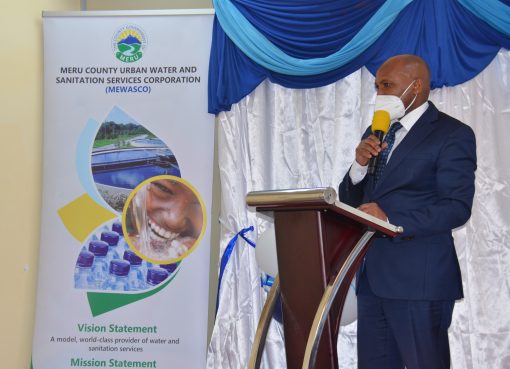
Cabinet Secretary (CS) for Cooperatives and MSMEs, Wycliffe Oparanya, has reaffirmed the government’s commitment to strengthening Kenya’s cooperative movement through legislative reforms aimed at enhancing transparency, sustainability, and public trust.
Speaking during an international cooperative sector meeting in Mombasa that brought together regional leaders and global delegates, Oparanya dismissed claims that the government intends to control Savings and Credit Cooperative Organizations (SACCOs), instead emphasizing the creation of an enabling environment for their growth.
“We do not intend as a government to control the cooperative movement, but we want to encourage it to be self-sustaining. The responsibility of the government is to create an enabling environment for the cooperative movement to thrive,” said Oparanya.
The CS noted that ongoing reforms are informed by recommendations from a committee of experts appointed in May last year to address challenges facing the sector, including governance concerns in key institutions. He said the proposals, some of which require legislative action, are currently under review in consultation with Parliament.
“There has been a lot of misinformation that the government wants to control SACCOs. That is not true. We are putting in place institutions and legislation that will strengthen the movement,” he added.
The meeting, convened by the African Confederation of Cooperative Savings and Credit Associations (ACCOSCA) also hosted board members from the World Council of Credit Unions, highlighting Kenya’s growing influence in the global cooperative space.
WOCCU Board Chairman, Mark Lawrence, lauded Kenya for hosting the international delegation, noting Africa’s strategic importance in advancing financial inclusion.
“Africa is a very important part of the global cooperative movement. The strength lies in having a single voice globally, and partnerships like the one we have with Africa are critical,” said Lawrence.
Global leaders underscored the role of SACCOs as people-centered financial institutions that prioritize member welfare over profit. Bill Cheney, Chairman of the Worldwide Foundation for Credit Unions, described Africa as a key frontier for cooperative finance.
“Africa is rising. It is the youngest continent on the planet, and cooperative finance offers the best pathway for consumers and small businesses to thrive. We are owned by members, not shareholders, and that allows us to put people first,” said Cheney.
Meanwhile, WOCCU President and CEO Elisa McCarter LaBorde (represented at the forum) highlighted a new global data initiative aimed at improving performance tracking and decision making across the cooperative sector.
The initiative, developed in partnership with ACCOSCA and global stakeholders, seeks to standardize data collection, validation, and analysis across member countries, with plans to expand the pilot project beyond Africa.
“Data is key as we move into the future. This initiative will allow us to build a global database that supports better planning and growth of the cooperative movement worldwide, said a WOCCU representative.
ACCOSCA Board Chairperson, Janet Nalim, welcomed the reforms and collaboration, describing the moment as transformative for the sector.
“Today is a defining moment for us. The partnership between government and cooperative institutions shows a united effort to transform the SACCO environment and improve livelihoods at the grassroots,” she said.
The Forum brought together representatives from 19 countries across Eastern Africa, reinforcing the region’s shared commitment to leveraging cooperative finance as a driver of economic empowerment and inclusive growth.
By Chari Suche