Patients seeking cancer treatment in western Kenya may soon access comprehensive care after the Jaramogi Oginga Odinga Teaching and Referral Hospital (JOOTRH) announced plans to operationalise its long-awaited cancer centre.
The facility’s acting Chief Executive Officer (CEO) Dr. Joshua Okise, said the hospital’s radiotherapy unit, a critical component currently unavailable at the facility, was expected to be ready once construction of the Comprehensive Cancer Centre is completed.
Once operational, the centre will enable JOOTRH to offer a full spectrum of oncology services, including chemotherapy, radiotherapy and surgical cancer care, under one roof, significantly reducing the need for referrals to facilities such as Moi Teaching and Referral Hospital and Kenyatta National Hospital.
Currently, JOOTRH only provides chemotherapy, forcing nearly half of its cancer patients to travel between 350 and 500 kilometres to access radiotherapy services.
These referrals, Dr. Okise said, have come with steep challenges, including long waiting periods of up to six months in some facilities, high travel costs and patient drop-offs.
“At times you refer a patient and you are not sure you will see them again. Some get lost along the way; others deteriorate before accessing treatment,” Dr. Okise said, underscoring the urgency of decentralising cancer care.
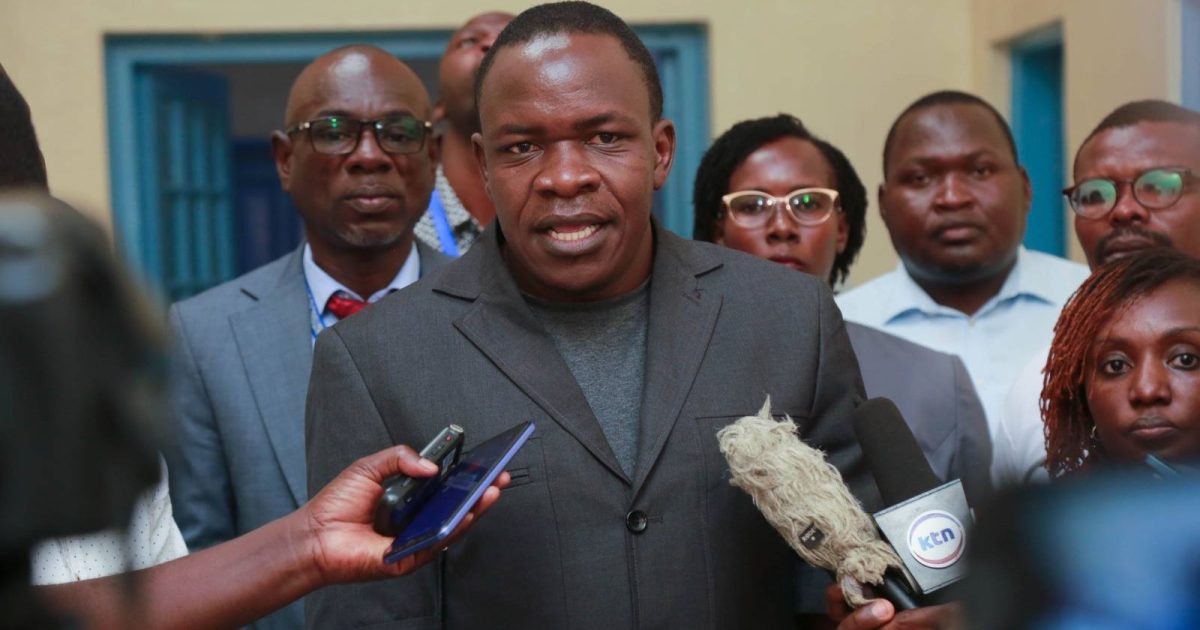
Addressing journalists at the Kisumu-based facility, Dr. Okise said the delays have also been compounded by congestion at referral centres.
At Moi Teaching and Referral Hospital, for instance, about 150 radiotherapy sessions are conducted daily, with demand outstripping capacity due to referrals from across western Kenya.
To bridge the gap in the interim, Dr. Okise said JOOTRH has entered into a public-private partnership with The Nairobi Hospital to fast-track care for referred patients.
“Instead of waiting for months at KNH to access services, we have signed an MoU with the Nairobi Hospital to have our patients who are registered on SHA access radiotherapy treatment as we fast-track the completion of our comprehensive cancer centre,” he said.
The national government has already committed approximately Sh500 million towards construction of the cancer centre, with a focus now shifting to equipping it with radiotherapy machines and other essential infrastructure.
However, Dr. Okise noted that many patients referred to Nairobi Hospital still fail to follow through due to unfamiliarity with the city and lack of support systems.
“Patients tell us they have never been to Nairobi and do not know anyone there. Navigation becomes a major barrier, and some opt not to travel at all,” he said.
According to the JOOTRH’s cancer dashboard, Kisumu County recorded 4,394 cancer cases between 2011 and 2025, with women accounting for over 64 per cent.
Cervical cancer remains the most prevalent, followed by oesophageal, breast, prostate and colorectal cancers.
In 2024 alone, 720 new cases were reported — nearly double the 292 cases recorded in 2018, highlighting a sharp upward trend.
Most patients present late, often at advanced stages, complicating treatment outcomes.
Additionally, about half of patients risk being lost to follow-up within the first year, partly due to the challenges associated with referrals and access to specialised care.
The establishment of the cancer centre is expected to ease this burden by shortening waiting times, improving treatment continuity and boosting survival rates through earlier intervention.
It will also position JOOTRH as a regional oncology hub serving not only western Kenya but also neighbouring counties and cross-border patients from Uganda and South Sudan.
Dr. Okise emphasised that expanding services locally is key to addressing inequities in healthcare access.
“Our goal is to ensure that every service a patient requires can be accessed here. No one should have to travel long distances for care we can provide locally,” he said.
By Chris Mahandara