Universities have been challenged to spearhead transformative research and innovation aimed at solving community problems and driving sustainable development in the country.
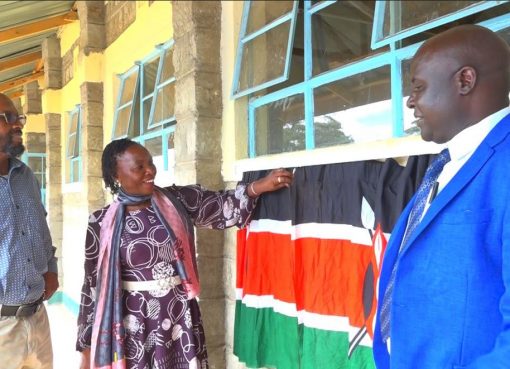
The appeal was made during the 6th International Multidisciplinary Research Conference hosted by Rongo University under the theme “Transformative Research and Innovation for an Inclusive and Sustainable Future”.
The three-day conference brought together scholars, researchers, innovators and policymakers from universities and research institutions across the country.
Speaking during the conference, Dr. Carol Wahunja, Secretary for Higher Education in the Ministry of Education, said universities situated within local communities play a critical role in addressing societal challenges through research, innovation and knowledge generation.
She noted that institutions of higher learning should position themselves as centres of excellence by developing practical solutions tailored to the needs of surrounding communities.
“As you know, the President has consistently committed to ensuring that research is allocated two per cent of the GDP through the National Research Fund that has been established in this country,” said Wahunja.
She encouraged researchers to actively participate in research funding calls under the National Research Fund in order to strengthen innovation and scientific solutions in the country.
Rongo University Deputy Vice Chancellor in charge of Academic and Student Affairs, Prof. Michael Ntabu, said universities remain important institutions where learners acquire knowledge and apply it in solving real-life community challenges.
Prof. Ntabu said the institution was already undertaking research initiatives aimed at addressing challenges affecting communities in the region, including gold mining, sugarcane farming and crop production.
“We have a lot of issues and the university is already trying to find solutions to the issues around us like gold mining, sugarcane farming and crops such as sorghum, among others,” he said.
He added that the university had expanded its outreach programmes through facilities such as the university clinic and soil science department, which also serve members of the public.
“We have a clinic which is open to everybody. Instead of people travelling to Migori and other places, they come here and are attended to,” added Ntabu.
Chairperson of the conference local organising committee, Dr Mbuchi, said the conference attracted 112 participants drawn from 21 universities and two research institutions, including the Kenya Water Institute and Caldwell institution.
He noted that the university had also launched its community radio station, 87.9 FM, to help disseminate research findings and information to local communities.
“Yesterday, we commissioned our radio station 87.9 FM. Members of the community can listen to and follow information aimed at solving local issues,” said Mbuchi.
The conference also showcased various innovations and research projects aimed at improving livelihoods.
Dr. Akane Wekesa from the Co-operative University of Kenya presented a prototype machine learning model designed to help farmers digitally test soil using Android phones.
The innovation, which is expected to be implemented in partnership with the Kenya Agricultural and Livestock Research Organization (KALRO), seeks to reduce the cost and time involved in soil testing.
“My paper is practical because it is based on a prototype project in which I am trying to develop a machine learning model for soil testing to reduce costs,” said Wekesa.
Meanwhile, Prof. Joseph Maitaria of Katarina University observed that research funding had become highly competitive, noting that only impactful and value-driven projects attract funding from governments and investors.
The conference concluded with a presentation by Dr Marren Akong’o on the role of technology in preserving culture and traditions.
Dr. Akong’o expressed concern over the negative effects of urbanisation on Luo culture, saying many young people were gradually losing their language and understanding of traditional practices.
She urged stakeholders to embrace digital platforms such as YouTube to preserve and promote African culture among the youth.
“Technology can be used as a bridge to preserve our culture. If we intentionally apply it on digital platforms, young people will reconnect with our traditions and language,” she said.
The conference forms part of Rongo University’s broader agenda of positioning itself as a regional centre of excellence in research, innovation and community-driven development.
By Faith Opar and Sharon Kidiga