Kenya remains committed to ensuring that no one is left behind in this digital age, Broadcasting and Telecommunications Principal Secretary Stephen Isaboke has affirmed.
The PS said through the Digital Superhighway agenda and partnerships such as DigiKen, the government was expanding digital opportunities for youth, women, and persons with disabilities, while strengthening innovation ecosystems across the country.
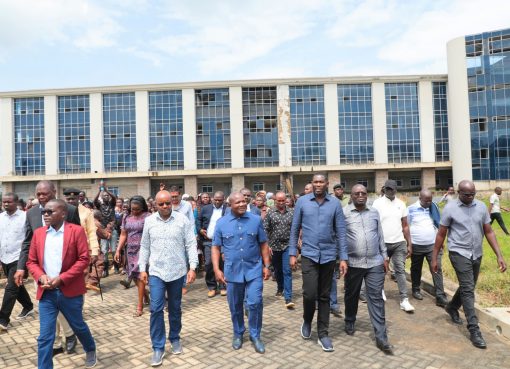
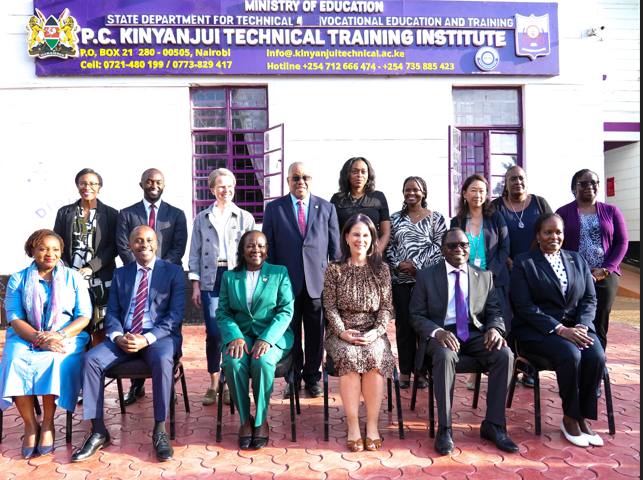
The PS made the remarks during an official visit to Kenya by the President of the United Nations General Assembly, Ms. Annalena Baerbock at PC Kinyanjui Technical Training Institute (PCKTTI), Nairobi for a high-level review of inclusive digital transformation on the ground.
He emphasized the national government’s unyielding stance on digital inclusion and regional ecosystem building.
The high-profile event brought together key leaders across government and international diplomacy, including TVET Principal Secretary Dr. Esther Muoria, Dagoretti South MP John Kiarie and Kenya’s Permanent Representative to UN-Habitat, Susan Nakhumicha Wafula.
Others present were a robust delegations of global dignitaries, including the UN Resident Coordinator and representatives from UNESCO, UN Women, UNCDF, and UNEP.
At the heart of the tour was the DigiKen (Digital Platforms Kenya) initiative, an ambitious, $4.26 million 36-month UN Joint Programme funded by the UN Joint SDG Fund.
The initiative is being implemented by UNESCO in partnership with Kenya’s Ministry of ICT and Digital Economy.
The project aims to train 20,000 government officials, support 150 MSMEs, and ultimately unlock over 24,500 direct and indirect jobs by 2027.
The high-level talks firmly aligned with local impact, centering heavily on skills development, digital transformation, and inclusive economic participation under Kenya’s Bottom-Up Economic Transformation Agenda (BETA).
PCKTTI served as a live blueprint, illustrating how collaboration between the government of Kenya and the United Nations is expanding access to digital skills, innovation pathways, and enterprise opportunities for everyday trainees.
Welcoming the international visitors, Dr. Muoria lauded the strategic intersection of technical training and the modern digital economy.
“This partnership bridges the gap between traditional technical training and the digital frontier. By turning our TVET institutions into vibrant innovation hubs, we are ensuring that Kenyan youth are not just consumers of technology but the creators, innovators, and leaders of tomorrow’s global digital economy,” stressed Dr. Muoria.
Among the participant was Winnie Achieng, a clinical officer who traveled from Kilifi to demonstrate how the hub network breathes life into grassroots commerce.
Standing by her display of value-added local food products, Achieng credits the digital ecosystem for giving her the technical edge needed to scale her enterprise.
“Through DigiKen and the Kilifi Innovation Hub, I have gained the knowledge and confidence to turn my local resource innovations into a growing business,” Achieng shares.
The program’s unique architecture relies on a “cascade” model, where public sector leaders and trainers are equipped with advanced technical knowledge to train communities at scale.
On a projection screen inside the hub, Vera Obonyo, Deputy Director at the Kenya School of Government’s eLearning and IT Institute, highlighted this public-sector synergy.
“As the implementing partner for the government, the Kenya School of Government is empowering 20,000 public servants at scale to lead digital transformation and AI governance,” said Obonyo.
For local trainers like Philip Omondi Ochola, the Jitume hub center manager, completing this curriculum means having the tools to directly uplift hundreds of learners annually.
“It empowers us to cascade AI, platform governance, digital ethics, and transformation leadership across the hub network, drastically strengthening learner-centered services,” Ochola notes.
The grass-roots impact of this joint delivery model visibly impressed the visiting global dignitaries with Baerbock saying the visit played an important role in allowing the UN to experience first-hand the real-world impact of General Assembly decisions and their actual implementation in beneficiary member States.
“The UN was established for the people and has always been standing together with the people,” said Baerbock.
Today in Kenya, I visited a material recovery facility supported by UN-Habitat, along with a digital innovation hub that combines the work of four different UN entities. These projects show the power of joint delivery and the UN’s work on the ground towards the 2030 Agenda and the New Urban Agenda,” she said.
As the high-level delegation concluded the tour, the engagement reaffirmed a collective commitment to digital competence, inclusion, and equitable access to emerging opportunities.
Armed with 100 high-speed computers, reliable internet, backup power, and a certified curriculum, PCKTTI is geared to train over 530 learners annually, ensuring that for youth, women, and persons with disabilities, the digital superhighway remains a tangible, life-changing reality.
For Amani Ali, a visually impaired beneficiary, the gentle, rhythmic hum of one hundred computers inside the PC Kinyanjui Technical Training Institute (PCKTTI) isn’t just background noise; it is the sound of barrier shattering.
Moving his fingers with practiced precision at his digital workstation, Amani is using technology to redefine what is possible.
“Participation in DigiKen has empowered me to pursue technology education,” Amani says, his face lit by the glow of the monitor. His is a story to inspire other visually impaired persons to embrace digital opportunities.
Amani’s story is a single thread in a massive tapestry of economic transformation sweeping across Kenya.
Meanwhile, Isaboke highlighted the exceptional performance of the host institution, noting. “We are particularly proud of the PC Kinyanjui Jitume Hub, which is a model for TVET-led digital innovation.
Through training in areas such as coding, artificial intelligence, cybersecurity, data analytics, and digital entrepreneurship, the Hub is equipping young people with skills required for the jobs of the future,” the PS emphasized.
By Violet Otindo