Street families remain one of Kenya’s most vulnerable populations, despite significant progress in reducing the number of people living on the streets.
Experts, government officials and other stakeholders are now calling for renewed efforts to address the root causes of homelessness including poverty, family breakdown, domestic violence, substance abuse, unemployment and mental health challenges.
According to the 2025 National Census of Street Families, the number of people living on the streets has dropped from about 46,639 in 2018 to 18,049 in 2025, signaling progress in government-led interventions, aimed at rescuing, rehabilitating, and reintegrating street-connected persons into society.
The Constitution of Kenya guarantees fundamental rights and freedoms to all citizens, including street families, who remain entitled to protection, dignity and equal opportunities.
Over the years, the government has implemented various social protection and rehabilitation programmes to support vulnerable populations.
A major milestone was the establishment of the Street Families Rehabilitation Trust Fund (SFRTF), which formalized efforts to rescue, rehabilitate and reintegrate people living in street situations.
The Trust Fund has supported programmes that facilitate rehabilitation and economic reintegration including engagement in income-generating activities such as waste recycling and other informal sector opportunities.
SFRTF Acting Chief Executive Officer Caroline Towett said the agency’s mandate is to help street families reintegrate into mainstream society and access social protection services.
“The welfare of street families aligns with the government’s commitment to leave no one behind. Through the Bottom-Up Economic Transformation Agenda (BETA), they have benefited directly and indirectly from programmes such as the Hustler Fund, NYOTA, and Youth Funds, which promote economic empowerment and access to financial opportunities,” she said.
Towett noted that despite the decline in street populations, the 2025 census provides critical data that will help policymakers design interventions that respond to the specific needs of street-connected persons.
She described the completion of the national census report and the rollout of the Street Families Management Information System as major milestones in addressing the challenges facing street families.
According to Towett, the digital information management system will enhance coordination, accountability, and real-time service tracking by providing stakeholders with a shared platform and reliable source of data.
“These initiatives reaffirm the government’s commitment to ensuring interventions for street-connected persons are evidence-based, coordinated, and effective in restoring dignity, hope, and opportunity,” she said.
Kenya National Bureau of Statistics (KNBS) Director General Dr. Macdonald Obudho said the report fills a critical data gap by providing detailed information on street families that is not captured in the national population and housing census.
“The findings provide a rich source of official statistics that will support policy formulation, targeted interventions and further research on street families,” he said.
Dr. Obudho welcomed the reduction in the number of street families, saying it indicates that government and stakeholder interventions are yielding positive results.
However, the DG called for further analysis to establish whether the changes reflect actual trends, or differences in methodology and classification.
He urged stakeholders to use the findings to address the underlying causes that push individuals and families onto the streets, particularly poverty and family-related challenges.
Looking ahead, Dr. Obudho said KNBS plans to develop a specialized statistical framework that would allow regular surveys of street families instead of conducting expensive nationwide censuses.
“We need evidence-based interventions that help street families access education, employment, and opportunities to contribute to national development,” he said.
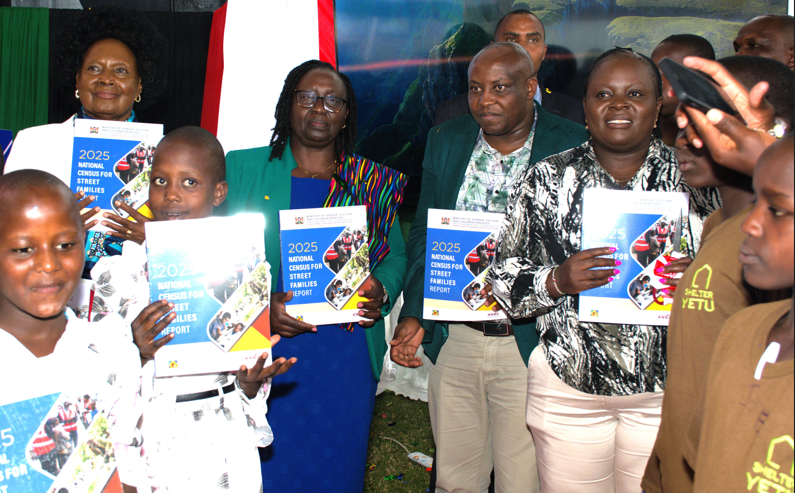
During the launch of the 2025 census, Gender, Culture, and Children’s Services Cabinet Secretary Hannah Wendot Cheptumo called for a renewed national commitment to eliminate street families, stressing that all stakeholders must work together to restore dignity, hope, and opportunity to vulnerable children and families.
She said government programmes focusing on rescue, rehabilitation, reintegration, de-socialization, and prevention remain central to addressing the challenge.
The Cabinet Secretary also called for stronger collaboration among national and county governments, civil society organizations and communities to implement the report’s recommendations and tackle the root causes of vulnerability.
Cheptumo added that the government is expanding affordable housing and social protection programmes to help vulnerable families transition from street life to stable living conditions.
The 2025 National Census of Street Families builds on the first census conducted in 2018 and provides a comprehensive picture of the current status of street families across the country.
While the sharp decline in street populations offers hope, stakeholders say sustained investment in prevention, rehabilitation and economic empowerment will be critical to ensuring that every Kenyan has the opportunity to live with dignity and contribute to national development.
By Wangari Ndirangu