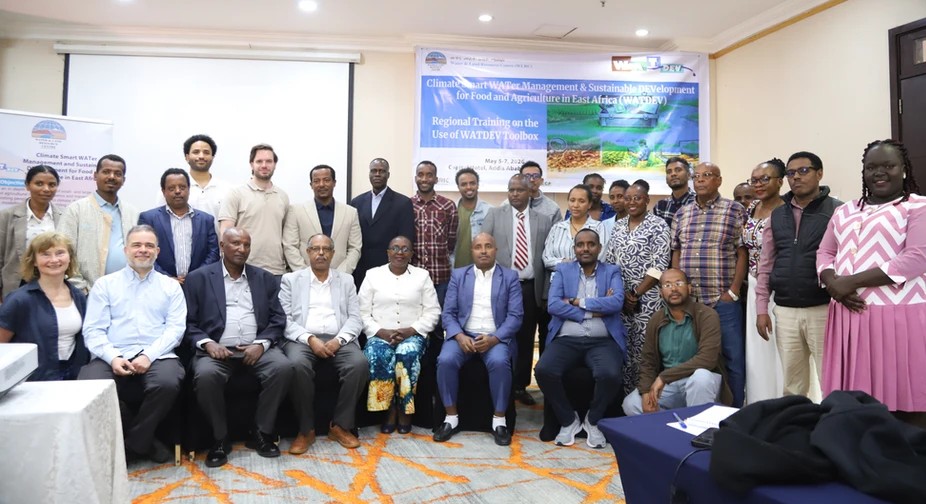
Experts, researchers and community representatives will convene in Nairobi next week for an international conference, aimed at advancing climate-resilient agriculture through improved water and soil management.
The two-day conference is being organized with support from the Climate Smart Water Management and Sustainable Development for Food and Agriculture in East Africa (WATDEV) initiative.
The meeting comes at a time when Kenya and many African countries are grappling with the effects of climate change, land degradation, erratic rainfall patterns and declining agricultural productivity.
Participants will explore ways of harnessing Africa’s vast agricultural potential, driven by its abundant natural resources, growing population and expanding markets to enhance food security, create employment and improve livelihoods.
The conference will also highlight the importance of integrating scientific research with indigenous knowledge developed by local communities over the generations to strengthen climate adaptation and support sustainable agricultural transformation.
In Kenya, where agriculture remains a key pillar of the economy, the discussions are expected to contribute to the ongoing efforts to address climate-related challenges affecting food production and natural resource management.
Experts note that agriculture accounts for about 70 per cent of global freshwater withdrawals and nearly 30 per cent of global energy consumption through food production and supply chains, underscoring the need for sustainable resource use.
With Africa’s food demand projected to rise significantly by 2050, stakeholders say effective management of water, soil, and energy resources will be critical in ensuring food security and sustaining economic growth, amid recurring droughts, floods, soil degradation, and limited access to agricultural inputs.
The conference is expected to generate policy recommendations and strengthen partnerships, aimed at promoting climate-resilient agriculture and sustainable natural resource management across the continent.
It will also review achievements and lessons learned from the WATDEV initiative and other Africa-Europe research partnerships.
For Kenya, the outcomes are expected to support efforts to improve livelihoods and build climate resilience by encouraging the adoption of locally relevant and sustainable farming practices that enhance productivity and food security.
By James Kabutu