Residents of Vihiga County have been encouraged to embrace sustainable waste management practices and tap into economic opportunities available in the waste sector.
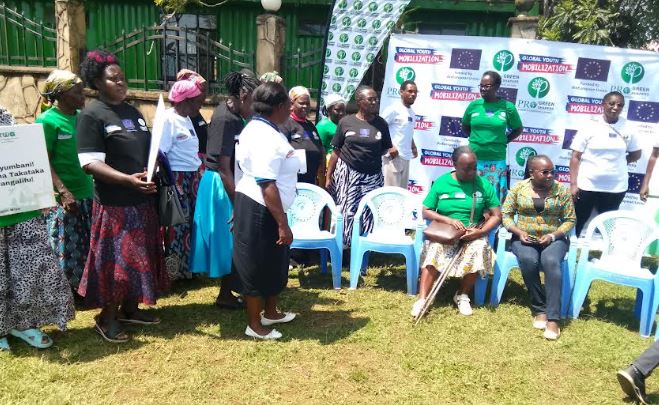
This emerged from a training held at Mutembei Friends Church, Sabatia Sub County, organized by Pro Green Shapers Initiative.
The training, held under the Transforming Waste for Economic Growth (TWEG) programme brought together members of various community groups to learn about waste management, recycling, waste valorization, green entrepreneurship and environmental stewardship.
Pro Green Shapers Initiative founded in 2019 by young environmental advocates dedicated to environmental sustainability and community empowerment, organized the workshop as part of its efforts to promote a circular economy and support sustainable livelihoods.
Facilitating the session, Pro Green Shapers member Justin Kapanga highlighted the growing global waste challenge.
Kapanga gave statistics from the United Nations Environment Programme (UNEP) saying the world currently produces about 2.6 billion tonnes of waste annually, a figure projected to rise to 3.9 billion tonnes by 2050 if urgent interventions are not implemented.
He also noted that direct waste management costs amount to approximately Sh300 billion annually, insisting the need for innovative and sustainable waste management solutions.
Representatives from Ebusamuli Self Support Group, Mwembe Widows Group, Chapkembei Self Help Group, and Likindu A Widows Group identified common waste generated within their communities including plastics, glass bottles, sugarcane residues, sewage and animal waste.
The participants were encouraged to adopt circular economy practices that minimize waste through reusing, recycling, repairing and recovering materials and products.
They also proposed the establishment of a waste management station in Vihiga County, saying it would help create employment opportunities and addressing environmental challenges.
Speaking during the workshop, Philip Angose, the County Environmental Development Officer, emphasized that environmental conservation is a responsibility shared by every individual.
“Environmental conservation is an individual responsibility given by God, while the government’s role is to coordinate efforts through public education and awareness,” he said.
Angose added that society is rapidly transitioning from the traditional linear economy model to a circular economy approach that promotes resource efficiency and sustainability.
Vihiga County Director of Environment Aquila Lwanga appreciated the county government’s commitment to empowering women through waste management initiatives.
She said her department conducts workshops that equip women with skills to transform waste into valuable products and participate in material recovery facilities.
Lwanga commended the Pro Green Shapers Initiative for organizing the training and involving women in circular economy activities.
“I appreciate Pro Green Shapers for conducting such an impactful training and engaging women in circular economy initiatives, where their efforts are helping us in the journey of making Vihiga green and clean,” she said.
She further emphasized that waste should not be viewed as a problem, but as a valuable resource capable of transforming lives and improving livelihoods if managed properly.
The training concluded with a renewed commitment among participants to champion environmental conservation and explore income-generating opportunities through sustainable waste management practices.
By Clara Simiyu