The Kenya Agricultural and Livestock Research Organization (KALRO) Mwea, in partnership with the Korea Program on International Agriculture (KOPIA) Kenya Centre, has trained researchers, seed growers and extension officers from six African countries on quality rice seed production and processing as part of efforts to enhance food security and boost rice productivity in the region.
The training brought together participants from Kenya, Tanzania, Ethiopia, Malawi, Rwanda and Zimbabwe and focused on technologies, innovations, management practices and regulatory requirements necessary for certified rice seed production.
Speaking during the training, Kirinyaga County Executive Committee Member for Agriculture Dr. John Gachara underscored the importance of international collaborations in fostering agricultural innovation and knowledge exchange.
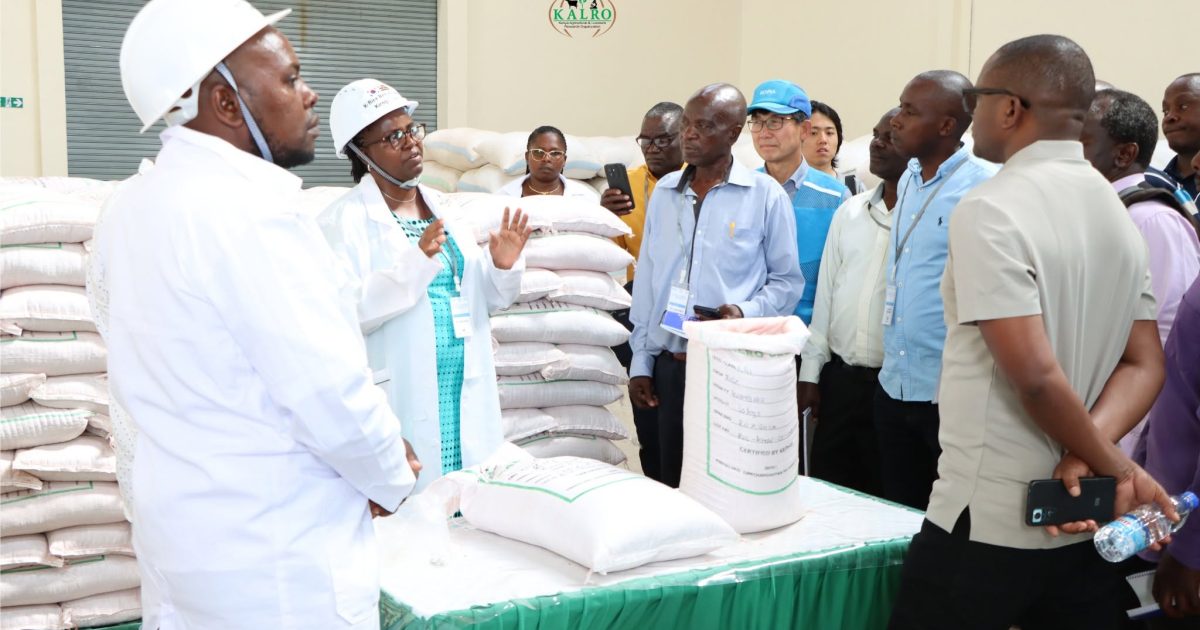
The participants were also taken through practical sessions at the certified rice seed processing facility at Kirogo Farm in Mwea, where they gained hands-on experience in seed processing and quality assurance procedures.
KALRO Deputy Director General for Crops, Dr. Alice Murage, commended KOPIA and other development partners for supporting capacity-building initiatives aimed at strengthening rice production systems across Africa.
She urged participants to utilize the knowledge acquired during the training to improve rice seed systems, increase productivity and contribute to regional food security.
Dr. Ruth Musila, Centre Director at KALRO Mwea, emphasized the critical role of quality seed in transforming rice production and reducing reliance on imports.
“We can double our rice production, while reducing imports through the adoption of improved varieties and quality seed systems,” Dr. Musila said.
The director noted that Kenya has diverse rice-growing ecologies, including upland, irrigated and rain-fed lowland systems.
She explained that while 80 per cent of the country’s rice is currently produced under irrigation, KALRO is also developing varieties suited for upland and rain-fed conditions.
Among the improved varieties being promoted are Komboka, Mkombozi and the recently released Tongil varieties, which were developed through collaboration between Kenyan and South Korean breeders.
“The Tongil varieties can yield between six and seven tonnes per hectare and are resistant to major rice diseases, making them suitable for increasing production and farmer incomes,” she added.
KOPIA Kenya Centre Director Dr. Ji Gang identified poor post-harvest handling as one of the biggest challenges facing rice farmers, particularly the practice of drying rice on roadsides.
“After harvest, many farmers dry rice on roads, which leads to contamination, broken grains and reduced quality,” he said.
Dr. Ji noted that the modernized post-harvest facilities installed in Mwea are helping address these challenges by enabling clean drying and proper processing of rice seed.
“Through these facilities, we can provide pure rice seed with high germination rates and improve post-harvest management in the Mwea area,” he added.
Participants from across the region hailed the training for providing valuable skills and technologies that can be transferred to farmers to enhance rice production.
Barnabas Sita from Tanzania said the exchange of experiences and exposure to modern technologies would help strengthen rice farming systems in participating countries.
He noted that governments across the region are investing in new technologies and farm equipment to improve rice production and that the knowledge gained from the training would assist extension officers in supporting farmers to adopt improved practices.
The training forms part of ongoing efforts by KALRO and KOPIA to strengthen sustainable rice production and improve food security in the region.
By Mutai Kipng’etich