A new labour market study has called for a fundamental shift in how young people are prepared for work, warning that skills training alone will not solve youth unemployment unless it is closely linked to employers and emerging economic opportunities.
The Mombasa County Future of Work Report, launched by Mizizi Elimu Afrika in partnership with the Global Development Incubator (GDI) and the County Government of Mombasa, paints a disturbing picture of the county’s labour market while outlining strategies to align skills development with industry demand.
The Report, which was conducted in Mombasa County, is based on data collected from 1,821 employers, 1,593 young women and men, 52 institutional stakeholders, and 21 food and beverage industry practitioners.
Its findings reveal that 38.8 per cent of young people are unemployed and actively seeking work, while 35.2 per cent are self-employed and only 19.4 per cent are in wage employment.
The study discloses that addressing youth unemployment will require expanding pathways to decent work beyond traditional formal employment.
Speaking during the report’s launch, Mombasa County Executive Committee Member for Blue Economy, Fisheries and Livestock Ibrahim Khamis said the county government was investing in practical, industry-driven training to improve youth employability.
“There remains a gap in practical skills training, particularly in hands-on occupations, and we are working to bridge that gap,” Khamis said.
He noted that specialised technical skills are increasingly essential for jobs in the blue economy, especially in the cruise ship industry. “You cannot secure employment on cruise ships without the relevant practical skills,” he said.
Khamis observed that the two neighbouring counties, Kilifi and Kwale, are currently offering more hospitality jobs because they have a larger number of hotels; however, he said Mombasa is positioning its youth to take advantage of opportunities in the blue economy through expanded vocational training.
He cited Mtongwe Vocational Training College as one of the institutions equipping young people with skills in modern fishing techniques, maritime services and cruise ship operations.
“Mombasa is home to Kenya’s main seaport, and ships from around the world dock here. It would be unfortunate if our young people are unable to benefit from employment opportunities in the cruise industry,” Khamis said.
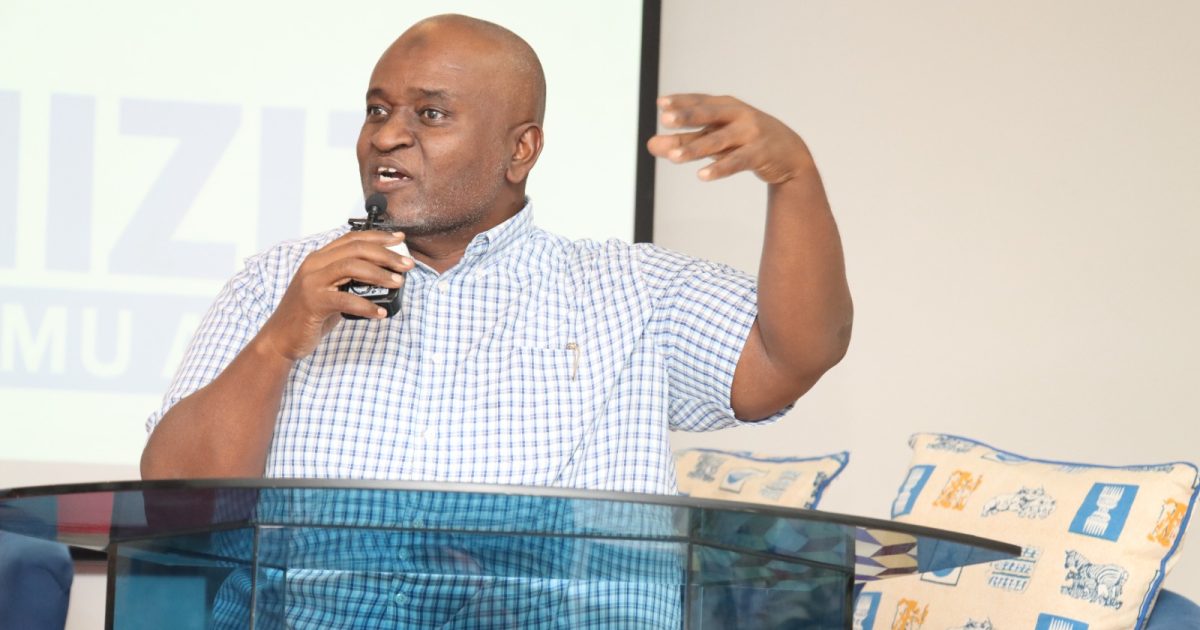
Mizizi Elimu Afrika Research Director Dr Maurice Mutisya said the findings underscore the need to move beyond stand-alone training programmes towards integrated employment systems that connect young people directly with jobs, entrepreneurship opportunities and business support services.
“We need to assist our youth because there is a mismatch between available job opportunities and young people’s ability to access them, and we must work together to connect young people with these opportunities,” Mutisya said.
He added that training programmes should be redesigned to address the gap between the skills employers need and those currently being taught in training institutions.
“We need an inclusive system that brings together training institutions, young people and employers so that we can identify available job opportunities and ensure the workforce is equipped with the right skills to fill them,” he said.
Mutisya also welcomed the Competency-Based Education (CBE) system, saying it has the potential to better align education with labour market needs by allowing learners to make subject choices that reflect future career opportunities.
“As stakeholders, we must guide these children because they are still young and need support in making informed decisions that match future opportunities,” he said.
By Mary Mtawa