Junior Secondary School (JSS) learners in Nyamira County have been encouraged to embrace Science, Technology, Engineering and Mathematics (STEM) pathways as they prepare to transition to senior school under the Competency-Based Curriculum (CBC).
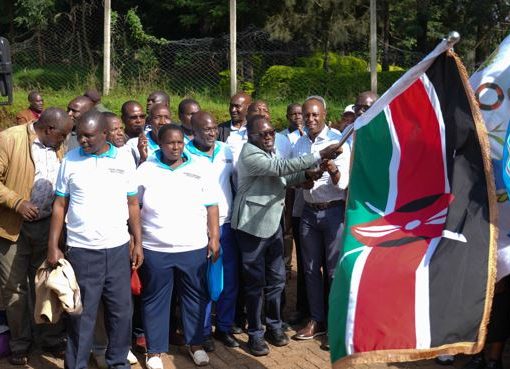
The call was made by the Coordinator for Special Programmes and Student Learning at the Centre for Mathematics, Science and Technology Education in Africa (CEMASTEA), Joseph Kuria, during the closing ceremony of a week-long STEM outreach programme held at Nyamira Primary School.
Speaking to journalists after the event, Kuria said the outreach programme seeks to ignite learners’ interest in science and technology subjects and inspire them to pursue STEM-related careers. He noted that the initiative is aligned with ongoing education reforms aimed at increasing the number of learners enrolling in STEM pathways at the senior school level.
“The objective of this outreach programme is to arouse interest and motivate learners to take up STEM subjects as they transition to senior school. The government intends to have more than 60 per cent of learners joining senior school enrolled in STEM pathways as part of the curriculum reforms,” said Kuria.
He explained that the outreach programme exposed learners to mathematics, integrated science, physics, biology, chemistry and Information Communication Technology (ICT) through practical, learner-centred approaches designed to simplify complex scientific concepts.
According to Kuria, the programme focuses on demonstrating that science can be enjoyable, understandable and relevant to everyday life when taught through hands-on experiences rather than relying solely on theoretical instruction.
The learners who participated in the programme expressed enthusiasm about the practical approach used during the sessions, saying it helped them understand and retain scientific concepts more effectively.
Sharon Kirota, a learner at Nyambaria Junior Secondary School, said the practical lessons transformed her understanding of biology and other science subjects.
“I enjoyed the lessons because the practical approach made learning easier. I was able to use a microscope to observe and draw a plant cell and identify its parts. Previously, we only learned about plant cells through pictures in textbooks,” she said.
Kirota added that the experience had boosted her confidence in answering science questions and handling laboratory equipment.
“I am now confident that if I am asked questions about plant cells, I can answer correctly. I have also learned to identify and use different apparatus used in Chemistry and Physics practicals,” she said.
School administrators also praised the outreach programme, noting that practical learning helps learners make sense of scientific concepts that are often perceived as abstract.
Nyambaria Comprehensive School Principal David Okemwa said both teachers and learners benefited immensely from the programme.
“The most exciting aspect was the practical component where learners used laboratory apparatus to conduct experiments and obtain results. This kind of learning makes science meaningful and enjoyable,” he said.
Okemwa appealed to the Ministry of Education to increase capitation for STEM programmes and provide more laboratory equipment to schools to enhance practical learning.
“Many schools still face challenges in acquiring adequate laboratory equipment. Increased support would enable learners to gain hands-on skills instead of relying mainly on theory,” he added.
Magombo Curriculum Support Officer George Nyabero echoed the sentiments, emphasizing that practical learning is critical in shaping positive attitudes toward STEM subjects.
He observed that many learners develop negative perceptions about science because of excessive reliance on theoretical teaching methods.
“Theory alone cannot inspire learners to embrace STEM pathways. Teachers have already been retooled and trained to use learner-centred pedagogical approaches where learners actively participate in experiments and practical activities,” said Nyabero.
He noted that allowing learners to interact directly with laboratory equipment and scientific materials improves comprehension and nurtures curiosity, innovation and problem-solving skills.
Kuria acknowledged that inadequate laboratory infrastructure remains a challenge in many schools across the country. However, he encouraged teachers to make use of locally available materials and improvised resources to support practical learning.
“Science can still be taught effectively even where resources are limited. Teachers can improvise using materials available in their environment while schools gradually acquire the required equipment,” he said.
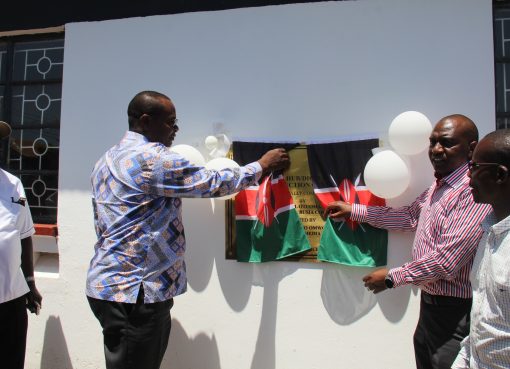
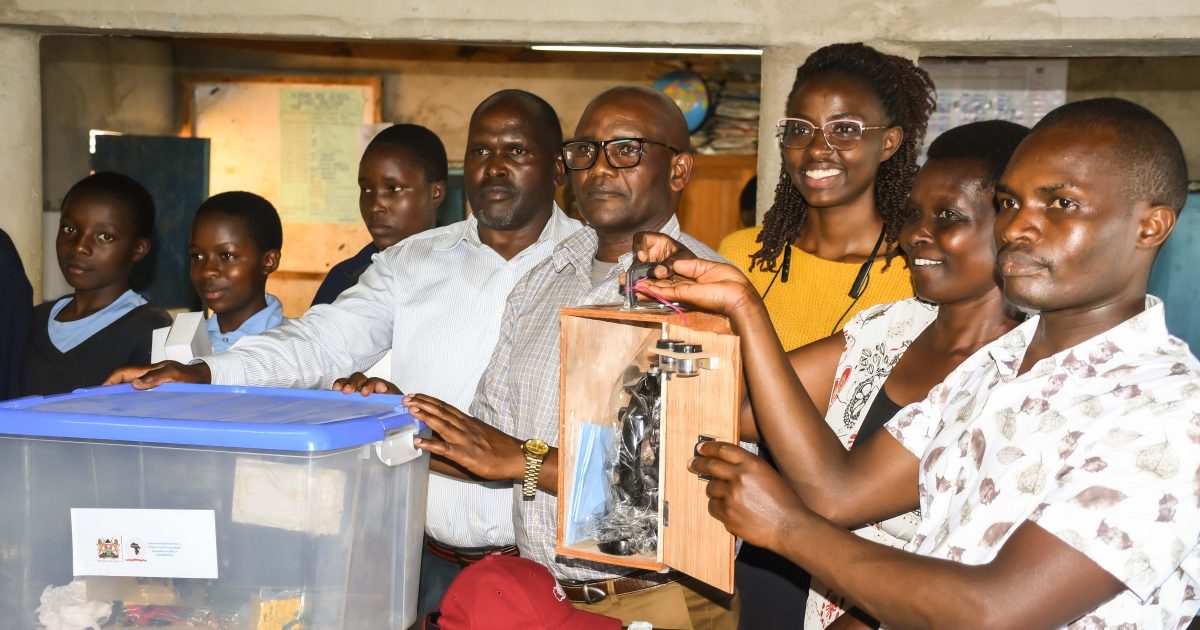
As part of the outreach programme, CEMASTEA donated assorted laboratory equipment, including light microscopes and other science apparatus, to participating schools. The equipment is expected to strengthen practical science teaching and improve learning outcomes in junior secondary schools.
Kuria said the outreach initiative has so far covered about 20 counties across the country, with Nyamira County being the final county targeted under this year’s programme.
“Nyamira is the last county in our performance contract for this year. In every county, we work with five schools to maximize impact and create centres of excellence in STEM education,” he said.
He explained that the selected schools are expected to serve as benchmarks for neighbouring institutions through a multiplier effect, encouraging wider adoption of innovative teaching and learning practices.
For schools that may not benefit directly from the outreach programme, Kuria said CEMASTEA offers opportunities for educational visits to its Nairobi-based centre, where teachers and learners can interact with modern teaching technologies and innovative STEM learning activities.
He noted that the programme has received positive feedback from both teachers and learners in all the counties visited, largely because the activities are closely aligned with curriculum designs and classroom learning objectives.
The five-day outreach programme in Nyamira County was conducted in one Junior Secondary School from each sub-county. Participating institutions included Kebabe Comprehensive School in Nyamira North, Nyambaria Comprehensive School in Manga, Gesibei Comprehensive School in Borabu, Kierira Comprehensive School in Kitutu Masaba North and Nyamira DEB School in Nyamira South.
By Deborah Bochere