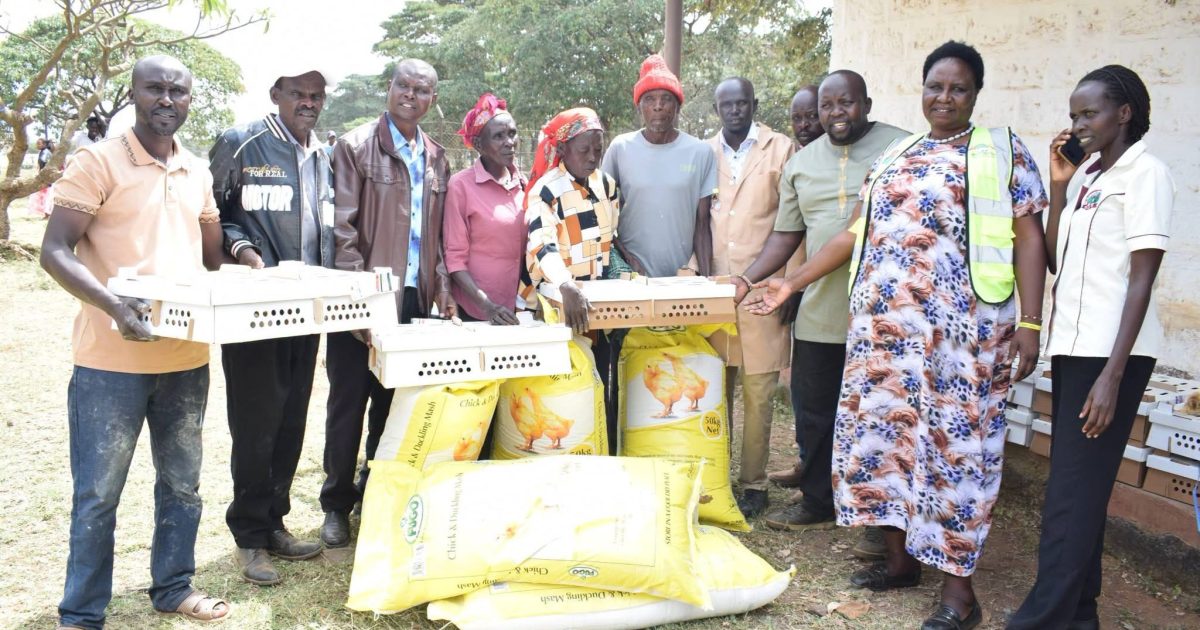
The County Government of Nakuru, in conjunction with the Kenya Livestock Commercialization Project (KELCOP), has distributed high-grade breeding chicks to community groups in Rongai Sub-County in a move aimed at boosting meat and egg production, reducing inbreeding, and enhancing household incomes.
Under the initiative, eight community groups received a total of 3,100 day-old chicks and 41 bags of poultry feed as part of efforts to promote commercial poultry farming and improve livelihoods among rural households.
Beneficiary groups included Arise and Shine Group, Amani Makongeni Self-Help Group, Terik Women Group, Salama Lomolo, Kaptera Women Group, Pandaptai Self-Help Group, Ruiyobei Women Group, and Koilitit 032, all of which are expected to utilize the support to expand poultry production, improve household incomes, and enhance food and nutrition security.
Addressing beneficiaries during the distribution exercise, Nakuru County Chief Officer for Public Service Joseph Kibusia said the initiative is aimed at empowering farmers and strengthening agricultural enterprises through targeted support programmes.
“Our goal is to ensure that farmers have access to quality breeding stock that can enhance production and strengthen the commercialization of poultry farming across the county,” said Kibusia.
The Chief Officer observed that poultry farming remains one of the most accessible agricultural enterprises for rural households, with the potential to enhance food security, improve nutrition, and generate sustainable income for families.
In Nakuru County, the Kenya Livestock Commercialization Project (KELCOP) is being implemented through key livestock value chains, including indigenous poultry production, goat and sheep farming, dairy goat development, and apiculture.
The programme is complemented by capacity building, veterinary support services, and market linkage interventions aimed at improving productivity and increasing household incomes among smallholder farmers.
It also integrates training on modern livestock management practices and provision of improved breeding stock to enhance commercialization and sustainability of livestock enterprises.
Kibusia reaffirmed the Nakuru County Government’s commitment to supporting farmers through targeted agricultural programmes aimed at boosting productivity, strengthening livestock enterprises, and improving rural livelihoods across the county.
The World Food Programme (WFP) observes that strengthening smallholder livestock systems plays a critical role in improving food security, nutrition outcomes, and household resilience, particularly among vulnerable rural communities affected by climate and economic shocks.
The International Fund for Agricultural Development (IFAD) notes that strengthening livestock production among smallholder farmers contributes significantly to rural development by increasing household incomes, improving nutrition, creating employment opportunities, and enhancing resilience to economic and climate-related shocks.
The Ministry of Agriculture and Livestock Development has been supporting the Kenya Livestock Commercialization Project (KELCOP) as part of its broader agenda to transform livestock production into a commercially viable sector, enhance food and nutrition security, and increase household incomes among smallholder farmers.
The Kenya Livestock Commercialisation Project (KELCOP), a six-year initiative running from 2021 to 2027, is jointly funded by the Government of Kenya and the International Fund for Agricultural Development (IFAD) to support smallholder farmers in improving livestock productivity, strengthening value chains, and increasing household incomes.
Beneficiaries welcomed the initiative, noting that the support will go a long way in boosting poultry production, improving household incomes, and enhancing food and nutritional security within their communities.
by Caroline Nyakio and Esther Mwangi