Nakuru County has committed to embracing digital revolution to transform health care service delivery across the devolved unit, towards enhancing efficiency and transparency within the health sector.
Governor Susan Kihika stated that her government was employing cutting edge digital systems in all its operations in the health sector to harness technology for better health management.
She said that from electronic health records to automated appointment scheduling, the County administration was successfully implementing digitized health systems that streamline patient care, record keeping on patients and availability of drug stocks in addition to overall health care management.
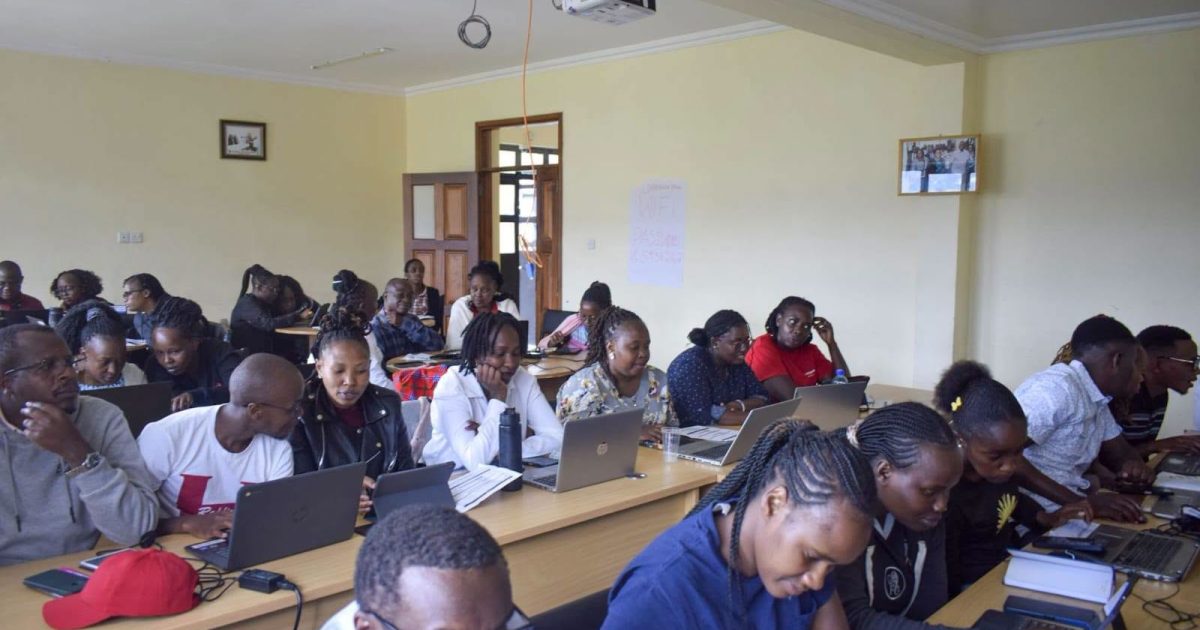
The governor made the remarks in a speech delivered on her behalf by County Executive Committee Member for Health Services Ms Roselyn Mungai during the close of a two-day training program for healthcare workers from various facilities on the Taifa Care digital health platform that focused on strengthening their capacity to effectively use the Tujenge Jamii system, powered by the Kenya Electronic Medical Records (Kenya EMR) platform.
Kihika pointed out that the Tujenge Jamii system, a paperless technology, had not only enhanced efficiency of medical practitioners but also significantly improved patient experiences.
The governor explained that the training will enhance the county government’s administration’s commitment to enhance efficiency, improve data management, and streamline service delivery across beneficiary health care facilities.
She assured that her administration will continue to advance digitization agenda and emphasized the county’s commitment to leveraging technology for improved healthcare outcomes.
The practical training equipped frontline health workers with skills in patient registration, electronic records management, data quality, reporting, and troubleshooting common system challenges.
Participants also engaged in hands-on learning sessions designed to improve confidence and accuracy in the use of digital health tools during routine service delivery.
Kihika noted that the initiative was part of ongoing efforts to strengthen health information systems and support continuity of care by ensuring patient information is accurately captured and easily accessible across facilities.
She said the County was advancing the vision of a modern, technology-driven health system that delivers efficient, patient-centered services by enhancing digital competencies among healthcare workers.
The training, she added aims to support better decision-making through quality data, helping health managers track performance, strengthen referrals, and improve healthcare outcomes for residents across the county.
The exercise included training healthcare workers to collect, analyze, and use data through standardized, unified systems that will help them make data-driven decisions about improving healthcare for patients.
The Health CECM Rosalyne Mungai indicated that real time data access empowers health officials to make informed decisions promptly leading to more efficient health care delivery in all public hospitals.
She further indicated that Nakuru County had transitioned to an electronic Community Health Information System (eCHIS) to boost community health promoters’ (CHPs’) work.
The CHPs have transitioned from analogue to digital reporting using electronic gadgets after gaining proficiency through technical training.
She stated that over 2,000 CHPs are using the gadgets to aid household registration, patient screening, treatment and referrals and help advocate primary health practices.
The Electronic Community Health Information System (eCHIS) is a national project that was launched a year ago by the Ministry of Health that comprises a SmartHealth Mobile Phone application, built on Medic’s Community Health Toolkit (CHT) platform.
By leveraging technology to its fullest potential, Ms Mungai observed that healthcare workers will be able to access real-time patient/ Community information, track health trends, and identify potential outbreaks promptly.
She observed that the analogue system was expensive for the county government, rendered data vulnerable and data could easily get lost. But with the digitized system, the official stated data entry is easy, data can be traced and is credible.
She further cited that digitization of the health system had transformed the way patient data is collected, managed, and shared, ultimately enhancing healthcare outcomes and improving patient experiences.
Two years ago, the County Government rolled out an electronic health register designed to improve collection, storage and analysis of health data, improve data accuracy, increase accountability and bolster the tracking of health trends.
With the technology patients at the grassroots level can interact remotely with healthcare providers, thus averting costs and inconveniences occasioned by travelling while also ensuring that proper records are kept.
The system dubbed ‘Medical Social Work Service Register’ also collects information that is used by the county government to formulate policy, or take action such as issuing alerts on outbreaks of the diseases, thereby improving response time.
According to the CECM the e-register complements the Kenya Health Information System (KHIS) register at the National and County level and enables physicians and healthcare administrators to easily manage appointment bookings, medical billing, and prescriptions. It also offers better guidelines on healthcare and insurance plans.
Medical Social Work Service Register is also an online database containing information on disease burden by type and location at sub-county level. Also, there are specialty-wise medical journal publications bearing extensive information on various disease burdens.
The County Government of Nakuru is also collaborating with a United Kingdom based software developer to automate medical records and revenue collection at all public health institutions within the devolved unit.
Elephant Healthcare Turnkey Solution, headquartered in London, is initially digitizing delivery of services at Bahati, Langalanga and Olenguruone Sub County Hospitals on pilot basis.
The system has been designed to capture patient records, stock inventory, payments, insurance and reporting at all healthcare service delivery points.It also allows the patient access to his or her medical records through tablet, smart phone, laptop and at cybercafés without being able to alter them whereas health practitioners are given access according to their roles in the cycle of patient care.
Elephant Healthcare Turnkey Solution has engineering and operations teams in Kenya, Pakistan and Lebanon.
The project is complementing the Department of Health Services’ efforts to automate all medical health records with the Electronic Medical Records- EMR system.
By Esther Mwangi