The State Department for Mining has launched a nationwide public participation exercise on proposed bills, policies and regulations aimed at transforming Kenya’s mining sector by attracting investment, strengthening occupational safety and environmental protection, and improving the welfare of miners and communities living near mining operations.
The proposed legislative reforms include the Draft Explosives Bill, 2026, the Minerals, Mining and Beneficiation Policy, the Explosives (Fees) Regulations and the Mine Health, Safety and Environment Regulations. The reforms are intended to modernise the country’s mining industry, strengthen governance and align the sector with emerging global standards and best practices.
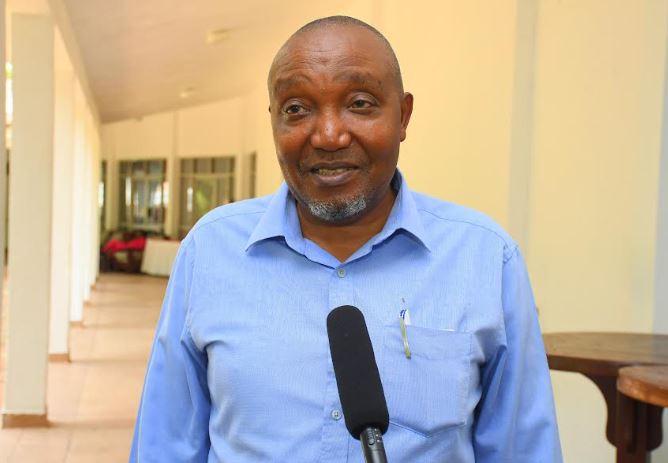
Speaking during a public participation forum in Mombasa, the Ministry of Mining, Blue Economy and Maritime Affairs Director of Licensing, Compliance and Enforcement, Gregory Kituku, said the proposed Mine Health, Safety and Environment Regulations, 2026, will replace outdated regulations made under the repealed Mining Act, Cap 306.
He said the new framework has been developed to respond to the evolving needs of the mining sector, particularly the rapid growth of Artisanal and Small-Scale Mining (ASM), while ensuring safer, more environmentally sustainable mining practices.
According to the State Department, the ASM sector currently employs an estimated 14,000 people directly and supports the livelihoods of more than 800,000 Kenyans through mining-related economic activities.
Despite its contribution to livelihoods, the largely informal sector continues to face significant health, safety and environmental challenges, with frequent accidents exposing miners to occupational hazards that have resulted in injuries and fatalities.
Kituku said the proposed regulations seek to safeguard the health, safety and welfare of all persons working in mines, as well as anyone accessing mining sites. They also provide measures to ensure that exploration, prospecting and mining activities are undertaken safely, responsibly and in accordance with acceptable environmental standards.
He noted that the regulations further protect neighbouring communities from health and environmental risks associated with mining operations while strengthening the monitoring of occupational safety, environmental management and compliance across the industry.
“These regulations we are doing are geared towards enhancing the safety of the workers and operators of the large-scale mines, the small-scale mines and artisanal miners,” said Kituku.
He expressed confidence that the proposed legal framework would significantly reduce accidents and improve compliance once implemented.

The director said the regulations introduce a new chapter on mine rehabilitation, including the creation of a rehabilitation licence that did not previously exist. The new requirement will ensure mining sites are restored after exploration and extraction activities are completed, reducing long-term environmental degradation.
Kituku said the Draft Explosives Bill, 2026, seeks to repeal the existing Explosives Act, Cap 115, which has been in force for more than a century and no longer adequately addresses current technological and operational realities in the management of commercial explosives.
The proposed law provides for the establishment of the Directorate of Commercial Explosives and Inspections to regulate, supervise and monitor the manufacture, storage, transportation, sale and use of commercial explosives across the country.
He said the Bill also introduces modern approaches to investigating complaints relating to blasting activities, including claims of property damage caused by explosives, while establishing clearer procedures for assessing and resolving such disputes.
The proposed legislation further introduces revised licence fees for explosives, with Kituku noting that the existing charges are outdated and no longer reflect the actual cost of regulation and service delivery.
The Director said the government is also reviewing the current Mineral Policy to make it beneficiation-focused and align it with Africa Agenda 2063, the Africa Mining Vision and the Africa Green Minerals Strategy.
He explained that the Minerals, Mining and Beneficiation Policy seeks to promote value addition through downstream mineral processing, enhance technology transfer, create employment opportunities and increase the mining sector’s contribution to Kenya’s Gross Domestic Product from the current one per cent to 10 per cent by 2030.
“We also want technology transfer for mineral beneficiation to benefit Kenya and create more employment opportunities in the mineral beneficiation sector,” he said.
Participants at the public engagement welcomed the reforms, saying they address long-standing gaps in mining regulation while balancing economic growth with environmental conservation and public safety.
Kwale resident James Mukipombua said the proposed Mine Health, Safety and Environment Regulations would strengthen protection for workers, surrounding communities and future generations by promoting responsible mining practices and safeguarding water resources, land and the environment.
He said the proposed regulations would also require employers to provide appropriate personal protective equipment for workers, reducing occupational health risks and improving safety standards across the mining industry.
By Sadik Hassan