Preparations for the establishment of the Busia Jumuiya Cross-Border Market are at an advanced stage, with the national government expressing confidence that the facility will transform Busia into a regional commercial hub and enhance cross-border trade within the East African Community (EAC).
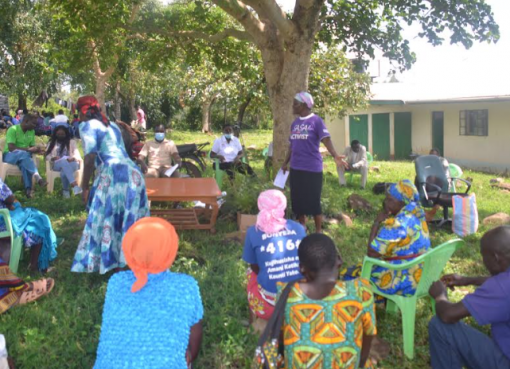
The announcement was made during a sensitization forum for cross-border traders on the East African Community trade regime held in Busia on Wednesday.
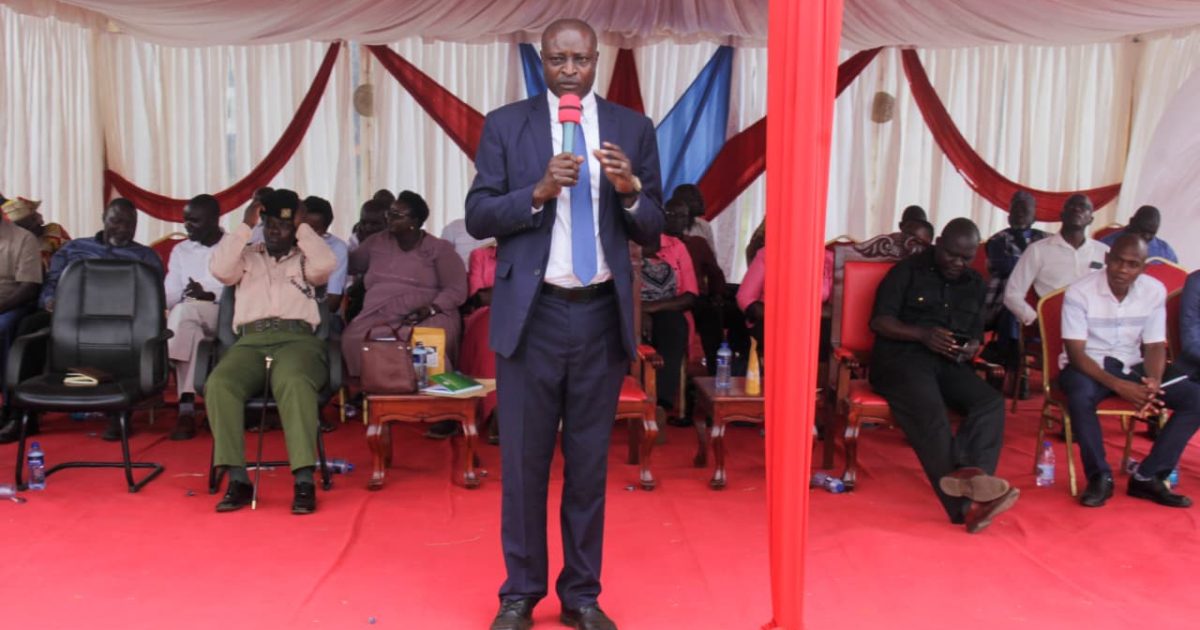
In a speech read on behalf of the Principal Secretary for East African Community Affairs Dr. Carolyne Karugu, by the director in the State Department for EAC, Mr. Musa Okwemba, the PS underscored that the government was implementing a directive to establish Jumuiya markets along Kenya’s border points to facilitate trade among EAC member states.
“I am pleased to note that preparations for the commencement of the Busia Jumuiya Cross-Border Market are at an advanced stage. This project will significantly transform Busia into a regional commercial hub. The Busia Jumuiya Market will be the pilot centre. These markets will support MSMEs to undertake cross-border trade in modern and well-equipped facilities,” the statement read.
The PS said the government was also strengthening regional integration by establishing regional integration centers at major border posts and deploying regional integration officers to facilitate implementation of EAC commitments.
“The deployed officers are assisting in coordinating implementation of EAC commitments, facilitating resolution of cross-border trade challenges, improving inter-agency coordination, and ensuring businesses benefit fully from regional integration,” she said.
Dr. Karugu further highlighted several trade facilitation instruments developed by the EAC to ease cross-border business for traders.
Among them are the EAC Simplified Guide for Micro, Small and Medium Enterprises (MSMEs), which provides practical information on import and export procedures, customs requirements, duties and taxes, border procedures, and available support services.
She also cited the EAC Simplified Trade Regime (STR), the annual EAC MSMEs Trade Fair, One Stop Border Posts (OSBPs), and ongoing efforts to eliminate non-tariff trade barriers across the region.
Busia County Executive Committee Member for Trade, Olekachuna Omuse, welcomed the sensitization forum, saying it would help traders better understand the opportunities available under the simplified trade regime while encouraging the use of official border crossing points.
“We need to reduce the porous borders by enabling our traders to understand the Simplified Trade Regime, which will encourage them to embrace official crossing points rather than porous borders. This will be achieved through capacity building. There is also a need to establish an information centre at the border so that all traders receive the same information, reducing misinformation that often causes unnecessary suffering while conducting business in neighbouring countries,” he said.
Omuse also highlighted ongoing investments aimed at promoting value addition and expanding trade in Busia County.
“We are among the 12 counties selected to host an Export Processing Zone and the County Aggregation and Industrial Park (CAIP). These projects will promote consumption of locally produced goods through value addition. The projects are about 90 per cent complete through investments by both the county and national governments. We need our traders to prepare themselves so they can benefit from government funding and opportunities in value addition,” he added.
Despite welcoming the government’s initiatives, traders used the forum to raise concerns over challenges that continue to affect cross-border trade.
Kenya International Freight and Warehousing Association (KIFWA) Busia Liaison Office Secretary General Peter Ojera said inadequate infrastructure and congestion at the Busia One Stop Border Post have increased the cost of doing business.
“The OSBP holding area can only accommodate 40 trucks at a time despite having been operational for 10 years. We need expansion of the facility. The Northern Corridor road between Kisumu and Busia is in poor condition, making transport difficult and increasing the cost of doing business,” he said.
Ojera also criticized what he termed illegal county charges, numerous unauthorized checkpoints, and unpredictable taxation.
“We have many ungazetted checkpoints along our trade routes and we want them eliminated. We are also experiencing unpredictable tax patterns, including increased excise duty, the introduction of marine cargo insurance, and a NEMA levy of Sh150 per package. Such charges undermine regional integration and may encourage other EAC member states to introduce similar levies,” he said.
Long-distance truck drivers also appealed to the government to improve security along the Northern Corridor.
Speaking on behalf of truck drivers at the Malaba border point, Abel Namenge called for the reinstatement of the Northern Corridor Police Unit, saying drivers and cargo remain vulnerable to attacks.
“We have witnessed attacks on our trucks as officers watch because it is not within their mandate. Our drivers have been assaulted and even killed by members of the public and security officers in neighboring countries. We are calling for the reinstatement of the Northern Corridor Police so they can provide security for our trucks, drivers, and cargo,” he said.
Namenge further urged EAC partner States to protect transporters and traders operating across borders.
“We request, in the spirit of the East African Community, that all member states treat each other equally. They should respect citizens doing business across borders and stop the killing, harassment, assault and extortion of our members,” he added.
Fish traders and hotel operators also complained about the growing number of unlicensed mobile food vendors operating around the border, saying the practice has significantly reduced their customer base.
“We are licensed to operate our businesses at designated locations, yet many people are selling food through mobile hotels without licenses. This denies us customers. We also have people hawking fish while we are required to remain at our stalls, leading to huge losses,” the traders said.
By Salome Alwanda/Rodgers Omondi