The National Treasury has launched the Financial Year 2027/28 Budget and Medium-Term Expenditure Framework (MTEF) preparation process, with the government committing to prudent fiscal management, wider public participation and targeted spending to sustain economic growth amid global economic uncertainties.
The launch marks the beginning of sector consultations that will inform the formulation of the FY2027/28 Budget, which the government expects will strengthen fiscal sustainability while supporting long-term economic growth and national development.
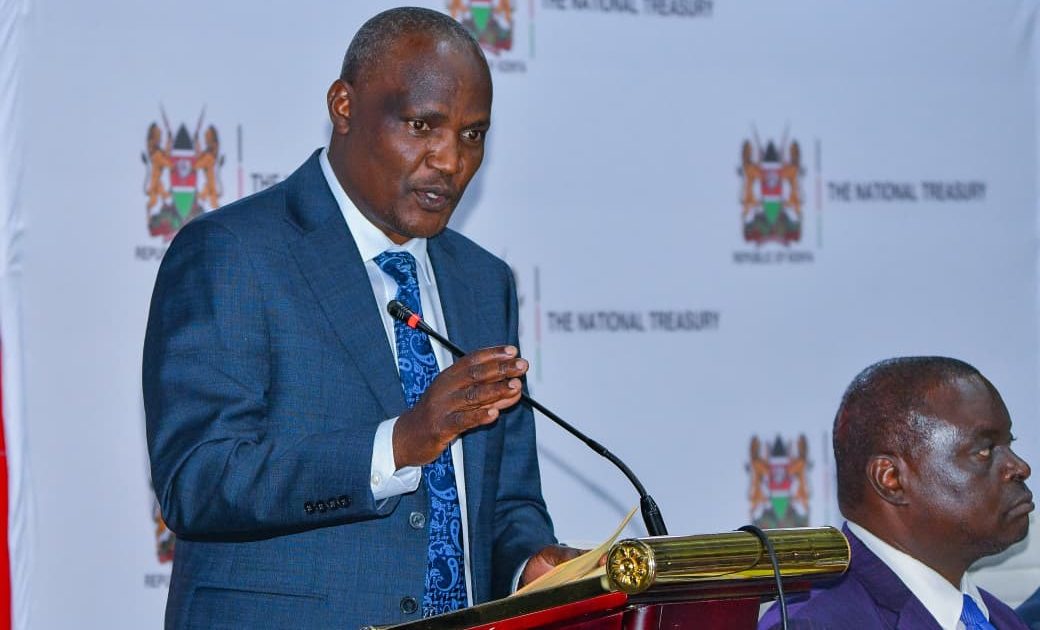
Speaking during the launch at the Kenyatta International Convention Centre (KICC) in Nairobi, Cabinet Secretary (CS) for the National Treasury and Economic Planning, John Mbadi, noted that the process had commenced ahead of the statutory timelines to provide sufficient time for stakeholder consultations, public participation and parliamentary scrutiny before the 2027 General Election.
Mbadi highlighted that the budget will be anchored on Kenya Vision 2030, the Fourth Medium-Term Plan (MTP IV) and the Bottom-Up Economic Transformation Agenda (BETA), with priority accorded to programmes that create jobs, improve livelihoods and promote fiscal sustainability.
“As we undertake this new budgeting cycle, our collective duty is to ensure scarce public resources are allocated and applied in ways that maximize economic returns, deepen inclusion, boost productivity and sustain fiscal stability for the benefit of all,” affirmed the CS.
Further, he outlined agriculture, affordable housing, universal healthcare, Micro, Small and Medium Enterprises (MSMEs) and the digital superhighway as the government’s key spending priorities, adding that the Treasury is targeting a reduction of the budget deficit to 3.2 percent of Gross Domestic Product (GDP) by the 2029/30 financial year.
Equally, Mbadi urged ministries, departments and agencies to eliminate non-essential expenditure, embrace zero-based budgeting and prioritise programmes that deliver measurable economic and social returns.
He also announced reforms to strengthen public financial management through electronic government procurement, digitization of pension administration, operationalisation of the National Infrastructure Fund and enhanced use of technology to improve tax compliance without introducing new tax measures.
“We believe that with what we have now, we can collect more if everyone is paying. The burden of taxation is currently borne by a few Kenyans. We would like everyone to bear that burden so that it becomes lighter for all of us,” he acknowledged.
The CS further announced that the Treasury will hold nationwide public participation forums on tax proposals and budget implementation to strengthen transparency and accountability in public finance management.
Principal Secretary for the National Treasury, Dr. Chris Kiptoo, maintained that Kenya’s economy has remained resilient despite geopolitical tensions, supply chain disruptions and rising energy prices that have disrupted global markets.
Dr. Kiptoo noted that the conflict in the Middle East had forced the government to revise its 2026 economic growth projection from 5.3 percent to 5.0 percent following disruptions in global trade, higher fuel prices and inflationary pressures.
“Kenya remains one of the fastest-growing economies in the world and in the region because of its diversified economy, which enables it to recover quickly from external shocks,” he reaffirmed.
The PS reported that inflation rose from 4.4 percent in March to 6.7 percent in May before easing to 6.4 percent in June. To cushion consumers, the government temporarily reduced Value Added Tax (VAT) on petroleum products from 16 percent to 8 percent.
He also mentioned that lower interest rates had boosted private sector lending, while record-high foreign exchange reserves had strengthened the country’s capacity to absorb external shocks. Investor confidence had also improved significantly, with the Nairobi Securities Exchange ranking among the world’s top-performing stock markets and market capitalization rising to Sh3.9 trillion.
On public finances, Dr. Kiptoo disclosed that revenue collection fell short of target by about Sh90 billion during the 2025/26 financial year, although the fiscal deficit stood at 6.7 percent of GDP, below the projected 7.3 percent.
Therefore, he cautioned that rising debt servicing costs continue to constrain development spending, with more than half of ordinary government revenue allocated to debt repayment and pensions.
To strengthen domestic revenue mobilization, Dr. Kiptoo echoed that the government will broaden the tax base, reduce tax exemptions, enhance digital tax administration and fully implement electronic procurement to improve efficiency, accountability and value for money in public expenditure.
On his part, the Principal Secretary for Economic Planning, Dr. Boniface Makokha, described the FY2027/28 budget as the final full-year budget under the Fourth Medium-Term Plan, making it critical in consolidating gains achieved under the BETA agenda.
He urged ministries, departments and agencies to align budget proposals with national priorities by focusing on programmes that create jobs, lower the cost of living, raise household incomes and improve service delivery.
Meanwhile, the Chairperson of the National Assembly Budget and Appropriations Committee, Samuel Atandi, called for realistic budgeting based on available resources and urged accounting officers to submit well-supported budget proposals to Parliament.
He also challenged ministries to embrace zero-based budgeting, eliminate duplication of projects and prioritise investments that stimulate private sector growth, strengthen exports and improve livelihoods.
By Nancy Omondi and Paskal Osonga