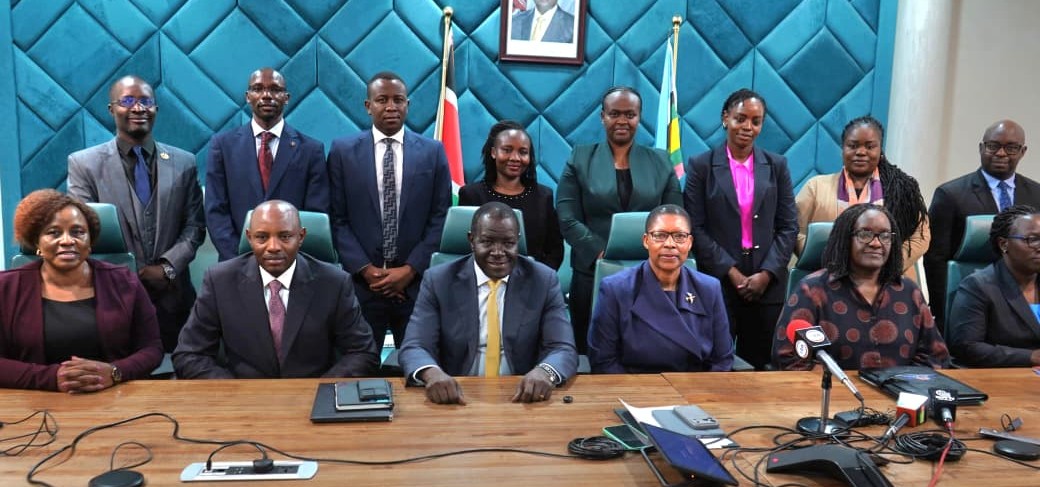
The government has established a multi-sectoral committee to review obsolete laws and statutory frameworks that have been rendered unconstitutional and inconsistent with the provisions Constitution of Kenya 2010.
The committee, chaired by Kenya Law Reform Commission (KLRC) Chairperson, Christine Agimba, will review and evaluate statutes and subsidiary legislation inconsistent with rulings by courts of competent jurisdiction.
Speaking during the committee’s inauguration in Nairobi on Wednesday, Attorney General, Dorcas Oduor, said the team will undertake a comprehensive review focusing on four key areas, including examining judicial decisions, assessing unconstitutional statutory provisions, identifying obsolete laws for repeal and recommending measures to address legislative gaps.
Oduor added that the committee will also analyze structural and policy gaps that have emerged following constitutional, judicial and institutional developments and propose legislative, policy and administrative interventions, including amendments, repeals, consolidation or enactment of new laws.
“This committee is not just another administrative task force. It is envisioned as a seminal inter-institutional engine room designed to modernize Kenya’s legal architecture, protect constitutionalism and ensure our laws serve the contemporary public interest,” she said.
The attorney general noted that although courts have declared several statutory provisions unconstitutional, many remain in the country’s statute books because the necessary legislative amendments have not been undertaken.
“We are gathered here to address a persistent governance gap in our legal system. That gap is the presence of statutes and statutory provisions that have been invalidated by courts but remain unamended, unrepealed or unaligned,” she said.
Oduor explained that once a law or part of it is declared unconstitutional by the High Court, Court of Appeal or Supreme Court, it becomes void to the extent of the inconsistency.
However, she said, court decisions do not automatically remove the affected provisions from the written laws.
She warned that the continued existence of such provisions has created legal uncertainty, hindered government operations, exposed the State to costly constitutional litigation and delayed the delivery of justice.
According to the AG, the review will help align Kenya’s laws with the Constitution, reduce unnecessary litigation, safeguard public resources and create a more predictable legal framework.
KLRC Chairperson Christine Agimba said the commission had identified about 64 court decisions delivered between 2014 and 2024 that declared various statutory provisions unconstitutional.
She noted that the decisions mainly relate to violations of constitutional principles, including public participation, equality and non-discrimination, political rights, fair administrative action, fair trial rights, children’s rights, separation of powers and institutional independence.
Agimba further revealed that the commission’s preliminary analysis had identified 42 statutes that may have become obsolete but remain in force.
She said the laws include those superseded by the Constitution or later legislation, statutes establishing institutions that no longer exist, and laws relating to historical loans, guarantees and obligations that have since been spent.
The committee has invited members of the public to submit proposals on laws they believe are obsolete or redundant.
Agimba said once the review is completed, the committee’s report will be subjected to public participation before being submitted to Parliament for consideration.
By Douglas Namunane and Wangari Ndirangu