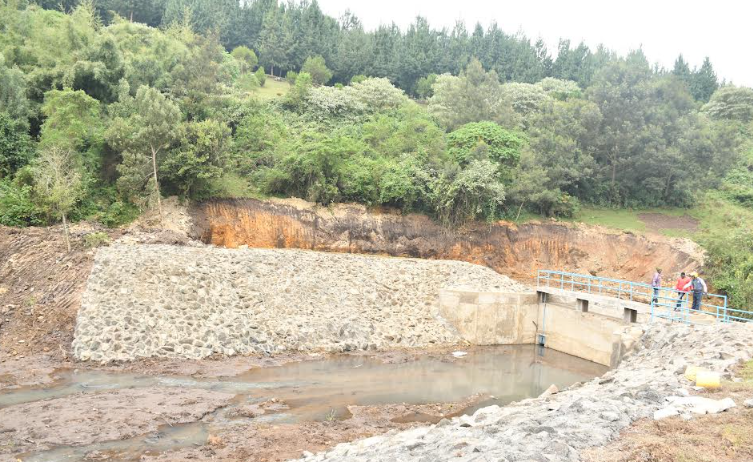
The Great Escarpment Belt Irrigation Project in Kinale Forest, Lari Subcounty, is complete, with only some piping work remaining before the scheme is fully completed.
The irrigation scheme will draw water from the permanent Gatamaiyu River through a weir and intake chamber that form part of the water abstraction system.
Implemented by the State Department for Irrigation at a cost of Sh 316 million, the scheme is designed as a gravity-fed pipe sprinkler system covering about 500 acres and supporting approximately 500 farmers.
Water diverted through the intake chamber will flow into a network of distribution pipes serving farms across the escarpment belt.
Although the intake structure appears relatively small, it is not a storage dam. The weir is designed to hold and direct water into the intake chamber, from where it will be conveyed through the pipeline network to the targeted farming areas.
The distribution system is expected to serve Kijabe, Machani, Mbau-ini, Korio, Kabunge, Escarpment, and Gitithia.
More than 10,000 families in these areas are expected to benefit from improved access to irrigation water, particularly during dry seasons when water shortages affect farming activities.
The importance of maintaining a reliable water source was highlighted by Paul Gichaga, a forester at Kinale Forest. Speaking to the Kenya News Agency, Gichaga said the Gatamaiyu River has a reliable flow throughout the year.
“The intake has been designed in a way that allows water to be diverted for irrigation while the river continues flowing downstream, which is important for both the surrounding forest ecosystem and the communities that depend on the river,” he said.
Gichaga added that the scheme would help farmers access water during dry periods while maintaining the ecological value of Kinale Forest.
For farmers living along the escarpment belt, reliable irrigation remains a key concern during periods of low rainfall.
“We have struggled with water shortages for many years, especially during the dry season. With this project, we expect to grow crops more consistently and reduce the losses that farmers experience when the rains fail,” said Peter Kung’u, a resident of the area.
Kung’u said many farmers have relied heavily on rainfall, making crop production difficult when dry conditions persist for extended periods.
Once the remaining piping work is completed, the Irrigation Scheme is expected to provide a more reliable source of water for food crop and vegetable production in the escarpment belt and help reduce crop losses associated with prolonged dry spells.
By Annrita Mutembei and Grace Naishoo