Cobblers in Chuka Town have expressed concern over the future of the shoe repair business, saying the trade is slowly disappearing as fewer young people show interest in learning the skill despite its ability to provide a reliable source of income.
The artisans say shoe repair has sustained their families for decades by enabling them to educate their children, repay loans and meet household needs.
However, with most practitioners now over 50 years old, they fear the profession could gradually disappear if the younger generation fails to embrace it.
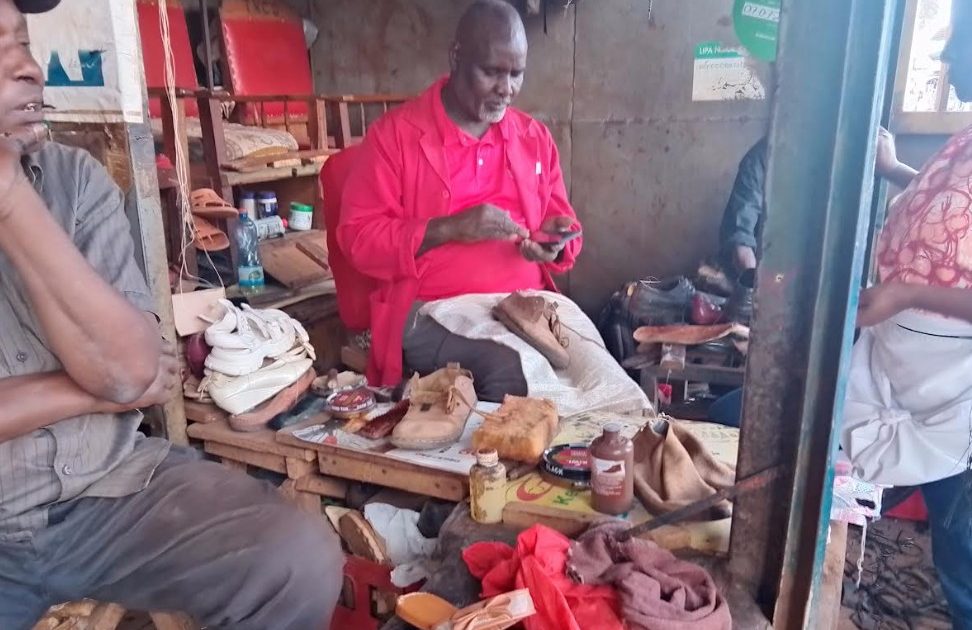
Jack Gitonga, a cobbler operating near the new Boma Yangu Chuka housing development project, said he has witnessed major changes in the trade over the years.
He recalled working at the former Chuka Open Air Market before it was demolished to pave the way for the construction of the modern market, forcing traders to relocate.
“We used to operate from the old open-air market stalls before they were demolished to pave the way for the modern market. Every trader had to look for another place to work.
While we appreciate the national government’s construction of the new Chuka Modern Market, he added, “Many of us are still trying to secure stable business locations.”
Gitonga noted that the cost of repair materials has nearly doubled, forcing cobblers to increase their charges.
“Rubber that used to cost about Sh100 now costs around Sh200. We have had to adjust our repair charges, but some customers do not understand the reason,” he said.
He also observed that changing consumer habits have affected the business, with many people opting to buy new shoes instead of repairing old ones.
“Many people prefer buying new shoes today, yet the older ones were more durable and worth repairing. That is why many customers still bring them to us,” he added.
Despite the challenges, Gitonga said the trade has enabled him to educate his children and provide for his family, describing the shoe repair business as a dignified and dependable source of livelihood.
Another cobbler, Alfred Murithi, who has been in the business for 20 years, said the trade has enabled him to educate his children, feed his family and repay loans.
Besides repairing torn footwear, Murithi replaces worn-out soles and polishes shoes to restore their appearance.
“I have been repairing shoes for 20 years, and this business has enabled me to educate my children, feed my family and even repay loans,” he said.
He identified unclaimed shoes and customers who fail to pay after repairs as some of the major challenges facing cobblers.
He explained that footwear left uncollected for extended periods is eventually handed over to county enforcement officers for disposal, and owners who return later are informed that the items were disposed of after remaining unclaimed.
Murithi appealed to young people to embrace the trade, noting that most cobblers in Chuka are above the age of 50.
“Young people should not fear this trade. Most of us working here are over 50 years old, yet it remains a reliable source of income for anyone willing to learn the skill,” he said.
The artisans encouraged young people to enrol in technical and vocational training institutions, including Chuka Technical and Vocational College, to acquire practical skills that can help them become self-employed.
They said success is not determined solely by academic qualifications but also by practical skills that generate sustainable income.
“If more young people learn this trade, they will create employment for themselves while ensuring this important service continues to benefit the community,” they said.
By Dickson Mwiti and Cynthia Mwende