The Uasin Gishu County Department of Livestock has intensified surveillance and vaccination campaigns to contain a resurgence of black water anthrax and an outbreak of lumpy skin disease as prolonged drought continues to expose livestock to disease and feed shortages.
Director of Veterinary Services Dr. Philip Biama said all six sub-counties and 30 wards, with a livestock population of more than 450,000 animals, are at risk as deteriorating pasture and water availability increase the spread of diseases.
Speaking during an interview with KNA, Dr. Biama said black water anthrax, a disease that can remain dormant in the soil for decades, has resurfaced after prolonged dry conditions left grazing fields bare.
“There is a disease that has emerged that wasn’t rampant called Black Water Anthrax, which always stays up to 60 years when inactive. But now that the grass has dried up and animals feed until the ground is almost bare, it has activated,” he said.
He explained that under normal conditions, thick grass cover prevents animals from coming into contact with dormant disease spores. However, the current drought has forced livestock to graze close to the ground, increasing exposure to the bacteria.
“The grass is usually tall and plentiful, but now it is short and scarce, and animals have grazed until the ground is bare,” he added.
Dr. Biama said the county is also battling lumpy skin disease, which has persisted for nearly two months and continues to affect cattle production.
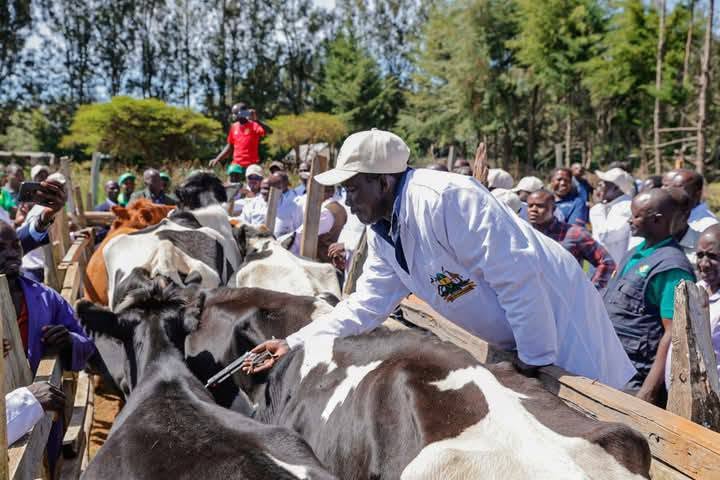
To curb its spread, the county has deployed veterinary officers to all wards to vaccinate livestock. More than 100,000 cattle have already been vaccinated against a target of 350,000.
He attributed the rapid spread of the disease to overcrowding at grazing fields and watering points caused by acute shortages of pasture and water.
“The drought has resulted in severe shortages of animal feed. Even farmers who practised zero grazing are now forced to release their animals into communal grazing fields, leading to overcrowding and faster transmission of diseases,” he said.
Dr. Biama noted that the current situation contrasts sharply with 2025, when adequate rainfall ensured abundant pasture and water. This year, dried-up grazing fields and boreholes have forced farmers to trek long distances in search of water from rivers and streams.
He said the drought has already affected farmers’ livelihoods through declining milk production, reducing household incomes for many families that depend on dairy farming.
The veterinary director urged livestock keepers not to lose hope despite the harsh conditions, but instead report suspected disease outbreaks promptly to veterinary officers or ward administrators to facilitate timely treatment and vaccination.
Director of Livestock Production Abraham Kiptanui warned that the effects of the drought could extend well beyond the current season if rainfall remains below normal.
He said even farmers who had adopted climate-smart practices such as fodder production and silage making were facing challenges because maize crops had failed to produce sufficient cobs required for quality silage.
“This will affect dairy and beef production next year, and the prices of milk and beef are likely to increase because of reduced supply,” Kiptanui said.
He noted that livestock farmers are now grappling with the high cost of commercial feeds, while those with large herds may be forced to sell part of their stock to reduce feeding costs.
Kiptanui advised farmers to invest in long-term fodder conservation, saying households with adequate feed reserves are better placed to withstand prolonged dry spells than those relying solely on natural pasture.
By Shaline Jeruto