The International Livestock Research Institute (ILRI) and the Financial Inclusion for Youth and Micro, Small and Medium Enterprises in Agriculture (FIYMA) have teamed up with the County Government of Nakuru to enhance smallholder farmers’ uptake of technology as a means to enhance productivity and overcome the challenges posed by climate shocks.
County Chief Officer for Livestock, Dr. Michael Cheruiyot, while emphasizing the pivotal role of innovation in bolstering farming practices, improving household incomes and increasing harvest yields, announced that ILRI and FIYMA had already been officially integrated in the County Agriculture Sector Steering Committee (CASSCOM) to help facilitate the technology transfer.
The Chief Officer regretted that climatic shocks had continued to increase locally and globally adding that the only way to manage it was through learning and adapting to new technology.
While reiterating the significance of technology in driving agricultural growth, citing its potential to up farmer incomes and foster business opportunities, Dr Cheruiyot underscored the need for global innovative agricultural solutions, particularly in the face of population growth, climate change, and environmental challenges.
Research and innovation, he added were crucial for boosting agricultural production by introducing new technologies, improving farming practices, and enhancing resilience to climate change.
He cited Digital technologies, such as precision farming and market information systems, which he said empower farmers with data-driven insights and access to vital resources, ultimately leading to increased yields and improved livelihoods.
The Chief Officer indicated that Governor Susan Kihika’s administration was strengthening partnerships, expanding inclusive agricultural financing and promoting climate-smart farming to boost food production, improve household incomes and enhance food security without increasing the acreage under cultivation.
According to the chief officer, the strategy seeks to maximize productivity through innovation, modern technologies and collaboration while ensuring women, youth and persons with disabilities (PWDs) play a central role in the county’s agricultural transformation.
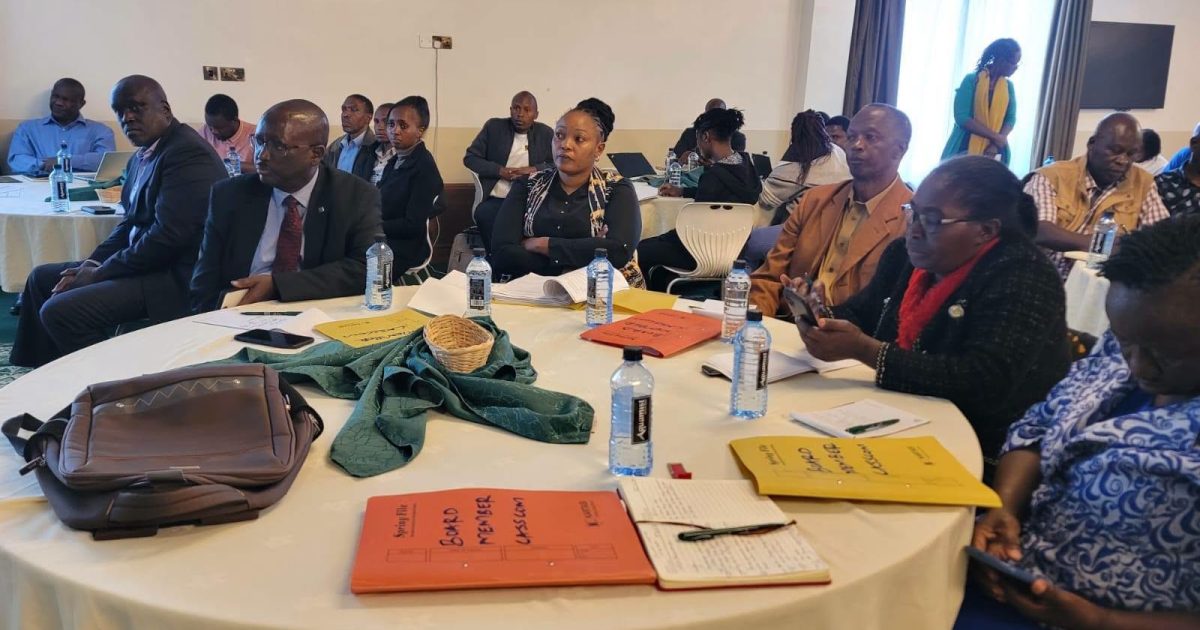
The official was speaking at a Nakuru hotel during the County Agriculture Sector Steering Committee (CASSCOM) meeting, where stakeholders reviewed strategies for accelerating agricultural growth through coordinated action.
The forum brought together government agencies, research institutions, development partners and farmer organizations to explore practical solutions for increasing productivity, building resilience and creating sustainable livelihoods for farming communities across the devolved unit.
Dr Cheruiyot expressed confidence that ILRI’s and FIYMA’s expertise, research capacity and strategic partnerships are expected to enhance innovation, strengthen agricultural extension services and expand farmer support programmes across all the eleven sub-counties.
FIYMA is a five-year (2025–2030) Mastercard Foundation-backed initiative targeting 28 Kenyan counties. Implemented by a consortium led by the Micro Enterprise Support Programme Trust (MESPT), the program aims to create 250,000 work opportunities for 100,000 disadvantaged youth, focusing on women, people with disabilities, and refugees.
The facilitates access to affordable credit and training through local cooperatives, targeting sectors including dairy, livestock, fisheries, potato, pulses, and horticulture.
Dr Cheruiyot said the partnership aims to contribute to Kenya’s development agenda by promoting research-led innovations and technologies that directly impact communities and enhance agricultural value chains.
“We already know that agricultural technologies can play a key role in transforming food systems, but for a long time, there have been few platforms that dedicate exclusive time and resources. The partnership provides the much-needed platform for sharing knowledge and experiences on the most effective approaches to scaling up the best of science and technology innovations in agriculture,” stated the Chief Officer.
Besides driving agribusiness and overcoming the challenges posed by climate shocks, Dr. Cheruiyot noted that incorporating technology in agribusiness would help overcome barriers to entry in marketing and value addition, as well as deliver efficient, transparent, and last-mile extension services at scale. He stated that embracing modern-day farming methods will make Kenya food secure.
Dr. Cheruiyot said the solution to challenges facing agriculture, ranging from shrinking land size as a result of population explosion, poor yields, and food insecurity, lay in the adoption of modern farming trends.
He said there was a global need for innovative agricultural solutions, particularly in the face of population growth, climate change, and environmental challenges adding that there were emerging technologies in the agricultural sector all over the world, and part of the discussion was to make sure that Kenya is not left behind in those discussions.
Chief Officer for Agriculture, Engineer Margaret Kinyanjui, affirmed that the county government will continue to prioritize research, innovation, and strategic partnerships in driving agricultural transformation and economic growth across all its 55 wards.
Engineer Kinyanjui urged farmers and the youth to embrace climate-smart farming and emerging technologies to unlock new opportunities in the sector.
Agriculture is changing. Innovation, technology and value addition are key to increasing productivity and creating jobs, especially for our young people,” said the Chief Officer.
Engineer Kinyanjui noted that sustained partnerships would be critical in equipping farmers with the skills, technologies and financial support required to improve productivity and build resilient farming enterprises.
Chief Officer for Cooperatives Mr. Kibet Kurgat said the Government and its development partners had avenues to assist farmers but lack of proper structures delayed such processes.
“Most farmers in crop and dairy sectors are in production as individuals, which makes it hard for them to tap maximum market potential. The Government best assists farmers in organised groups,” said Mr Kurgat
And to retain their status as agents of economic empowerment, Mr. Kurgat advised cooperatives’ leaderships to embrace transformative practices by exploiting various openings like the latest technology and product development to enhance capital buildup to maintain their position at the helm of the game.
He said SACCOs and cooperatives were an integral part for any person to achieve their development goals.
Mr Kurgat said that the county remains focused on building an inclusive and competitive agricultural sector that empowers marginalized groups while improving livelihoods and strengthening Nakuru’s contribution to national food production.
The meeting also explored ways of broadening access to affordable financing to enable more women, youth and PWDs to invest in agriculture and agribusiness.
The deliberations emphasized the need to strengthen value chains, improve access to quality inputs, encourage adoption of modern farming technologies and promote sustainable production practices that increase yields while making efficient use of existing farmland instead of opening up new cultivation areas.
Participants further underscored the importance of knowledge sharing, research-driven innovations and stronger institutional collaboration in addressing emerging challenges such as climate change, declining soil fertility and market access.
By Esther Mwangi and Jephther Afuya