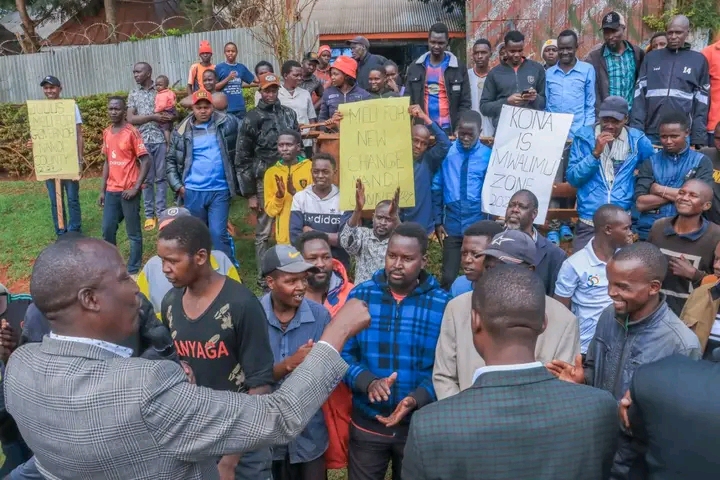
The citizenry has called on political players to focus on policies that would improve the lives of ordinary Kenyans rather than endless exchanges of insults, propaganda, and personal attacks.
Residents of Tinderet Sub-county in Nandi County say they expect politicians to articulate practical solutions to the country’s economic and social challenges, instead of engaging in divisive rhetoric that offers little value to voters.
Businessman Peter Kimutai said leadership should be judged by ideas and development plans rather than the ability to ridicule political opponents.
“We want leaders who can explain how they will create jobs, improve infrastructure, lower the cost of living, and support businesses. Campaigns should be about presenting workable policies instead of trading barbs,” he said.
Teacher Mercy Chebet observed that education, healthcare, and employment should dominate political campaigns because they directly affect the lives of millions of Kenyans.
“We expect leaders to explain how they intend to improve learning institutions, employ more teachers, strengthen hospitals, and create opportunities for young people. These are the issues that deserve public debate,” she said.
Farmer John Kiprono noted that agriculture remains the backbone of the rural economy, yet discussions on improving production and marketing are often overshadowed by political confrontations.
“Farmers need affordable fertilizer, better extension services, reliable markets, and improved rural roads. Politicians should tell us how they will address these challenges instead of attacking one another,” he said.
Youth leader Faith Jelagat urged political parties to formulate programs that address unemployment, innovation, and entrepreneurship.
“The youth want opportunities, not political hostility. Leaders should explain how they will support digital jobs, technical training, access to affordable credit, and business development,” she said.
Political analyst David Kimaiyo said issue-based campaigns enable voters to compare candidates objectively and make informed choices.
“When political competition revolves around policies and manifestos, democracy becomes stronger because voters can evaluate leaders based on measurable commitments instead of emotional rhetoric,” he said.
He added that focusing on policies also enhances accountability since elected leaders can later be assessed against the promises they made during campaigns.
Civil society representative Mary Atieno called on politicians to exercise restraint in their public statements and promote peaceful coexistence.
“Kenya has made considerable progress in strengthening democracy. Leaders should safeguard that progress by embracing respectful dialogue and avoiding propaganda that may polarize communities,” she said.
Religious leader Rev. Joseph Kiplagat, said political leadership should inspire hope and national unity.
“Leaders have a responsibility to unite citizens around common development goals. Campaign platforms should provide solutions to poverty, unemployment, healthcare, food security, and education instead of promoting hatred and misinformation,” he said.
College student Sharon Njeri said the younger generation is increasingly interested in evidence-based leadership.
“Many young voters research candidates before making decisions. They want realistic policies backed by facts rather than slogans or propaganda,” she said.
Governance expert Henry Mutai said mature democracies are characterized by robust debates on public policy, economic growth, fiscal responsibility, environmental conservation, and institutional reforms.
“Our political culture should evolve towards constructive discussions where candidates explain how they will finance development programs, improve public services, and strengthen governance institutions,” he said.
Residents further urged political parties to organize public policy debates and civic forums where aspirants can present their manifestos and respond to questions from voters.
They argued that such engagements would improve public understanding of competing policy proposals while reducing tensions associated with personality-based politics.
As preparations for the next electoral cycle gather pace, wananchi maintain that leaders who focus on practical solutions, integrity, and inclusive development are more likely to earn public confidence than those who rely on propaganda, personal attacks, and divisive political rhetoric.
By Sammy Mwibanda