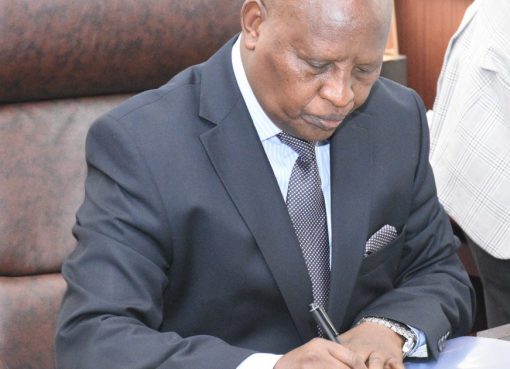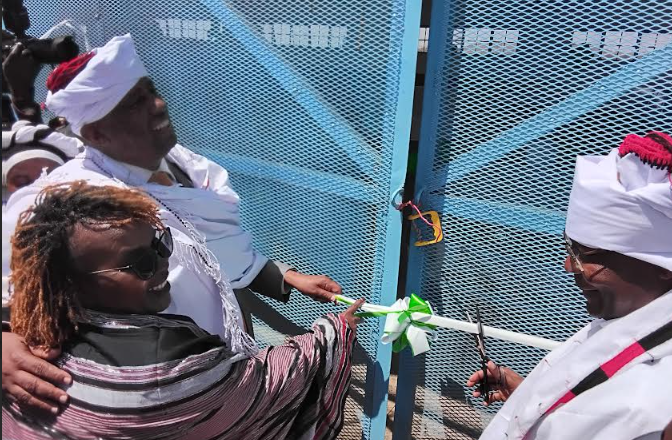
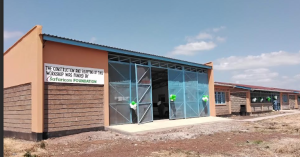
The County Government of Marsabit, in partnership with the Safaricom Foundation, has commissioned three fully equipped vocational training workshops at Saku Vocational Training Centre.
The Sh20 million initiative, marks a significant investment in technical and vocational education, aimed at equipping young people with marketable skills.
The newly inaugurated facilities comprise a Welding and Fabrication Workshop, a Motor Vehicle Mechanics Workshop, and a Catering and Hospitality Training Unit.
Each has been fitted with modern equipment to provide trainees with practical, industry-relevant skills that enhance their employability and entrepreneurial potential.
Speaking during the commissioning ceremony, Marsabit Governor, Mohamud Ali, said the investment reflects the County’s commitment to empowering youth with quality education and skills development.
He noted that the County government has consistently prioritised education by offering scholarships to deserving students and making training in County vocational institutions free, ensuring that financial constraints do not prevent young people from acquiring technical skills.
“Education and skills are the foundation of economic growth. By investing in vocational training, we are preparing our youth, not only for employment, but also for entrepreneurship and self-reliance,” the governor said.
Governor Ali praised the Safaricom Foundation for complementing the County’s efforts through the Wezesha Vijan Programme, which has transformed the lives of hundreds of young people across Marsabit.
According to the Governor, 213 youth have benefited from vocational scholarships and skills training under the programme, with about 90 per cent successfully earning nationally recognised qualifications.
Many of the graduates, he said, have either secured employment or established successful businesses.
He also acknowledged the Foundation’s broader contribution to education and community development in Marsabit, including support for school infrastructure and learning initiatives.
“The true value of these workshops will not be measured by the buildings or equipment, but by the number of young people who acquire skills, create businesses, secure jobs, and transform their communities,” he said.
Governor Ali announced that the Third Phase of the Wezesha Vijana Programme will benefit an additional 130 young people, drawn from the North Horr, Laisamis, Saku, and Moyale sub-counties.
He further revealed that Saku Vocational Training Centre currently has an enrolment of 576 trainees, a sign of growing confidence in technical and vocational education.
The Governor pledged continued support for vocational institutions through investment in infrastructure, instructor capacity, and training resources, while urging the private sector to offer industrial attachments and employment opportunities to graduates.
Addressing the trainees, he encouraged them to embrace discipline, respect their instructors, and take good care of the newly installed equipment.
“A skills become valuable when people trust the person who practices it. Technical education opens doors to dignified livelihoods and enables young people to become job creators rather than job seekers,” he said.
Safaricom Foundation Chairperson, Joseph Ogutu, reaffirmed the Foundation’s commitment to youth empowerment through strategic partnerships with the County governments.
He said the Foundation has invested nearly Sh500 million in development projects across Marsabit since 2003, with education remaining one of its key focus areas.
“Today we are handing over workshops worth nearly Sh20 million, but more importantly, we are investing in the future of young people by equipping them with practical skills that will help them secure employment or establish businesses,” Ogutu said.
He urged trainees to uphold integrity, professionalism, and quality workmanship, emphasizing that reputation is one of the greatest assets any skilled artisan can build.
Safaricom Foundation Country Manager for Corporate Social Responsibility, Caroline Kahiga, said investing in children and young people remains central to the Foundation’s mission.
She noted that the Foundation’s partnership with the County Government of Marsabit has supported many learners while strengthening vocational education in the County.
“There can be no meaningful development without investing in young people. Skill training provides opportunities for economic independence and community transformation,” she said.
Kahiga called for the expansion of vocational training opportunities to remote areas to ensure that youth across the County have equal access to quality technical education.
Safaricom Foundation Trustee, Lynda Kasina, challenged trainees to put their newly acquired skills into productive use, expressing hope that many would establish successful enterprises within a year.
Marsabit Deputy Governor Solomon Riwe thanked the Foundation for its continued support and encouraged graduates to embrace entrepreneurship instead of waiting for formal employment opportunities.
The Commissioning of the three workshops marks another milestone in the Wezesha Vijana Programme, a partnership between the County Government of Marsabit and the Safaricom Foundation, aimed at expanding access to quality vocational education, promoting youth employment, and supporting entrepreneurship.
County leaders, development partners, and educational stakeholders expressed confidence that the modern facilities will equip hundreds of young people with skills needed to drive economic growth and improve livelihoods across Marsabit County.
By Anthony Melly