The government is on course to establish the National Intellectual Property Policy and Strategy-2026, aimed at strengthening protection of intellectual property rights in all sectors, including manufacturing, agriculture, technology, research, the creative industry and cultural heritage.
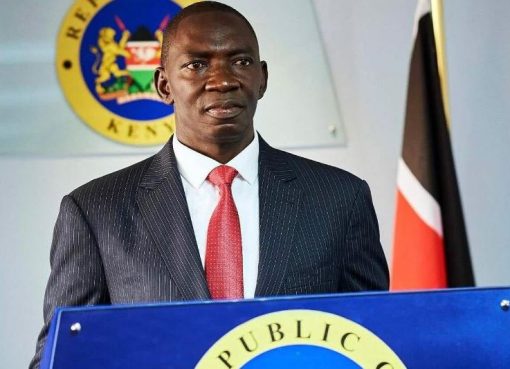
Speaking during a public participation meeting at the regional headquarters in Kakamega, Chief State Counsel Robert Kungu reminded participants that intellectual property has become a key pillar of national development.
The forum that brought together participants from Kakamega, Bungoma, Busia, Vihiga and Trans Nzoia counties was meant to provide a platform for innovators, entrepreneurs, researchers, creatives, farmers and members of the public to contribute to a policy that will guide how the country protects, manages and commercializes intellectual property.
Kungu, who opened the forum and read the speech of Dr. Juma Mukhwana the Principal Secretary for the State Department for Industry, said the proposed policy is expected to promote job creation, wealth generation, protect Kenya’s innovations, creativity and indigenous knowledge.
In the speech, Mukhwana noted that besides strengthening protection of intellectual property rights, the policy will also provide stronger safeguards against piracy, enhance digital rights management and enable innovators and creators to benefit from their inventions and artistic works.
He added that the strategy proposes measures to strengthen patent registration, protect utility models, traditional knowledge, genetic resources and folklore, while enhancing efforts to combat counterfeiting and illicit trade that continue to undermine local industries.
Mukhwana further said that the policy will also support plant breeders’ rights and promote geographical indications for Kenyan products to improve their competitiveness in local and international markets.
Kenya Industrial Property Institute (KIPI) Deputy Managing Director Stephen Ng’eno said Kenya’s intellectual property landscape has evolved significantly over the past two decades, making it necessary to develop a modern policy that responds to emerging innovations, digital technologies and artificial intelligence.
He noted that the draft policy covers patents, utility models, industrial designs, trademarks, trade secrets, geographical indications, copyrights, plant breeders’ rights, traditional knowledge, genetic resources and folklore, including digital and AI-driven innovations.
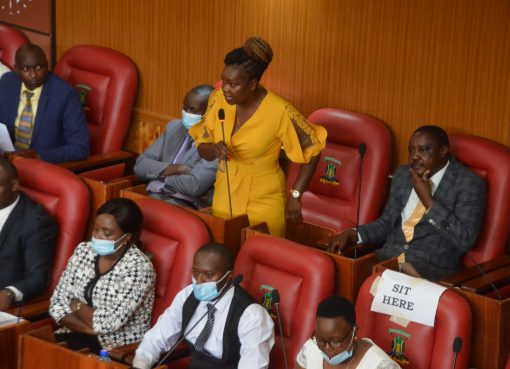
Kakamega County Executive Committee Member for Trade and Industrialization, Godfrey Owuor, said the county government is committed to promoting fair trade and protecting local products through intellectual property rights.
He said the consultative forums across the country will provide an opportunity for stakeholders to deliberate on strategies that will strengthen local enterprises, enhance fair trade and create economic opportunities through effective protection of intellectual property.
Owuor emphasized on the need to safeguard indigenous products, cultural heritage and traditional knowledge through appropriate legal frameworks, noting that intellectual property rights would prevent unauthorized use of local innovations and cultural assets while ensuring communities benefit economically from them.
He urged stakeholders especially those from Kakamega to identify and protect unique products from the county, including traditional foods, cultural practices and locally developed innovations, saying proper protection would enhance their market value and competitiveness in both local and international markets.
“The county government will continue working with KIPI and other relevant institutions to create awareness on intellectual property rights and support local innovators and entrepreneurs in commercializing their products.” Owuor said.
Anti-Counterfeit Authority Deputy Director of Research and Policy, Henry Omusundi Maina, who took participants through the draft document said the proposed framework seeks to harness intellectual property as a driver of innovation, creativity and economic growth through improved protection, commercialization and enforcement of intellectual property rights.
He noted that the policy is the government’s third attempt to establish a national intellectual property policy after the 2007 and 2012 attempts.
Maina told the forum that persistent challenges in the generation, protection, commercialization and enforcement of intellectual property assets have continued to hinder the country’s innovation ecosystem.
He disclosed that patent applications by Kenyan residents are still low compared to other countries in Africa.
He said: “Statistics contained in the draft policy indicate that patent applications by Kenyan residents have remained below 200 annually, compared to more than 2,000 in South Africa, while more than 70 per cent of micro, small and medium enterprises lack awareness of their intellectual property rights.
“Kenya invests less than one per cent of its Gross Domestic Product in research and development against the two per cent target provided under the Science, Technology and Innovation Act, 2013, with much of the funding directed towards academic research rather than innovation and commercialisation.”
Maina further said that a 2020 national baseline survey by the Anti-Counterfeit Authority estimated illicit trade in Kenya to be at Sh826 billion, equivalent to 9.3 per cent of the country’s Gross Domestic Product, while the creative industry loses an estimated Sh92 billion annually to piracy.
Participants called for adequate funding in the draft policy to facilitate enhanced awareness creation across all the sectors.
Anthony Ngaira, a public health officer in Kakamega County, said there is a need to establish stronger measures in the proposed policy to combat counterfeit products, saying fake and substandard goods pose a growing threat to public health.
“Let the government enhance surveillance at both designated and undesignated border entry points to curb the influx of counterfeit goods,” he said.
The draft policy proposes strengthening of the legal and regulatory framework for intellectual property protection, enhancing institutional coordination, promoting commercialization and technology transfer, strengthening evidence-based policy formulation, and establishment of a National Intellectual Property Coordination Office and a National Intellectual Property Forum to improve collaboration among state and non-state actors.
By Melechezedeck Ejakait and Annlinda Simiyu