Mining, Blue Economy and Maritime Affairs Cabinet Secretary (CS) Ali Hassan Joho has come under pressure from aquaculture stakeholders over the Government’s failure to implement recommendations reached by a task force formed to resolve a dispute over levies imposed on commercial aquaculture operations.
The Lake Victoria Aquaculture Association (LVA) says the failure to honour the agreement reached through the Ministry-Industry Task Force has eroded confidence in the Government’s policy-making process and could undermine investment in one of the country’s emerging economic sectors.
LVA secretary Pete Ondeng, who co-chaired the task force, said industry representatives participated in months of consultations in good faith after Joho established the team to resolve a dispute surrounding the Fisheries Management and Development (Aquaculture) Regulations, 2024.
The task force eventually reached consensus and presented a Joint Communiqué to Joho outlining the agreed way forward.
However, Ondeng said the recommendations have not been implemented despite assurances by the CS. “The issue before us is no longer simply the legality of a levy. It is whether Government will honour the outcome of the very consultative process it established,” Ondeng said.
The regulations introduced a Sh50,000 license fee and a five per cent ad valorem levy on commercial aquaculture operations, triggering opposition from industry players.
The recent dismissal of LVA’s petition by the High Court has now heightened anxiety in the sector, with stakeholders fearing the decision could pave the way for enforcement of the disputed charges.
Ondeng, however, said the court ruling did not invalidate or reject the recommendations of the Ministry-Industry Task Force, which had reached a consensus on how the dispute should be resolved. “The court determined the legal issues before it. It did not decide whether the Government should honour the consensus reached through the Task Force,” Ondeng said.
He said the concern among industry players was that, with the petition dismissed, the Government could now move to enforce the Sh50,000 license fee and five per cent ad valorem levy, increasing the cost of doing business for commercial aquaculture operators.
Ondeng said LVA had written to Joho seeking an urgent meeting to establish why the Joint Communiqué had not been implemented and to clarify the Government’s intentions following the court ruling. “That remains a matter of public policy, good governance and Government credibility,” he said.
He said the dispute was increasingly becoming a question of investor confidence, arguing that uncertainty over the charges could discourage investment in aquaculture, particularly in the Lake Victoria Basin.
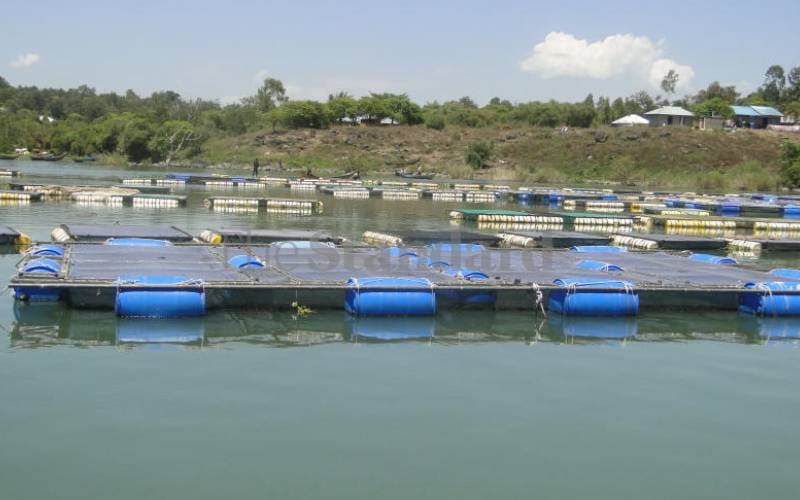
Aquaculture has emerged as an important source of private investment, employment and food security in the region, which has in recent years witnessed a decline in traditional economic activities such as sugar, cotton and capture fisheries.
“The Lake Region cannot afford another avoidable setback,” Ondeng said adding: “Public policy should be encouraging investment and enterprise, not creating uncertainty at a time when the Sector is beginning to realize its enormous potential.”
He said stakeholders were mobilizing support for a petition to President William Ruto, while public leaders had also raised concerns over the impact of the disputed levy on livelihoods and investment in the wider Blue Economy.
He said LVA remained committed to dialogue with the Government and believed implementation of the task force recommendations offered a way out of the impasse. He however added LVA is not the only party challenging the levy.
Kisumu cage farmer Victor Didi has filed a fresh constitutional petition seeking conservatory orders to stop implementation of the five per cent ad valorem levy.
The High Court has on the other hand issued interim conservatory orders pending further directions.
Didi’s case has added a fresh legal dimension to the dispute, with the contested levy now facing another court challenge even as stakeholders question its economic impact and also fear its enforcement following the dismissal of LVA’s earlier petition.
At the grassroots, operators say the additional charges could further squeeze already narrow profit margins.
Dunga farmer Hosea Ojwang described the new levies as punitive, saying they would eat into operators’ earnings and make it difficult for them to sustain and expand their businesses.
At Asat, fish farmer Beatrice Awino also described the charges as punitive, saying the additional costs would make aquaculture less viable.
The renewed pressure from industry players comes as the Government faces calls to revisit the disputed charges, clarify its position on enforcement and implement recommendations reached through its own consultative process.
By Faith Lumumba