The United Nations Environment Programme (UNEP) has committed USD190,000 (approximately Sh24.6 million) to the Northern Corridor Transit and Transport Coordination Authority (NCTTCA).
The money is meant to finance critical studies aimed at reducing greenhouse gas (GHG) emissions from heavy-duty freight vehicles operating along the Northern Corridor-one of East Africa’s busiest trade routes.
The funding will support a comprehensive assessment of heavy-duty vehicle emissions, evaluate the feasibility of introducing electric truck drayage and electrifying vehicles operating within the Port of Mombasa, update the Northern Corridor greenhouse gas emissions accounting framework, and develop a gender-inclusive green freight transport programme.
The Northern Corridor is a multimodal surface transport network linking the Port of Mombasa to the Great Lakes region.
Its member states include Burundi, the Democratic Republic of Congo (DRC), Kenya, Rwanda, South Sudan and Uganda, with the corridor managed and coordinated by the NCTTCA.
Every day, between 2,000 and 3,000 heavy-duty trucks transport an estimated 75,000 tonne of cargo from the Port of Mombasa to inland markets across the region, making the corridor a critical economic lifeline but also a significant source of carbon emissions.
The study is expected to identify the infrastructure, investment requirements and policy interventions needed to support the electrification of port operations and freight transport as cargo volumes continue to rise.
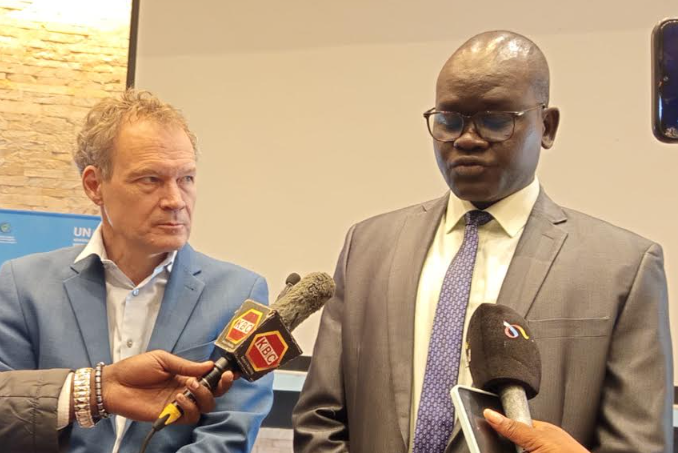
UNEP Head of Sustainable Mobility Unit Industry Rob de Jong said the Port of Mombasa is projected to handle more than 50 million tonnes of cargo in 2026, warning that the anticipated growth in trade could significantly increase carbon emissions unless governments and transport operators invest in cleaner technologies such as electric trucks and the electrification of port operations.
He noted that freight transport remains one of the most challenging sectors to decarbonize despite its indispensable role in facilitating regional trade and economic integration across East Africa.
“The rapid growth in cargo movement through the Port of Mombasa presents both an economic opportunity and an environmental challenge. The freight transport sub-sector in the region must become EV-ready by 2030 and achieve net-zero emissions by 2050 in line with global climate commitments,” he said.
Jong underscored the importance of establishing credible emissions data as the foundation for effective climate action.
“Getting emissions accounting right is the precondition for everything that follows. You cannot manage what you cannot measure,” he said, adding that the programme has been designed with the potential for replication along other transport corridors.
He lauded the Northern Corridor Green Freight Strategy 2030, describing it as a comprehensive roadmap for transforming freight transport through increased investment in cleaner technologies, including electric trucks, while strengthening the policy and regulatory frameworks required to support the transition.
The strategy also seeks to build the capacity of truck operators and logistics companies to adopt low-carbon transport technologies and accelerate the shift towards sustainable freight mobility.
NCTTCA Executive Director Dr John Deng said the funding agreement would fast-track implementation of the Green Freight Strategy by providing updated emissions data and assessing the viability of electrifying freight operations across the corridor.
Dr Deng commended UNEP for previously supporting the establishment of freight transport emissions baselines along the Northern Corridor routes across all member states.
“Emission baselines have enabled us to validate our 2030 emission reduction targets and continuously monitor the corridor’s environmental performance. UNEP also funded the development and integration of the Corridor Emission Tracker into the Northern Corridor Transport Observatory,” he said.
He added that the electric truck drayage study will be undertaken jointly by the NCTTCA, UNEP and the Kenya Ports Authority to determine whether trucks and other cargo-handling equipment operating within the Port of Mombasa can gradually transition from diesel-powered engines to electric alternatives.
Dr Deng said the funding would also facilitate the development of a Gender Green Freight Transport Programme aimed at increasing women’s participation in the transport and logistics sector while advancing climate action.
“These funds will enable NCTTCA to mainstream gender equality into the freight decarbonisation agenda by embedding gender-responsive policies, governance frameworks and institutional mechanisms that promote the full and equitable participation of women across the green freight value chain,” he said.
He added that the programme will also undertake a corridor-wide gender and green freight baseline audit to identify existing gaps and inform future policy reforms, investment priorities and strategic partnerships.
By Sadik Hassan