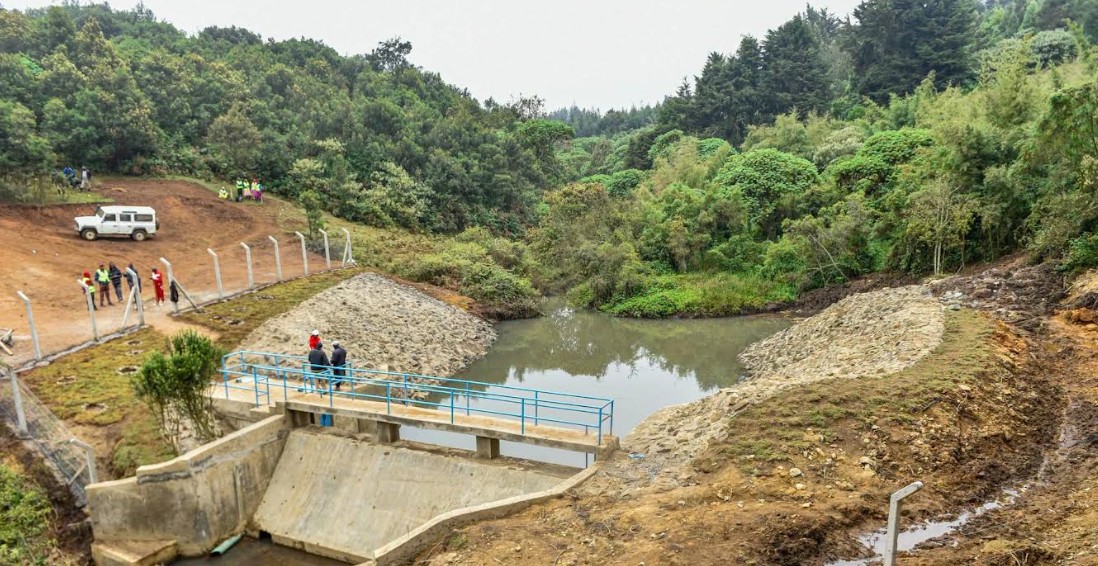
Residents from eight areas in Lari visited the Escarpment Irrigation Belt in Kinale Forest on Tuesday to assess its progress and anticipated benefits.
The visit was facilitated by Lari MP Joseph Mburu Kahangara, who brought together residents from Gitithia, Lare, Escarpment, Kabunge, Gathumuri, Matathia, Korio and Machani to view the project.
The irrigation project is intended to provide a reliable source of water for farming in the Escarpment region, where agricultural production largely depends on rainfall.
The initiative is expected to support farmers by improving access to water and enabling more consistent agricultural production.
Mary Wairimu, one of the residents who visited the project, said the tour provided an opportunity for the community to see the progress of an initiative they had been following.
“We have been waiting to see this project take shape, and today we wanted to come and see for ourselves,” Wairimu said.
She said seeing the project on the ground had given residents a better appreciation of its potential to support agriculture in the area.
“It is different when you hear about a project and when you actually come to the site. We can now see the potential it has for agriculture in this area,” she said.
Joseph Ngugi, another resident, said the community was looking forward to the irrigation system providing water to farmers who need it.
“Our expectation is that this water will reach the farmers who need it and help us produce more from our farms,” Ngugi said.
Ngugi said reliable access to water would also reduce farmers’ dependence on rainfall and enable them to plan their agricultural activities more consistently.
“Most of us depend on rainfall, so having a reliable source of water would allow us to farm more consistently and reduce the uncertainty that comes with relying on the rains,” he said.
The Escarpment Irrigation Belt is among initiatives aimed at strengthening agricultural production in the area by improving access to water for farming.
The visit also allowed residents to familiarise themselves with the irrigation infrastructure and share their expectations on how the project could support farming in their areas.
As the project progresses, residents are looking forward to seeing the anticipated benefits translate into reliable water for farming.
By Annrita Mutembei and Grace Naishoo