A total of 600 youths in Nandi Hills Constituency have completed a 20-day training on Social-Emotional Skills Development (SESD) under the National Youth Opportunities Towards Advancement (NYOTA) project, equipping them with skills needed to navigate employment, entrepreneurship and everyday life.
The training targeted young people aged 18 to 29, as well as persons living with disabilities aged up to 35, and focused on strengthening competencies that promote employability, productivity, resilience and positive citizenship.
Speaking during the final day of the training at Nandi Hills Township Primary School, Nandi Hills Constituency NYOTA Centre Manager Brian Kipruto said the exercise had progressed smoothly, with beneficiaries acquiring knowledge that would help them compete effectively in the employment market.
Kipruto said SESD was a core component of the NYOTA project designed to strengthen employability and life skills, adding that the programme would contribute significantly to improving the lives of beneficiaries.
He explained that the training comprised two modules covering soft skills and core business skills.
The first module covered youth as a NYOTA beneficiary, mind education, communication, leadership and interpersonal skills, decision-making and problem-solving, goal setting, etiquette, national values and climate change.
The second module focused on employment and entrepreneurship, including business start-up, business operations, basic financial planning and digital literacy.
“In Nandi Hills Constituency, we had two centres, one at Cheplelachbei Primary School and the other at Nandi Hills Township Primary School,” said Kipruto. “During the 20 days, our SESD beneficiaries gained knowledge on effective communication, cultivating resilience and flexibility, and developing problem-solving skills.”
Kipruto said the lessons were intended to give beneficiaries practical tools that could be applied beyond the classroom. He encouraged the youths to continue practising the skills acquired, support one another and pursue available opportunities through employment, enterprise and Government empowerment programmes.
He noted that effective communication, teamwork and responsible decision-making could help young people overcome challenges while contributing positively to their families and communities.
The centre manager also encouraged beneficiaries to share the knowledge with peers who did not participate in the training, saying wider dissemination of social-emotional skills would strengthen youth resilience and improve their preparedness for changing labour market demands. He said continued learning would be important as technology, workplaces and business opportunities continue to evolve.
One of the trainers, Titus Lagat, said the youths had benefited greatly from the programme, noting that social-emotional skills were essential in the workplace and for those seeking to establish businesses.
Lagat commended the Government for bringing together youths from different education levels and backgrounds, saying the interaction enabled them to learn how to work with people from diverse communities while building useful networks.
“As a trainer, I have had the opportunity to train these youths on social-emotional skills development, digital readiness, basic financial literacy and practical business management,” said Lagat. “This training serves as a foundation for transitioning youths from learning to earning.”
He, however, urged the Government to consider including modules on mental health awareness, gender-based violence, early marriages, teenage pregnancies and sexually transmitted infections in future training programmes.
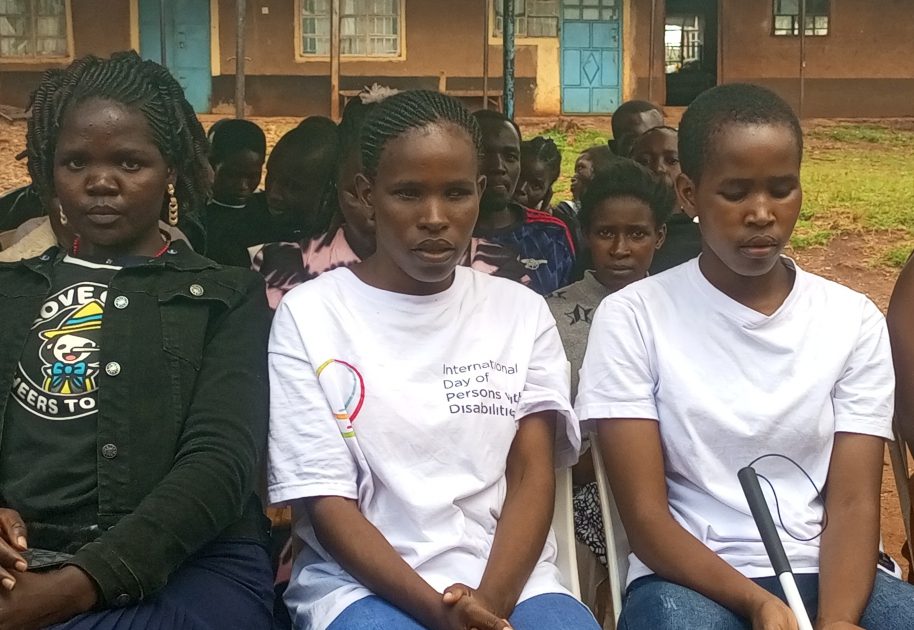
A 28-year-old beneficiary, Monica Jepkogei, who is visually impaired, commended the Government for the NYOTA initiative, saying the programme had enabled her to gain valuable social-emotional skills while interacting and networking with other youths.
“In addition to the skills I have learnt, I have made new friends. I thank the Government and the trainers for providing a Braille machine during the training that made my learning a success,” said Jepkogei.
She called for more programmes that deliberately accommodate persons living with disabilities to ensure they benefit equally from youth empowerment initiatives.
Another beneficiary, Device Mbarley, who works as a mason, said the training had equipped him with knowledge that would help him maintain good working relationships, solve problems, make informed decisions and improve productivity at his workplace.
Diana Jepkirui said the skills she acquired had improved her ability to manage emotions, handle conflicts and develop a business plan.
She added that the training had enabled her to make new friends with whom they had agreed to form and register a group at the social services office. The group, she said, would enable them to access Government youth funds and establish income-generating projects.
Another beneficiary, Debora Morah, said she had acquired knowledge on positive thinking, curriculum vitae writing, appropriate dressing for job interviews and conflict resolution.
“In the 20 days, I have learnt a lot that will greatly impact my life. It is here that I have learnt that to excel as youths, we need a positive mindset rather than a negative mindset,” said Morah.
She urged the Government to consider expanding the programme’s age limit in future to include unemployed people aged above 35 who are seeking opportunities to improve their livelihoods.
The SESD programme was delivered through a 20-day intensive, classroom-based training implemented by Chisawe Holdings Limited, the contracted firm responsible for training NYOTA beneficiaries in Nandi County.
By Ruth Mainye