Government agencies and community stakeholders in Elgeyo Marakwet County have intensified sensitisation on care reform, calling for stronger family and community support systems to facilitate the safe transition of children from residential care homes back to their families and communities.
The stakeholders said strengthening families and improving community-based support would help prevent unnecessary separation of children from their families while ensuring those already in residential care are safely reintegrated or placed in suitable family-based alternative care.
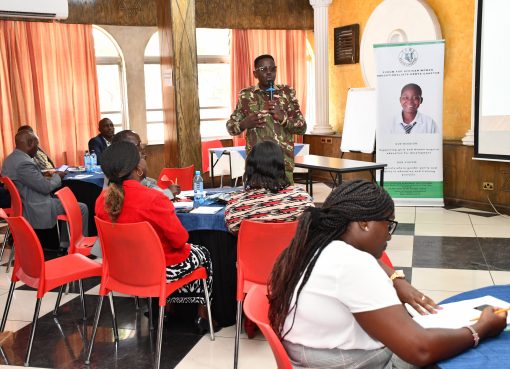
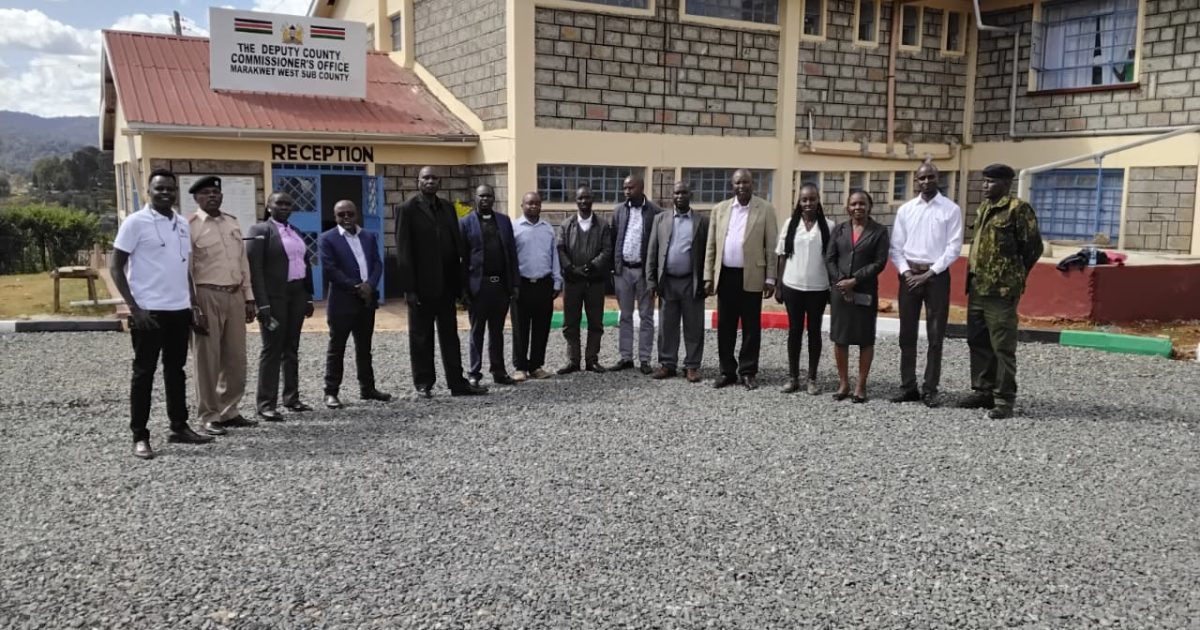
The stakeholders drawn from the National Government Administration, State Department for Children Services, County Government, Ministry of Education, Civil Registration Services, security agencies, and faith-based and community organisations held a one-day engagement at the Deputy County Commissioner’s boardroom in Kapsowar.
The forum, organised by the State Department for Children Services in partnership with the Lumos Foundation, sought to strengthen implementation of the National Care Reform Strategy for Children 2022–2032 and promote family- and community-based care.
Assistant County Commissioner Dickson Agoi said the success of care reform would depend on close collaboration between government agencies and communities to identify vulnerable children and families and link them to appropriate support.
“Care reform requires all of us to work together. As administrators, we have a responsibility to ensure that vulnerable children and families are identified and linked to relevant services so that children are not separated from their families unnecessarily,” Agoi said.
County Coordinator for Children Julius Yator said the reforms were guided by the best interests of children and aimed at strengthening families instead of relying predominantly on institutional care.
“Care reform is for the best interest of the child. The government has taken steps to ensure that children are not unnecessarily separated from their families,” Yator said.
Yator said Elgeyo Marakwet has one recognised children’s home, located in Kapsowar Ward, Marakwet West Sub-County.
He clarified that the reforms did not mean the immediate closure of children’s homes but represented a shift towards family preservation and family and community-based alternative care.
He said children living in residential care would undergo appropriate assessment and preparation before being supported to return safely to their families and communities or placed in suitable family-based alternative care.
Ministry of Education representative Moses Kutere said schools had an important role in identifying vulnerable children and referring cases of neglect, abuse, absenteeism and other challenges to relevant authorities.
“The education sector is an important partner in care reform because children spend a significant amount of their time in school. Teachers can help identify children who are vulnerable and ensure that cases requiring intervention are referred to the appropriate agencies,” Kutere said.
Kapsowar Location Chief Paul Kosgei urged parents and communities to take greater responsibility for child protection, saying grassroots structures were critical in identifying vulnerable families and facilitating timely interventions.
“Child protection begins at the family and community level. We must work together to identify families that need support and ensure children are protected, cared for and given an opportunity to grow within safe family environments,” he said.
The meeting also focused on strengthening referral mechanisms and coordination among agencies to ensure children at risk of abuse, neglect, exploitation or family separation receive timely assistance.
Probation Officer Julius Mokua said effective coordination and referral mechanisms would be crucial in ensuring children receive appropriate protection throughout the transition process.
The National Care Reform Strategy for Children 2022–2032 is a phased nationwide programme seeking to shift Kenya’s child protection system from reliance on residential institutional care towards family preservation and family- and community-based alternative care.
The government and its partners are also using social protection interventions, including cash transfers, to strengthen vulnerable families and reduce economic pressures that may contribute to the separation of children from their families.
The engagement brought together representatives from the Kenya Police Service, National Government Administration, Civil Registration Services, State Department of Probation, Ministry of Education, County Government, faith-based and community organizations, the media, and community representatives.
By Rennish Okong’o