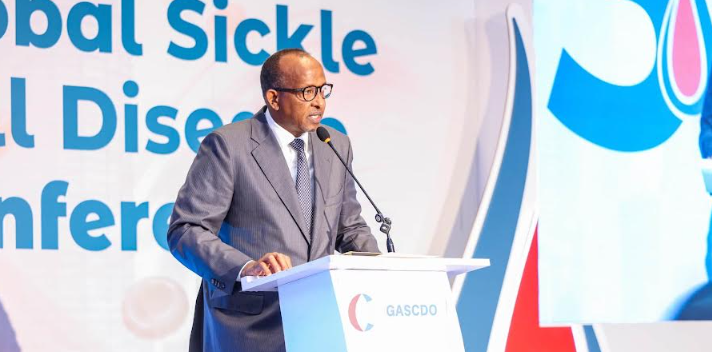
Health Cabinet Secretary (CS) Aden Duale has reaffirmed Kenya’s commitment to building a health system in which no child’s quality or length of life is determined by sickle cell disease, their place of birth or their ability to access care.
Opening the three-day Global Sickle Cell Disease Conference in Nairobi, Duale called for a shift from fragmented interventions to a coordinated national response anchored in early diagnosis, continuous care, and the dignity of people living with the condition.
The conference, themed ‘Global Standards, Local Impact: Advancing Sickle Cell Care Across Systems and Communities,’ brings together stakeholders from Kenya and across Africa to assess progress, address persistent gaps, and strengthen the delivery of sickle cell care.
During the event, the CS revealed that an estimated 250,000 Kenyans live with sickle cell disease, with approximately 14,000 affected children born annually.
Although the condition has historically been more prevalent around Lake Victoria, Western Kenya, and the coast, he reiterated that the disease is increasingly recognised as a national health and equity concern.
According to the CS, Kenya is integrating sickle cell services into the broader health system. Infant screening is being expanded following the adoption of the 2023 screening policy and its inclusion in the Mother and Child Health Booklet. More than 8,000 infants have so far been screened across 10 counties.
In addition, Duale pointed out that comprehensive care is also being strengthened through initiatives including the Jaramogi Oginga Odinga Teaching and Referral Hospital (JOOTRH) Centre of Excellence, the Kianda Level 4 model, PEN-Plus, KETAN and IMARA Care.
“More than 1,000 healthcare workers and 700 Community Health Promoters have been trained to support early detection, referral and continued care,” he announced, adding that the Social Health Authority is also providing financial protection for essential services, easing the cost of treatment for affected families.
Notably, testimonies shared by sickle cell warriors at the conference demonstrated that early diagnosis and consistent care can enable people living with the condition to lead longer, healthier, and fulfilling lives.
Duale further called for intensified national and continental action to achieve universal infant screening, establish a national sickle cell registry, secure reliable access to medicines, diagnostics and safe blood, strengthen referral networks, expand research, and develop sustainable financing for lifelong care.
“Our ambition must go beyond survival. Every person living with sickle cell disease deserves the opportunity to thrive,” he affirmed.
The CS was accompanied by Director for Family Health Dr Bashir Issak; Global Alliance of Sickle Cell Disease Organizations CEO Ms Biba Tinga; and Sickle Cell Federation of Kenya CEO Geoffrey Owino.
By Michael Omondi