Stakeholders in West Pokot County have renewed efforts to address the triple threat of teenage pregnancies, gender-based violence (GBV) and new HIV infections among adolescents and young people, warning that failure to act could have far-reaching consequences for the county’s future.
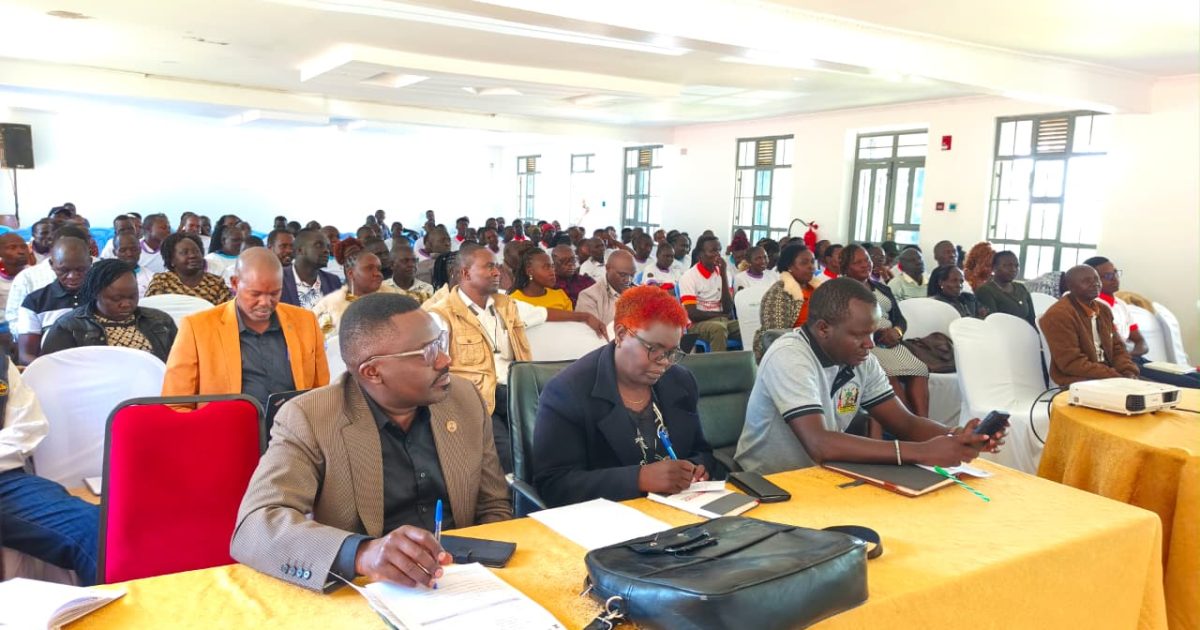
The stakeholders, including the county government, national government, health workers, probation officers, Community Health Promoters (CHPs), Huduma Centre officials and young people, held a community dialogue at Mtelo Hall in Kapenguria to discuss the challenges affecting adolescents and identify ways of protecting them from practices that expose them to health and social risks.
The dialogue brought together young people and duty bearers as part of an initiative targeting selected counties with high prevalence of the triple threat. West Pokot is among four counties selected for the community dialogues alongside Samburu, Homa Bay and Uasin Gishu.
West Pokot County Executive Committee Member for Health and Sanitation Claire Parklea said the county was selected because of its high teenage pregnancy burden.
According to the Kenya Demographic and Health Survey (KDHS) 2022, teenage pregnancies in West Pokot stand at 36 per cent, second only to Samburu County at 50 per cent. This means that approximately 36 out of every 100 pregnancies in the county involve teenagers.
Parklea said poverty, lack of education and inadequate access to sexual and reproductive health information and modern contraceptives were among the factors contributing to teenage pregnancies.
“Poverty exposes girls from low-income households to greater vulnerability, while keeping girls in school significantly reduces their chances of becoming pregnant,” she said.
She noted that available data indicates that between 38 and 40 per cent of teenagers with no formal education have experienced pregnancy, highlighting the importance of education in protecting adolescent girls.
The CEC called for greater involvement of adults in guiding young people, warning that silence from the older generation could jeopardise the future of the country.
“If the elderly in society go silent, there will be no future because these teenagers are the leaders of tomorrow,” Parklea said.
She urged the young people who attended the dialogue to share the information gained with their peers and become ambassadors in their communities.
The county government, she said, was also strengthening access to health services for young people. With the expected opening of a university in the area, the Department of Health has provided space for a clinic where a clinical officer, nurse and public health officer have already been stationed, while medicines have been stocked ahead of the arrival of students.
Parklea added that the nearby Keringet Health Centre had also been upgraded to Level Three to improve access to healthcare services.
Nelly Achokor, the County AIDS and STI Coordinator, said adolescents and young people account for about 22 per cent of new HIV infections in West Pokot, compared with 41 per cent nationally.
She attributed the progress in reducing HIV prevalence in the county to interventions by both levels of government and other partners, noting that the county’s prevalence currently stands at 0.54 per cent.
Achokor thanked the national and county governments for supporting programmes targeting young people, saying more engagements were necessary to help adolescents understand the risks associated with their choices.
She said youth-friendly health services were available at health facilities, including HIV prevention services such as pre-exposure prophylaxis (PrEP), which is offered free of charge.
On GBV, Achokor expressed concern that many survivors delay seeking medical attention, with some reaching health facilities more than 72 hours after an incident.
“By the time some survivors reach health facilities, they are already late, and this delays interventions for HIV prevention and unwanted pregnancies,” she said.
She urged survivors to seek immediate medical attention to enable timely medical and psychosocial interventions.
County Director for Gender Emmanuel Oigo said the county continued to face challenges related to GBV, including female genital mutilation (FGM), early marriages and teenage pregnancies.
He said West Pokot remained among the 22 FGM hotspot counties in Kenya, although prevalence had declined from about 72 per cent to approximately 44 per cent.
“We have improved, but there is still a lot of work to be done to further reduce the levels,” Oigo said.
He also noted that the changing economic landscape, including the emergence of industries such as the Sebit Klinker Factory, had brought increased movement of trucks and workers into the county, creating new social dynamics that required stakeholders to remain vigilant in addressing the spread of HIV.
Oigo emphasised that GBV affects both men and women and called for the development of programmes capable of addressing the different forms of violence.
Dr Samson Ndege, a Moi University lecturer who supports the HIV programme through AMPATH, said some cultural practices continued to expose girls and women to GBV and early marriages.
He said practices that undermine the empowerment of girls and women often leave them unable to make independent decisions about their lives and health.
The dialogue is part of an initiative championed by First Lady Rachel Ruto through the Office of the First Ladies of Africa under the Voice of Children project, which seeks to engage adolescents and young people in efforts to reduce the triple threat.
Achokor thanked the First Lady for supporting the initiative, saying sustained collaboration between government, communities and development partners was necessary to reduce teenage pregnancies, GBV and new HIV infections.
She called for concerted efforts to reduce teenage pregnancies in West Pokot to below the national level of 15 per cent, with the ultimate goal of ensuring girls remain in school and complete their education.
The stakeholders urged young people to take advantage of available youth-friendly services and speak out whenever they face challenges, while calling on parents, community leaders and institutions to provide the guidance and support adolescents need.
The dialogue underscored that addressing the triple threat cannot be left to the health sector alone, but requires a multi-sectoral approach involving families, schools, government departments, health workers and young people themselves.
By Parklea Ivor