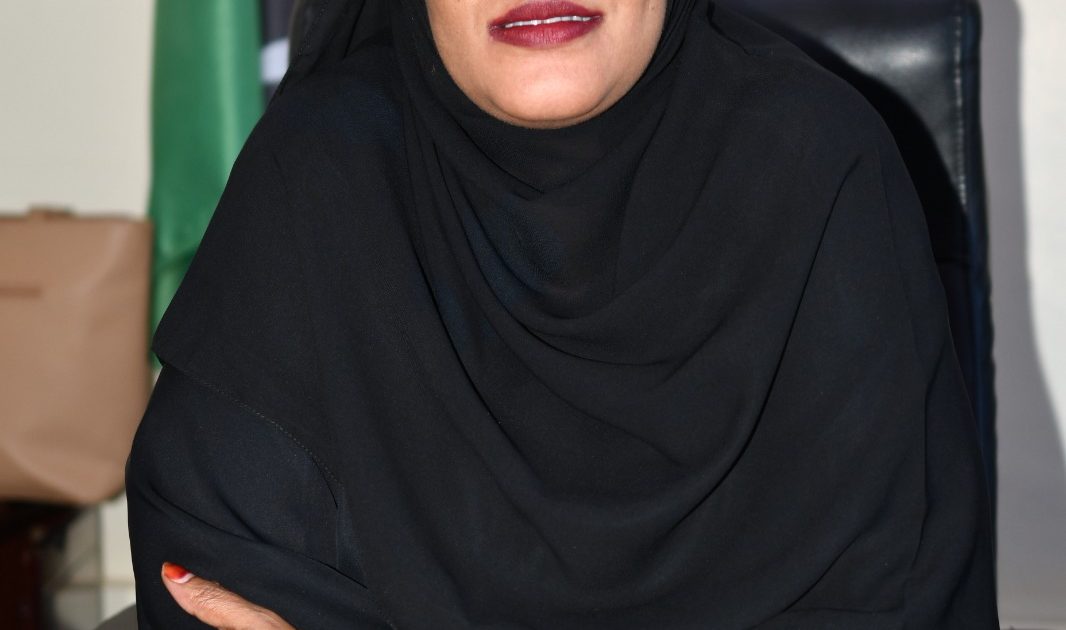
The appointment of Fouzia Hared as the first woman to head the Ewaso Ng’iro North River Basin Development Authority (ENNDA) has broken a major leadership barrier for women from pastoral communities.
At 40, Hared has risen from an Accounts Assistant to the helm of the Authority, where she has spent 18 years steadily climbing the ranks to become Director of Corporate Services.
Reflecting on her journey, Hared said her career had been defined by continuous growth, greater responsibility and a steady rise through the institution’s ranks.
“I served in the position until 2010 before being promoted to Regional Accountant in 2011. Over the years, I continued to rise through the ranks, eventually becoming the Authority’s Director of Corporate Services,” she said.
Hared holds a Bachelor’s Degree in Business Administration from Kenya Methodist University, a Postgraduate Diploma in Financial Management from Development Dimensions Africa and a Master’s Degree in Business Administration, specializing in Finance, from European International University.
She assumed office this week, taking over from Eng. Ali Ibrahim Hassan, who retired after serving as the Authority’s chief executive.
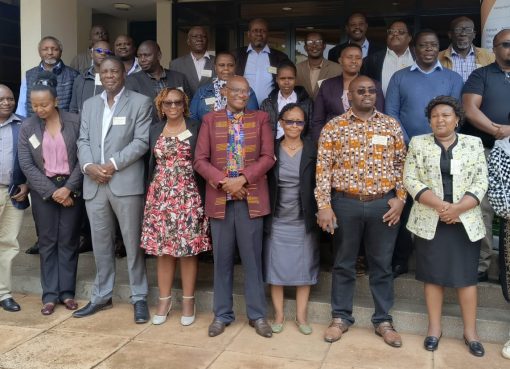
Her appointment triggered jubilation at the authority, with staff and board members describing it as a milestone for women in pastoral communities and evidence of the growing role of women in senior leadership.
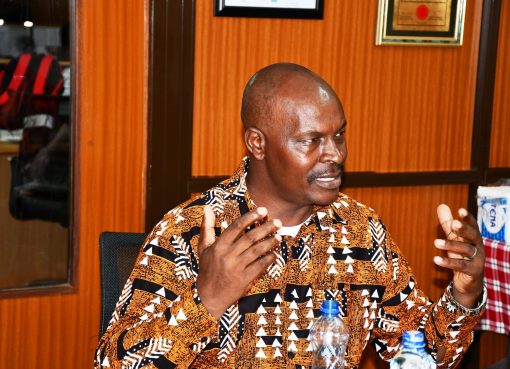
Board chairperson Ahmed Duale noted that Hared’s extensive institutional experience had prepared her for the top position, having served in various departments since joining the Authority.
“The incoming acting CEO has basically been brought up here since she was employed and has risen through the ranks to the position,” Duale said, expressing confidence that the board and staff would support her as she takes charge.
Hared joined ENNDA in 2007 as an Accounts Assistant and served in the position until 2010 before being promoted to Regional Accountant in 2011. She later held several senior management positions before rising to Director of Corporate Services.
Her elevation comes at a critical time for the Authority, which faces the challenge of expanding development programmes while responding to persistent water shortages, drought and climate pressures affecting northern Kenya.
ENNDA is mandated to spearhead development in the Ewaso Ng’iro North River Basin, an expansive area covering about 36 per cent of Kenya and stretching across 10 counties.
The Authority implements development programmes targeting communities within the basin, with particular focus on pastoral populations whose livelihoods depend heavily on livestock and remain vulnerable to drought and climate change.
Water development is among its major areas of intervention, with ENNDA constructing dams, water pans and boreholes to provide water for households and livestock in some of the country’s driest counties.
Among its projects is the Chafa Gafarsa Water Pan in Merti, Isiolo County, which is designed to hold 240,000 cubic litres of water and serve about 20,000 pastoralists and 60,000 livestock.
The Authority has also implemented programmes in irrigation, livestock development, drought-resilient agriculture, environmental conservation and livelihood diversification to strengthen the resilience of pastoral communities.
Its interventions include support for livestock value chains, grazing fields, cattle dips, agroforestry, soil and water conservation and restoration of degraded catchment areas.
ENNDA has further implemented climate adaptation programmes to help communities in counties such as Wajir and Mandera cope with prolonged drought and other effects of climate change.
Board member and Finance and Administration Committee chairperson Lenana Lenayara praised the outgoing CEO for strengthening the institution and mentoring staff to assume leadership roles.
“This institution was just a shell, but you’ve strengthened it. Now it’s a very healthy baby, that is able to take up new challenges and new bigger projects,” Lenayara said.
Hared’s appointment is particularly significant in a region where women have historically faced cultural, economic and educational barriers to leadership.
In many pastoralist communities, decision-making structures have traditionally been dominated by men, while women have carried much of the responsibility for household and care work.
by Muturi Mwangi.