Environment, Climate Change, and Forestry Cabinet Secretary (CS), Dr. Deborah Mlongo Barasa, has laid out an ambitious roadmap to turn climate commitments into large-scale delivery as Kenya pushes toward its 30 percent tree cover target by 2032.
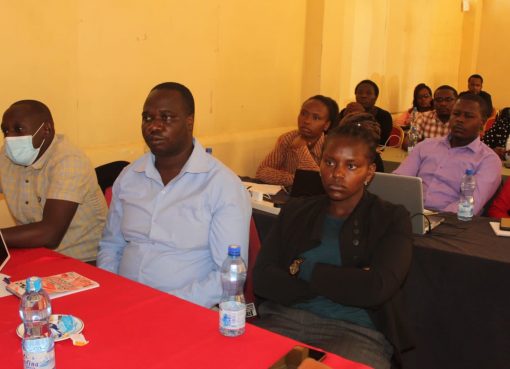
Addressing development partners in Nairobi during the Joint Sector Working Group on Environment, Climate Change, and Forestry, the CS emphasized that true progress requires coordinated, serious investment rather than fragmented efforts.
Dr. Barasa announced that the national programme has already achieved nearly 1.93 billion trees grown through government, county, non-state, and natural regeneration initiatives.
She reported that the ministry is expanding Mazingira Day into a comprehensive, whole-of-society Mazingira Week running from October 5 to 10.
“Each day of the campaign carries a distinct focus: kicking off the short-rains season and clean-ups in Trans Nzoia on Monday, followed by school-led activities on Tuesday, agroforestry and mine-site restoration on Wednesday, highway greening on Thursday, and a National Clean-Up Day on Friday anchored by village elders leading Mazingira Barazas across the country,” outlined the CS.
She disclosed that the week will culminate on October 10 in Trans Nzoia near Mount Elgon, a critical transboundary water tower vital for regional hydrology, biodiversity, and climate regulation.
“During the main event, 200,000 participants will execute the Presidential Green Challenge by growing six million trees in one synchronized hour,” added Dr. Barasa.
The CS revealed that the mass mobilization will be paired with aerial seeding across more than 35,000 hectares of degraded land by the Kenya Defence Forces, the distribution of 5.2 million quality seedlings, and the unveiling of the upgraded JazaMiti digital platform and USSD service to ensure transparent tracking and survival monitoring.
Calling for the full weight of international and local partnership behind delivery, Dr. Barasa urged stakeholders to align their support for seedling production, logistical transport, community tools, and the branding of 120,000 green scouts and 110,000 village elders.
With the short-rains window rapidly approaching, the appeal underscored that Kenya is actively closing last-mile gaps to prove that ecosystem restoration is a tangible, collaborative deliverable rather than a slogan.
By Michael Omondi