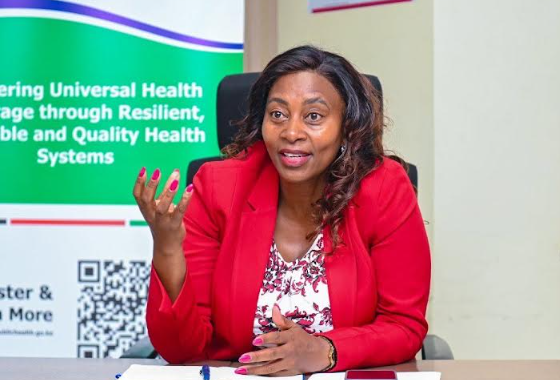
Principal Secretary (PS) for Public Health and Professional Standards, Mary Muthoni, has called for coordinated action to advance preparations for the Kenya Public Health International Conference (KEPHIC) 2026, strengthen disease outbreak control, and enhance preparedness for anticipated El Niño-related health risks.
Speaking during the weekly management meeting, the PS, on preparations for KEPHIC 2026, scheduled for 27–29 October 2026, maintained that the Ministry continues to prepare for the Conference, with registration now open at kephic.publichealth.go.ke.
“Our weekly management meeting reviewed preparations for the Conference, alongside measures to strengthen disease outbreak control and readiness for the anticipated El Niño-related health risks,” stated Muthoni.
She urged SAGAs, directorates, and divisions to take ownership of the Conference, with emphasis on prevention, primary health care, health security, and climate resilience.
PS announced that the Ministry is also strengthening surveillance and response to current public health threats.
The PS revealed that as of 12 September 2026, Kenya had recorded 1,309 confirmed mpox cases and 19 deaths across 40 counties and 469 measles cases and one death, while one circulating vaccine-derived poliovirus type 2 case has been reported in Dadaab, Garissa County.
“We remain on high alert for Ebola at points of entry and for water- and vector-borne diseases,” assured Muthoni, stressing that the Ministry is prioritizing county preparedness, immunization, community engagement, and protection of health workers.
The Kenya Public Health International Conference (KEPHIC) 2026, which will be held under the theme: ‘Delivering Universal Health Coverage through Resilient, Equitable and Quality Health Systems’, will provide a platform for public health professionals, researchers, policymakers, development partners, and other stakeholders to share knowledge, discuss emerging public health priorities, showcase innovations, and strengthen collaboration towards resilient, equitable, and quality health systems.
By Michael Omondi