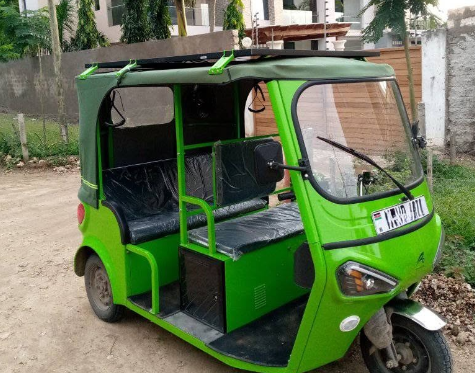
Electric tuk-tuks fitted with solar panels are offering operators an alternative way of reducing charging costs, with operators saying the technology has made transport business more economical.
Simeon Karanja, an electric tuk-tuk operator based in Kiambu Town, says the solar panel installed on the roof of his three-wheeler provides an additional source of power while reducing his reliance on conventional charging.
Speaking to the Kenya News Agency, Karanja admitted he initially hesitated to acquire an electric tuk-tuk because he was concerned about the availability of charging points and the possibility of losing working hours while charging the vehicle.
“I thought the tuk-tuk charging process would waste my time and feared for the inconveniences that would come with rainy or cloudy days,” he explained.
However, Karanja observed that the tuk-tuk had proven convenient and cheaper to operate compared to the motorcycle he previously used for transport.
He acquired the tuk-tuk through a financing arrangement after failing to raise the full purchase price. Apparently, a new electric tuk-tuk costs about Sh300,000 on a cash basis, while his financing plan requires him to pay Sh530 daily for 18 months.
On operating costs, Karanja said the solar panel was particularly useful on sunny days because it provides an additional boost to the battery while the vehicle is parked or in motion.
“As an electric/solar-powered tuk-tuk operator, I enjoy working in the sun because it helps a big deal to my transport business. This tuk-tuk charges while parked or moving provided there is sunlight,” he said.
Karanja estimates that the solar system helps him save about Sh250 on a good working day that he would otherwise spend on charging the battery.
He also said the electric tuk-tuk offered greater comfort compared to a motorcycle, as its enclosed body provides shelter for both the rider and passengers.
The operator estimates that with adequate sunlight, the solar charging system can support about a third of his day’s activities by providing additional energy to the battery.
He was also satisfied with the financial returns from the three-wheeler, claiming that he now makes about twice the profit he earned when operating a motorcycle.
The adoption of electric three-wheelers comes as Kenya seeks to promote cleaner and more affordable transport.
The National Electric Mobility Policy launched in February 2026 seeks to increase the uptake of electric vehicles, reduce greenhouse gas emissions, and improve air quality, while also lowering the country’s dependence on imported fossil fuels.
By William Tolbert and Grace Naishoo