The National Assembly Departmental Committee on Education has commenced nationwide public participation on six proposed Education Reform Bills, aimed at transforming the country’s education sector under the Competency-Based Education system.
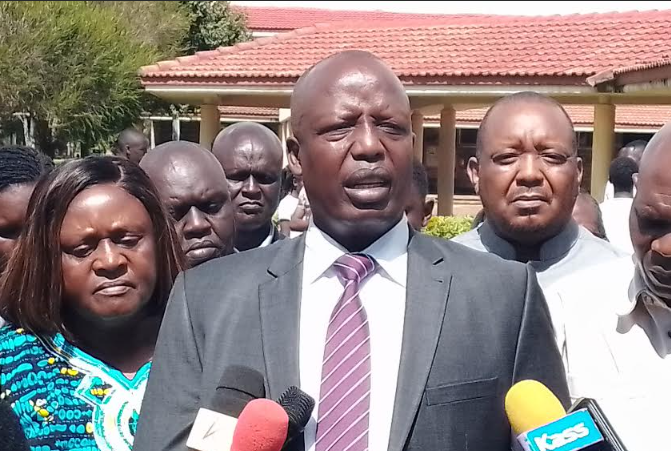
The Committee, chaired by Tinderet Member of Parliament (MP), Julius Melly, held its first public participation forum in Uasin Gishu County on Monday, where about 300 participants and more than 20 stakeholders presented their views on the proposed legislation.
The Bills are the Tertiary Education, Placement and Funding Bill, 2026; the Basic Education Bill, 2026; the Kenya National Educational Assessments Council Bill, 2026; the Pre-Service Education and In-Service Training Bill, 2026; the Kenya National Qualifications Framework (Amendment) Bill, 2026; and the Kenya Institute of Curriculum Development (Amendment) Bill, 2026.
Speaking during the Forum at the Eldoret National Polytechnic Hall, Melly said public participation was critical in ensuring that Kenyans have an opportunity to influence laws that would shape the future of education.
He said the reforms were informed by recommendations of the Presidential Working Party on Education Reform and that Parliament was constitutionally required to obtain the views of citizens before proceeding with the legislation.
“We also want to hear the input of the public because we run Parliament and the country on behalf of the people of Kenya,” Melly said.
He urged Kenyans to submit their views, memoranda, and opinions either physically or through the channels provided by Parliament, saying citizens were an important part of the law-making process.
Melly said the proposed Tertiary Education, Placement and Funding Bill was particularly significant because it sought to provide a new framework for financing university and tertiary education.
He explained that under the proposed system, students would sign loan agreements to finance their education and repay the loans after completing their studies, with parents no longer required to directly meet tuition costs.
“The parent is not to pay, and the student, after completion of education, will repay the loan,” he said.
Melly said the proposal was intended to restore a system similar to one that existed in the past, when university students accessed education through government-supported loans and repaid them after graduation.
The proposed Tertiary Education, Placement and Funding Bill seeks to restructure student financing, fund management, and placement in universities and TVET institutions.
The Committee Chairman assured parents that the proposed financing model would ultimately make university education free at the point of access, with students expected to take responsibility for repayment after completing their studies.
The proposed reforms also generated debate among participants, with stakeholders raising concerns and making recommendations on issues, including loan repayment and interest rates.
Melly said some participants had proposed that interest charged on student loans be scrapped altogether, noting that the current proposal in the Bill was a four per cent interest rate.
Another proposal raised during the forum was the possible return of corporal punishment in schools, an issue that the committee said would be captured among the views presented by members of the public.
The Basic Education Bill seeks to repeal and replace the Basic Education Act of 2013 and introduce new provisions on school registration, governance, inspection and learner protection.
The Kenya National Educational Assessments Council Bill proposes a new legal framework for national assessments and the repeal of the existing KNEC Act, while the Pre-Service Education and In-Service Training Bill seeks to overhaul teacher preparation and continuous professional development.
The Kenya National Qualifications Framework (Amendment) Bill proposes measures to strengthen credential tracking, establish a national qualifications database, and require registration of institutions that award qualifications.
Meanwhile, the Kenya Institute of Curriculum Development (Amendment) Bill seeks to streamline KICD’s mandate by focusing it on basic and teacher education and eliminating overlaps with the tertiary education sector.
Melly said the Uasin Gishu forum brought together representatives from the teaching fraternity, unions, non-governmental organisations, students, institutions, and members of the public.
He said the Committee would compile the views presented and submit them to the National Assembly for consideration during debate on the bills.
“There is no right or wrong view, and the public views will actually be presented very well on the floor of the House,” he said.
The Committee is undertaking the exercise in two circuits, with the western circuit covering several counties while another team led by the committee’s vice-chair, Eve Obara, handles the eastern part of the country.
Melly said the western circuit would proceed to other counties, including Elgeyo-Marakwet, Trans Nzoia, Kakamega, Kisumu, Nyamira, and eventually Turkana.
He urged citizens who could not attend the forums physically to submit their views through Parliament’s online platforms and memoranda.
The management of Eldoret National Polytechnic welcomed the public participation exercise, saying the proposed tertiary education financing reforms could make it easier for young people to access technical and vocational training.
Chief Principal, Dr. Charles Koech, said many trainees had previously struggled to raise fees, and expressed optimism that the proposed funding framework would enable more young people to acquire skills while meeting their financial obligations after training.
At the conclusion of the Uasin Gishu forum, Melly said the Committee had received what he described as extensive and informative contributions from stakeholders and the public.
He said the Committee would continue collecting memoranda as it proceeded with the public participation exercise before presenting the views to Parliament.
The six Bills are expected to play a significant role in shaping the legal and financing framework governing Kenya’s education system if enacted into law.
Other members of parliament present included Prof. Phyllis Jepkemoi Bartoo Moiben, Joseph Makilap Kipkoros (Baringo North), Jerusha Momanyi (Nyamira Women Rep), Mary Emase Otcho Teso South, Peter Ochieng Orero (Kibra), and Nabii Nabwera (Lugari).
By Ekuwam Sylvester and Purity Nafula