The creative sector in Nakuru is headed for a major revitalization as the County government champions the passing of legislative policies that will favour players in the arts industry.
Governor Susan Kihika said time has come for creatives to make a meaningful life out of their art noting that the State had put in place strategies that will open opportunities for all creatives and save their Intellectual Property from exploitation.
“This is really great news for the creatives that we are working on a comprehensive legal framework to manage this space. We should be able to monetize that space. Actually, creatives’ talent should be their source of livelihood. They should make good money and live well doing what they are doing,” Ms Kihika said.
Speaking after announcing that Nakuru will host the Kenya Music and Cultural Festival scheduled for 6th November and 7th November 2026 at the Shaabab Social Hall, the Governor indicated that her administration was banking on programs that enhance the development of the creative economy using the digital platforms and by extension enhance its development.
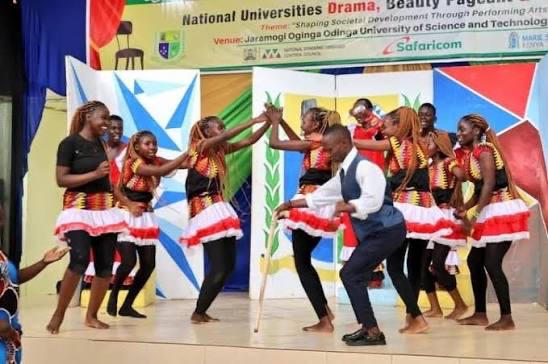
“The festival will showcase diverse talents through performing arts, cultural groups, choirs, poetry, spoken word, comedy, modelling, exhibitions, sports commentary and more. Persons with disabilities are also warmly welcomed and encouraged to participate and showcase their talents. Let us celebrate our diversity, promote peace and strengthen our unity,” stated Ms Kihika.
The Governor indicated that the event themed ‘I Am Because We Are’ will incorporate performing arts groups, cultural groups, choirs, poetry, spoken word, stand-up comedy, sports commentary and modelling and exhibitions. She added that two individuals will be crowned as Mr and Mrs Nakuru Culture.
Ms Kihika challenged artists to create content that identifies with African culture as it will speak to African values and will help in promoting local content internationally.
“Create content that speaks to our African values to tap the market, don’t chase Europe or America as you will not do better than they do,” she advised.
She noted that Kenya’s creative economy presents economic and cultural opportunities that require development.
Ms Kihika pledged that her administration is implementing a raft of policies and programs to support the creative and cultural industry including strengthening compliance to copyright laws to protect intellectual property and ensuring artists receive fair compensation for their work.
While pledging increased investments in the sector even as she called for more support from private organizations to promote the growth of the creative economy, Ms Kihika stated that the devolved unit was championing the passing of legislative policies that will favour players in the arts industry.
She affirmed that her administration recognizes the immense value of the arts and is committed to oversee the creative industry’s continued growth and development adding that the fifth pillar of the Bottom-Up Economic Transformation Agenda (BETA), emphasizes the transformation of the creative sector into a sustainable industry supporting decent livelihoods.
The Governor indicated that through continued investment in talent development, the devolved unit’s administration was working to create an enabling environment where artists across all disciplines can thrive.
“We will continue to champion policies, infrastructure development, and strategic partnerships that uplift our creatives, celebrate cultural diversity, and position the arts at the heart of our nation’s progress,” she pointed out.
Ms Kihika reaffirmed the County Government’s commitment to supporting the creative sector by creating opportunities for artists and small businesses to thrive.
She urged residents to embrace locally made products, saying that supporting local artisans contributes to job creation, economic growth and the development of Nakuru as a vibrant UNESCO Creative City.
The Governor said time has come for creatives to make a meaningful life out of their art noting that her administration was working with the national government to put in place strategies that will open opportunities for all creatives and save their Intellectual Property from exploitation.
The Economy Survey 2026 revealed that the arts, recreation and entertainment industry accounts for 5 percent of the Gross Domestic Product (GDP) and 0.25 percent of total wage employment. It was also identified as a contributor to a happier and healthier lifestyle.
Kenya with a burgeoning youthful population is targeting the creative and digital economy for job creation and employment.
While calling on Kenyans to reflect on the power of the arts to unite, inspire and drive change, Ms Kihika called upon all stakeholders, government agencies, private sector partners, development organizations, and the wider community, to continue investing in and supporting the creative sector as this will create more platforms, open additional opportunities, and amplify more voices.
She noted that by supporting the creative industry the county government was playing a key role in fostering creative thinking and addressing high unemployment rate.
She pointed out that the devolved unit’s administration has identified the creative economy as one of the fastest growing sectors not only as a source of employment but also as an enabler of national cohesion and innovation.
“This is really great news for the creatives that we are working on a comprehensive legal framework to manage this space. We should be able to monetize that space. Actually, creatives’ talent should be their source of livelihood. They should make good money and live well doing what they are doing,” Ms Kihika said.
According to the Communication Authority of Kenya (CA), there are over 130 Free-to-air (FTA) television stations and close to 200 radio stations. The Kenyan creative industry is estimated to have recorded over US$2 billion in total sales and is projected to grow annually at 10.3 percent.
Ms Kihika indicated that art provides a platform for people to express themselves, a situation that enables individuals to stand up for their beliefs and communicate their unique thoughts and needs.
“Art nurtures creativity, innovation, and celebrates cultural diversity. These are timeless values that transcend boundaries and bring people together, even in the most difficult of times. In recent years, through conflict, crisis, and even a global pandemic, the world has seen, more clearly than ever, the capacity of art to heal, uplift, and connect,” the Governor pointed out.
She added that the County Government would continue supporting such initiatives towards cultivating talents, professionalizing them, and integrating them into the broader framework of national development and economic empowerment. By doing so she noted the creative sector will continue to thrive across every part of Kenya.
Mr Barbushe Maina, a thespian and artist who successfully campaigned to have Nakuru recognized as the second Creative City in East Africa by UNESCO, said the introduction of prime arts and comedy segments in nearly all television stations was a clear indication that art is a paying venture.
He observed that besides the performing arts, visual arts and cultural heritage, Kenyans are producing films, videos, television and radio shows, video games, music and books.
Mr Maina noted that businesses in arts, entertainment and recreation are highly specialized in terms of knowledge, skill and capacity and are in effect more likely to be self-employed.
From fashion, film, music and design to digital art and photography, the thespian noted that the industry provides jobs and serves as an important cultural and economic driver.
“Recognizing the significant impact of Kenya’s creative sector, individuals, corporations and stakeholders must come together in collaborative efforts to harness and maximize creative talent.
This collaboration will support economic growth and nurture a thriving economy that enhances overall wellbeing and quality of life,” Mr Maina observed.
by Jane Ngugi and Caroline Nyakio