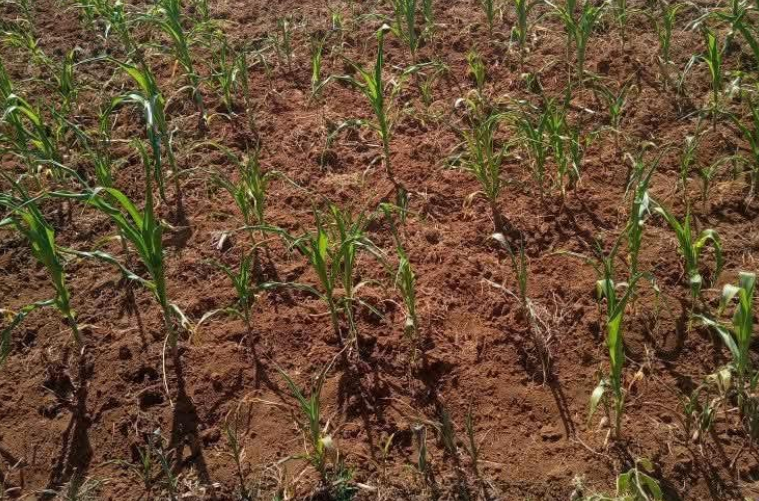
Residents of Elgeyo Marakwet County are grappling with rising food prices and dwindling supplies of essential commodities amid the end of prolonged dry conditions that have affected crop production, reduced milk yields and increased the cost of living.
Markets in Kapsowar and Kapcherop have recorded sharp increases in the prices of basic foodstuffs, forcing households to adjust their budgets as the cost of vegetables, potatoes, beans and other essential commodities continues to rise.
Residents fear that the situation could worsen, raising concerns over food availability and affordability in the coming months.
Faith Jepchumba, a resident of Kapsowar, said the rising cost of food had forced her household to cut back on quantities and compromise on planned purchases to cope with the increasing expenses.
Jepchumba noted that a 2kg tin of potatoes that previously retailed at between Sh80 and Sh100 now costs about Sh200, while the price of 2 kg tin of beans had increased from Sh240 to Sh370.
She said the cost of preparing ordinary meals had also increased significantly, placing additional pressure on household budgets.
“My household used to spend about Sh40 on vegetables for a meal, but we now have to spend at least Sh100 to get enough. Even then, the vegetables are not always available because the dry spell has affected supplies,” she said.
Jepchumba expressed hope that the onset of the rains would improve the availability of vegetables, although she acknowledged that it might take time for supplies and prices to return to normal.
“I hope the onset of the rains will increase the availability of vegetables, although it will take a while for everything to get back to normal,” she said.
Her experience reflects growing concerns among residents and traders in Kapsowar and Kapcherop markets, where rising prices of essential commodities are raising fears of worsening food insecurity.
For many households, the challenge is no longer just finding food but finding enough money to afford it.
Sharon Jebet, a potato vendor in Kapsowar, attributed the rising retail prices to increased wholesale costs and inadequate supplies from farmers.
Jebet said a 50 kg bag of potatoes now costs her Sh4,500 at the farm gate, adding that the commodity had become increasingly difficult to obtain.
She said the high purchase price had forced her to sell a two kilogram tin at Sh200, a price that was beyond the reach of some of her regular customers.
“The prices have gone up, yet potatoes are not readily available. I now buy a 50 kg bag at Sh4,500 directly from farmers, and this has pushed up the retail price,” she said.
Jebet noted that the high prices had affected sales, with some customers opting to for-go potatoes while others preferred to wait for prices to decline before resuming purchases.
She warned that continued supply constraints could further affect traders’ businesses as consumers increasingly struggle to afford basic food commodities.
The situation has also affected livestock farmers and milk retailers, who are facing increased production costs due to the scarcity of animal feeds and pasture.
Mary Joseph, a farmer and milk retailer in Kapsowar, said the lack of pasture had reduced milk production among her cows, while the scarcity of animal feeds had forced her to spend more to maintain the livestock.
She said she had been compelled to increase the price of milk to cushion her business against mounting operational costs.
“A litre of milk that previously sold at Sh60 now goes for Sh80. My customers are complaining about the increase, but there is little I can do because the cost of maintaining the animals has gone up,” she said.
Joseph noted that declining milk yields had further complicated her business, as she struggled to meet customer demand while keeping the enterprise financially viable.
Meanwhile, maize farmers in parts of the county have reported poor harvests following the failure of crops to reach maturity during the previous planting season.
Catherine Kanda, who owns two farms in Kapsowar and Chesoi, said she had not harvested any maize from her farms after the crops wilted due to inadequate rainfall.
Kanda said the losses had left her with limited financial resources to prepare for another planting season, even as the onset of rains offered some hope of recovery.
“I have had to cut down the wilted maize stalks and prepare the farm in Kapsowar for planting beans as I wait to see how the weather develops. I hope the crops will do well now that the rains have started,” she said.
However, she expressed uncertainty about planting in Chesoi, citing fears that the rains might not be sufficient to sustain crops throughout the growing season.
Kanda added that the losses incurred during the previous season had weakened her ability to invest in fresh planting, making it difficult to risk further expenditure without a reasonable expectation of rainfall.
“In Chesoi, I have not planted anything because I am afraid the rains may not be enough. After the losses I suffered in the last season, I do not have the financial capacity to undertake another planting exercise without knowing whether the crops will survive,” she said.
She also expressed concern over the possibility of excessive rainfall damaging crops, noting that unpredictable weather patterns had made it increasingly difficult for farmers to plan their agricultural activities.
Agricultural Extension Officer Justus Kemboi has urged farmers in Elgeyo Marakwet to prioritise fast maturing crops as a strategy to improve yields and minimise losses associated with unpredictable weather patterns.
Kemboi said farmers should take advantage of the ongoing rains to plant suitable crop varieties that mature within a short period, enabling them to harvest before soil moisture levels decline.
He noted that selecting crops suited to the prevailing weather conditions would help farmers make better use of available rainfall and improve household food availability.
The officer also encouraged farmers to seek advice from agricultural extension personnel on crop selection, planting schedules and appropriate farming practices to increase their chances of obtaining better yields.
He said adopting climate smart agricultural practices was increasingly important as farmers faced changing weather patterns that threatened traditional planting seasons and reduced agricultural productivity.
The rising cost of food in the county highlights the vulnerability of rural households to changing weather patterns, particularly where families depend on rain fed agriculture for food and income.
Poor harvests not only reduced the amount of food available in local markets but also diminished farmers’ earnings, limiting their ability to purchase food and meet other household needs.
The decline in livestock productivity further compounds the situation, as milk remains an important source of nutrition and income for many households in the county.
With food prices continuing to rise, residents and traders are concerned about the implications for household food security, particularly if agricultural production fails to recover during the current rainy season.
Farmers are now hoping that sustained and well-distributed rainfall will improve crop production, restore pasture and ease pressure on food supplies and prices.
By Rennish Okong’o