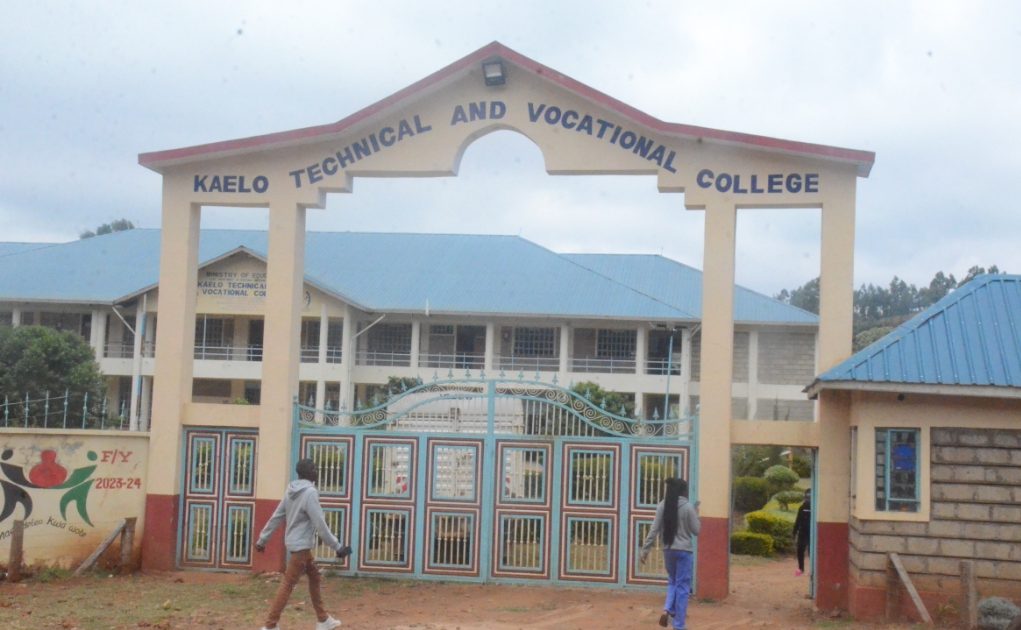
Kaelo Technical and Vocational College (TVC) in Laare, Igembe North constituency, Meru county, is set to hold its inaugural graduation ceremony on September 25, with more than 400 graduands expected to receive certificates and diplomas in various fields.
The graduation ceremony, to be presided over by TVET Principal Secretary Dr. Esther Thaara, will mark a major milestone for the institution, which was established in 2018 and has grown from a modest training center into an institution with an enrollment heading to about 1,500 students.
Speaking ahead of the ceremony, the institute’s Principal Joseph Kimathi said the event would provide an opportunity to showcase the institution’s achievements and demonstrate its role in equipping young people with practical skills for employment and self-reliance.
Kimathi said TVET institutions had historically faced challenges attracting students because, unlike basic education, vocational training was not compulsory.
However, he said the sector had undergone significant transformation since 2023, particularly following the introduction of the Competency-Based Education and Training (CBET) curriculum.
“When we introduced CBET, the perception and uptake of TVET started changing. Our enrollment has risen from about 300 students in 2023 to the current population of about 1,500, and admissions are still ongoing,” he said.
He attributed the growth to increased publicity and recognition of TVET institutions as an important avenue for equipping young people with practical skills needed in the fast-changing labor market.
Kimathi added that the institution had adopted a practical approach to training by giving its students opportunities to apply the skills they acquire in class to real projects within the institution.
He said Kaelo deliberately avoids outsourcing some jobs that can be undertaken by its trainees, including construction and other technical works, as a way of exposing them to real-life working environments and building their confidence.
“Where we have work that our trainees can do, we give them the opportunity instead of bringing people from outside. This enables them to practice their skills, gain experience, and build confidence that they can actually do the work when they leave the institution,” he said.
The approach was helping trainees move beyond theoretical knowledge and develop practical skills, teamwork, and problem-solving abilities that could enable them to create employment for themselves.
The principal said Kaelo had also positioned itself as a center of excellence in mechanical production after being assessed and registered by the Kenya Motor Vehicle Repairers Association.
He said the institution was preparing to operate as a garage and workshop, where government- and privately owned vehicles from the Igembe region and neighbouring areas could be serviced and repaired.
“We are undertaking preliminary works to prepare the facility to start receiving vehicles,” said Kimathi.
The institute has also established satellite garages in Laare and Maua, which will serve both as service centers and practical training facilities for trainees.
Kimathi said the government’s directive requiring government vehicles to be serviced through TVETs would provide Kaelo with an additional source of income while giving students an opportunity to gain hands-on experience.
Apart from income generated through its technical services, the institution has other income-generating activities, including dairy farming and an acre of miraa.
The principal said the government, through the National Government Constituencies Development Fund (NG-CDF), had supported the institution through bursaries, construction of a perimeter wall and a gate, and other projects.
He added that the institute’s growing student population had also contributed to the economic transformation of the surrounding community, particularly through increased demand for accommodation and other services.
Despite the growth, Kimathi said the institution continued to face challenges, including inadequate workshops and infrastructure and a shortage of trainers.
Currently, the institute has about 40 trainers, with 25 employed by the Public Service Commission, while the remaining are employed by the institute’s Board of Management.
He said the Board faced difficulties paying the trainers employed under it due to limited institutional income.
“Recently, we received 10 additional trainers through government recruitment, but we still need more trainers because the student population continues to grow,” he said.
Kimathi called for increased government funding to enable the institution to expand its infrastructure, construct more workshops, and recruit additional trainers.
Kaelo offers programmes in business studies, human resource management, mechanical production, automotive engineering, electrical and electronics, agriculture, cosmetology, fashion and design, environmental studies, and information and communication technology (ICT).
The institution works closely with other government agencies, including the Higher Education Loans Board (HELB), TVET Authority, Kenya National Qualifications Authority (KNQA), Curriculum Development, Assessment and Certification Council (CDACC), and the Kenya Universities and Colleges Central Placement Service (KUCCPS).
Kimathi said the institute’s growth demonstrated the increasing importance of technical skills in addressing unemployment and promoting economic development.
He urged young people to embrace vocational training, saying skills development was critical to achieving the country’s long-term development aspirations.
“Skills are the way to go if we are to achieve our development aspirations and prepare our young people for the future,” he said.
The inaugural graduation is expected to bring together government officials, education stakeholders, industry representatives, parents, guardians, and members of the community to celebrate the achievements of the first cohort of graduands.
By Dickson Mwiti