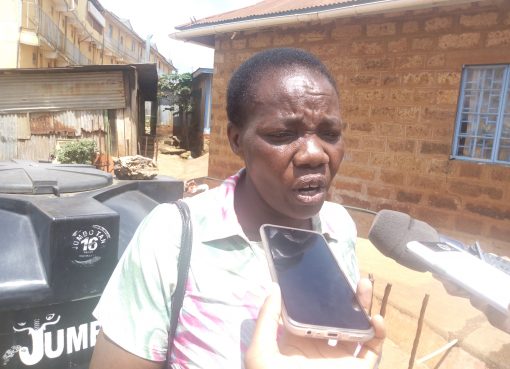
For years, Mary Atieno endured long and exhausting journeys to access antenatal services while pregnant with her four children, walking more than 25 kilometres to clinics in Uriri Market.
The 47-year-old resident of Ombo village recalls how the monthly trips were both time-consuming and physically demanding, largely because her village and four neighbouring communities lacked reliable roads and accessible transport.
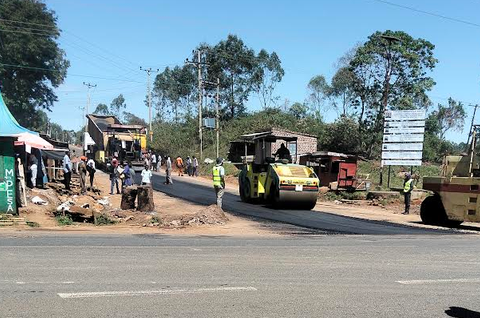
However, the recent tarmacking of a road connecting Ombo, Ayego, Rapogi and Uriri, and extending towards Migori town, has opened up previously isolated communities, improving access to essential services and economic opportunities.
Atieno and other residents are now welcoming ongoing road construction projects across Uriri Constituency, saying the improved infrastructure will ease transportation challenges and help save lives.
“The bad roads and long distance to health facilities in Uriri Market and Migori town forced many women to deliver at home. But this has now changed because of the good roads coming up and connecting the once interior parts of Uriri Constituency,” Atieno said.
She was speaking during a visit by the Kenya News Agency to the ongoing construction works along the Ombo-Oyani-Osogo road.
The approximately 58-kilometre road, previously a rough stretch of murram and rocky village pathways, is being upgraded to bitumen standards under the broad-based government arrangement between the Orange Democratic Movement (ODM) and the Kenya Kwanza administration.
The project is expected to open up more than five villages across the constituency and improve connections to health facilities, markets and other essential services.
The road will link with another project running from Stella through Nyabinga and Osogo to Gogo Power Station, near the border with Nyatike Constituency. The second road is also undergoing tarmacking.
Pamella Onyango, 67, said residents of the five villages targeted by the two multimillion-shilling projects had endured years of poor accessibility, with expectant mothers particularly affected by the difficult journeys to health facilities.
She recalled that some women who developed complications during childbirth could not reach hospitals in time and were instead assisted by unskilled traditional birth attendants, sometimes with tragic consequences.
“We have lost many lives in the past during delivery, and we must appreciate the ongoing works to construct better roads with a view to improving accessibility not only to health facilities but also to markets for our produce,” Onyango said.
According to Migori County’s 2026/2027 County Integrated Development Plan (CIDP), approximately 65 per cent of women deliver in health facilities, while maternal mortality stands at 691 deaths per 100,000 live births.
The county continues to face challenges in achieving global maternal health targets, including the Sustainable Development Goal of reducing maternal mortality to fewer than 70 deaths per 100,000 live births by 2030.
Hellen Apiyo, a nurse in charge of a local health facility, said improved road access, alongside other healthcare interventions, could help reduce preventable maternal deaths by enabling pregnant women to reach medical facilities more quickly.
“With the improved road network in this region alongside other interventions, we expect to register zero maternal deaths in the near future,” Apiyo said.
President William Ruto recently announced government commitments worth billions of shillings towards road construction in Migori, the wider Luo Nyanza region and other parts of the country.
Peter Omollo, an ODM supporter and admirer of the late former Prime Minister Raila Odinga, said he had never imagined that such major infrastructure projects would reach remote villages in his lifetime.
“I am yet to believe that the road constructions currently being implemented in this area could now happen after a very long time of neglect by the previous regimes,” he said.
By George Agimba