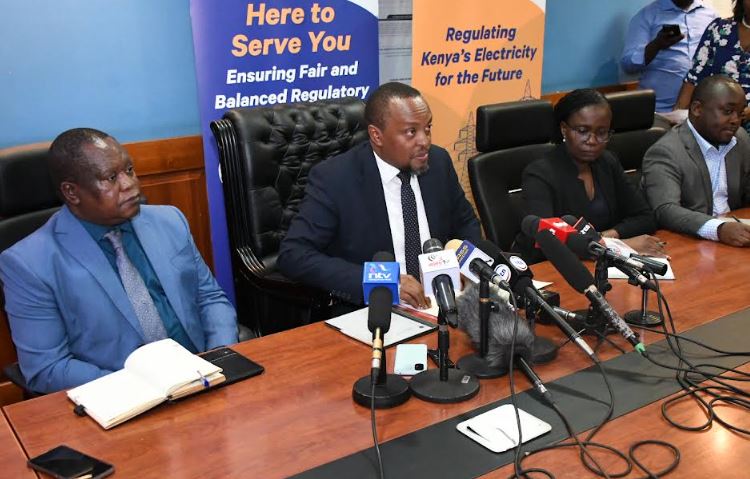
High global oil costs driven by Middle East geopolitical tensions and supply disruptions have pushed up Kenya’s fuel prices, the Energy and Petroleum Regulatory Authority (EPRA) has announced.
Speaking during a monthly pricing announcement press briefing at the EPRA headquarters in Upper Hill, Nairobi, EPRA Director General (DG) Eng. Edward Mwirigi Kinyua stated that September 2026 recorded the highest international prices for refined petroleum products in more than a decade.
“Supply of refined petroleum products worldwide has in the recent past been severely affected by closure of key transit corridors in the Middle East. Our international suppliers have therefore been forced to source cargoes from the Far East—looking at South Korea, Singapore, and Europe—to meet contractual requirements,” Kinyua reported.
According to EPRA, the crisis was compounded by an embargo on Saudi-linked shipping lines declared by rebels in July 2026, forcing marine petroleum tankers to avoid the Red Sea transit corridor following the earlier closure of the Strait of Hormuz.
In addition, fresh attacks on Saudi Arabia’s east-west pipeline pump stations in September, combined with recent diesel export bans by the United States and Russia, further squeezed global market supplies.
Notably, between February and September 2026, free-on-board (FOB) costs for super petrol surged by 89.45 per cent, rising from US686.53 to US1,300.65 per metric tonne. Diesel prices rose by 90.64 percent from US637.76 to US1,215.83 per metric tonne, while dual-purpose kerosene (JT1) increased by 84.01 percent from US681.20 to US1,253.50 per metric tonne.
The DG noted that these international shifts translated into landed cost increases of Sh59.36 per litre for super petrol, Sh61.80 for diesel, and Sh59.57 for kerosene. Average landed costs in September alone grew by 11.81 per cent for petrol, 11.32 per cent for diesel, and 9.41 per cent for kerosene compared to August 2026 levels.
Under the October–November pricing cycle, maximum allowed retail prices for super petrol, diesel, and kerosene have increased by Sh12.93, Sh9.90, and Sh28.49 per litre, respectively.
Addressing the sharp adjustment in kerosene, Eng. Kinyua explained that EPRA acted to narrow the price gap between kerosene and diesel to curb fuel adulteration within the transport industry.
“The decision on the pump price has also taken into consideration the risk of a huge price difference between kerosene and motor fuels, which may lead to widespread cases of adulteration. Instead of holding kerosene at an artificially low price, we have sought to bring it closer to the other fuels to remove that incentive for adulteration,” he reassured.
To cushion local consumers against wider market shocks, Eng. Kinyua disclosed that the government has sustained interventions through the government-to-government (G2G) petroleum procurement framework and tax relief measures.
Under the G2G arrangement, freight and premium costs remain capped at US84 per metric tonne for petrol, US78 for diesel, and US$97 for kerosene, saving consumers approximately Sh17.04 per litre compared to spot market rates.
Furthermore, he revealed that the government extended the reduction of Value Added Tax (VAT) on petroleum products from 16 per cent to 8 per cent through to January 14, 2027.
Eng. Kinyua added that Sh29.4 billion was deployed through the Petroleum Development Levy Fund (PDLF) during the 2025/2026 financial year to stabilise prices, with Sh24.3 billion applied between April and June 2026.
“Stabilisation of pump prices remains central to this administration as a primary cushion to citizens. The government will continue beefing up the Petroleum Development Levy Fund, allowing for stabilisation even as prices in the international market reach unprecedented levels, especially as the West enters the winter heating season,” affirmed the DG.
Meanwhile, long-term measures to enhance national energy security include strategic investments such as the recently commissioned Dangote East Africa Refinery, which EPRA expects will help insulate the country against global price volatility.
In attendance at the press briefing were EPRA Director of Economic Regulation and Planning Dr. John M. Mutua, Acting Director for Petroleum and Gas Stella Opakas and Senior Principal Pricing Analyst Leonard Legon.
By Lilian Gichohi