The African Development Bank (AfDB) has launched Phase III of the Technologies for African Agricultural Transformation (TAAT) programme and approved an additional USD16 million to accelerate the adoption of agricultural technologies and strengthen food security across Africa.
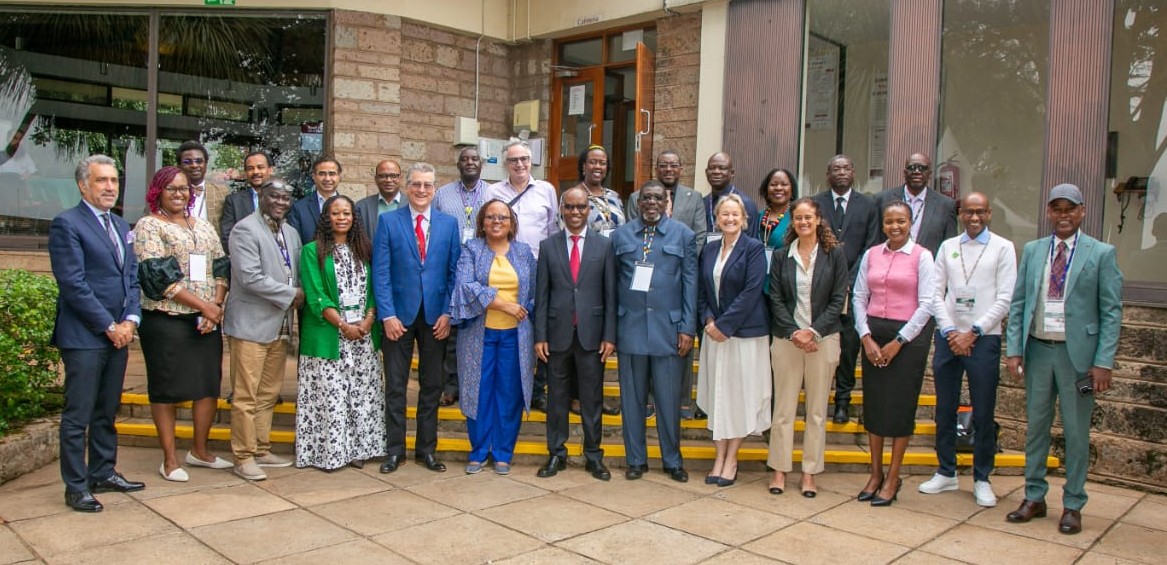
The launch, held at the International Livestock Research Institute (ILRI) campus in Nairobi, marks the next phase of a programme that has become Africa’s largest agricultural technology delivery platform.
The initiative is implemented by the International Institute of Tropical Agriculture (IITA) on behalf of Consultative Group on International Agricultural Research (CGIAR) Centres and African Agricultural Research, Innovation and Education Institutions (AARIEIs).
The third phase will focus on expanding access to certified seed, climate-smart technologies, digital advisory services and sustainable financing, while strengthening regional seed systems and integrating proven innovations into national agricultural investment programmes.
Speaking during the launch, ILRI Director General Prof. Appolinaire Djikeng described the TAAT Clearinghouse as a catalyst for agricultural transformation, saying it has evolved beyond technology broking into a platform connecting science, investment and partnerships across the continent.
CGIAR Chief Scientist Dr Sandra Milach said integrating the TAAT Clearinghouse into CGIAR would ensure it becomes a permanent continental asset linking research, national priorities, development finance and private-sector investment.
AfDB advisor to the Vice President, Agriculture, Human and Social Development, Dr Martin Fregene, said the programme demonstrates the importance of partnerships in transforming African agriculture.
“No institution can transform African agriculture alone. TAAT III connects science to finance, partnerships to implementation and innovation to impact, enabling the continent to build resilient food systems that can feed Africa,” he said.
Since its launch in 2018 under the Bank’s Feed Africa Strategy, TAAT has reached more than 25 million smallholder farmers, increased productivity by up to 69 per cent and influenced agricultural investments worth USD3.18 billion.
The programme has also supported the distribution of 488,000 tonnes of climate-resilient seed, facilitated delivery of 3.1 million tonnes of fertiliser through the African Emergency Food Production Facility, validated more than 180 agricultural technologies and developed national seed roadmaps in eight African countries.
Phase III places greater emphasis on sustainability through stronger private-sector participation, innovative financing models and demand-driven technical assistance to African governments, while the first and second phases of TAAT in 2018 and 2022, respectively, involved scaling agricultural technologies across multiple commodity value chains and emergency food responses.
Phase III also aims to strengthen Africa’s regional technology delivery infrastructure by increasing certified seed production, expanding digital extension services and improving climate resilience.
TAAT has already supported the development of national seed investment roadmaps in Kenya, Sierra Leone, Liberia, Guinea, Benin, Côte d’Ivoire, Cameroon and Zimbabwe to improve seed production, financing and policy reforms.
The programme will further expand digital agriculture through e-extension platforms, climate information services and online technology catalogues that enable governments and development partners to identify and deploy proven agricultural innovations.
Over the next phase, TAAT targets an additional 14 million smallholder farmers while supporting youth and women agripreneurs, increasing private-sector investment and strengthening resilient food systems across the continent.
CGIAR Scaling for Impact Director Dr Tim Krupnik said TAAT III provides an opportunity to position CGIAR as a science engine driving Africa’s agricultural transformation while strengthening collaboration with governments and financial institutions to scale impact.
By Wangari Ndirangu