In the rolling hills of Vihiga County, slender bamboo stalks sway gently in the morning breeze, symbolizing more than environmental conservation.
They are becoming a dependable source of income, transforming livelihoods and offering farmers and artisans a sustainable crop that yields returns within a few years rather than generations.
From baskets woven in village courtyards to furniture and household items displayed in showrooms, bamboo is steadily emerging as a valuable green enterprise.
According to Atlas Reforestation Foundation Agribusiness Manager Topysther Walusimbi, the organization realized that restoring forests alone was not enough if surrounding communities lacked alternative sources of income.
“We plant trees and restore ecological zones, but after planting, what do we do with the communities around those forests? If we don’t provide them with sustainable livelihoods, they will eventually return to cut down the forests,” she said.
This realization led to the establishment of Beyond Trees, the commercial arm of Earth Lungs, a non-profit conservation organization.
Walusimbi said Beyond Trees operates several enterprises, including Earth Lungs Bamboo Industry Limited in Vihiga, Bush Honey in Nandi, and Uyoga mushroom farming in Mombasa, alongside glass recycling, pottery, vegetable farming, and goat rearing.
“The idea is simple. Conservation cannot succeed without creating economic opportunities for communities,” she noted.
She explained that bamboo has gained global attention because of its exceptional environmental and economic benefits.
Unlike conventional timber trees, bamboo reaches maturity within three to five years, regenerates naturally after harvesting without requiring replanting, and absorbs significantly more carbon dioxide while producing more oxygen.
“Bamboo behaves differently from most plants. Once harvested, the root system remains intact and new shoots emerge naturally, making intact,renewable resource for decades,” she explained.
Walusimbi added that bamboo is increasingly replacing plastics and slow-growing timber in various industries because of its versatility and rapid growth.
She said different bamboo species thrive under different ecological conditions, with some suited for coastal areas while others perform best in highland regions such as Vihiga.
However, processing bamboo into durable products requires specialized treatment.
She explained that freshly harvested bamboo contains natural sugars that attract insects.
Traditionally, manufacturers relied on chemical preservation methods that required drilling through each bamboo node before soaking the poles in preservatives for several weeks.
Modern technology has significantly improved the process.
“Today we use pressure carbonizer treatment where high-pressure steam removes sugars from the bamboo within four hours, making it insect-resistant and ready for manufacturing,” she said.
Globally, bamboo has become an important crop in addressing climate change, soil conservation, and water management.
Research shows bamboo plantations reduce soil erosion on steep slopes, improve groundwater recharge, and capture between 12 and 17 tonnes of carbon dioxide per hectare annually.
The International Bamboo and Rattan Organisation estimates that increased use of bamboo products could help reduce global carbon emissions substantially by replacing materials such as steel, plastic, and conventional timber.
Kenya recognizes bamboo as a crop under the Crops Act, allowing farmers to cultivate and harvest it similarly to other agricultural crops.
Some of the bamboo species grown in the country include Bambusa longinternode, Thyrsostachys siamensis, Dendrocalamus latiflorus, Dendrocalamus asper, and Bambusa bambos.
At Atlas Reforestation Foundation, the focus extends beyond planting bamboo to building an entire value chain.
Business Manager Zwigyl Malesi said the organization distributes bamboo seedlings to farmers instead of maintaining large plantations.
“We don’t own bamboo farms. We provide seedlings to farmers across the community. Once the bamboo matures after about five to seven years, harvesting begins, and after cutting, new shoots emerge within a few months,” she said.
Although the bamboo processing factory became fully operational in 2023, the family’s involvement with bamboo dates back to 2012.
“My father began growing bamboo around 2012. We started by planting it at home before distributing seedlings to farmers. Later, we established the factory after realizing the enormous potential of bamboo products,” Malesi said.
She noted that the company sought to reduce dependence on imported bamboo products by utilizing locally available raw materials and supporting Kenyan artisans.
““We realized many products imported from overseas can actually be produced locally using bamboo while creating employment for our own people,” she said.
Inside the Vihiga factory, bamboo undergoes several stages of processing.
The harvested poles are first cut into uniform lengths before being split into strips. The strips are then smoothed by removing the nodes and later shaped into cylindrical rods.
Depending on market demand, the rods are processed into food-grade skewers and toothpicks, biodegradable cotton bud sticks, curtain blinds and various furniture products.
Despite the growing opportunities, Malesi acknowledged that bamboo farming and processing still face challenges.
“Bamboo is delicate during its early stages. Farmers must follow planting instructions carefully because different species require different ecological conditions,” she said.
She also noted that Kenya still lacks sufficient artisans with bamboo processing skills.
“Most carpenters are trained to work with hardwood such as mahogany and oak. Bamboo requires different skills, so we have to train many of our workers from the beginning,” she explained.
Currently, the Vihiga factory employs about 50 workers across different departments.
At the company’s showroom, bamboo products continue attracting customers from within and outside the county.
Showroom attendant Marion Kasorani said bamboo products are increasingly gaining popularity due to their affordability, durability and environmental friendliness.
“It has created employment and supports many low-income earners. We receive customers from Vihiga and other parts of Kenya, as well as international visitors,” she said.
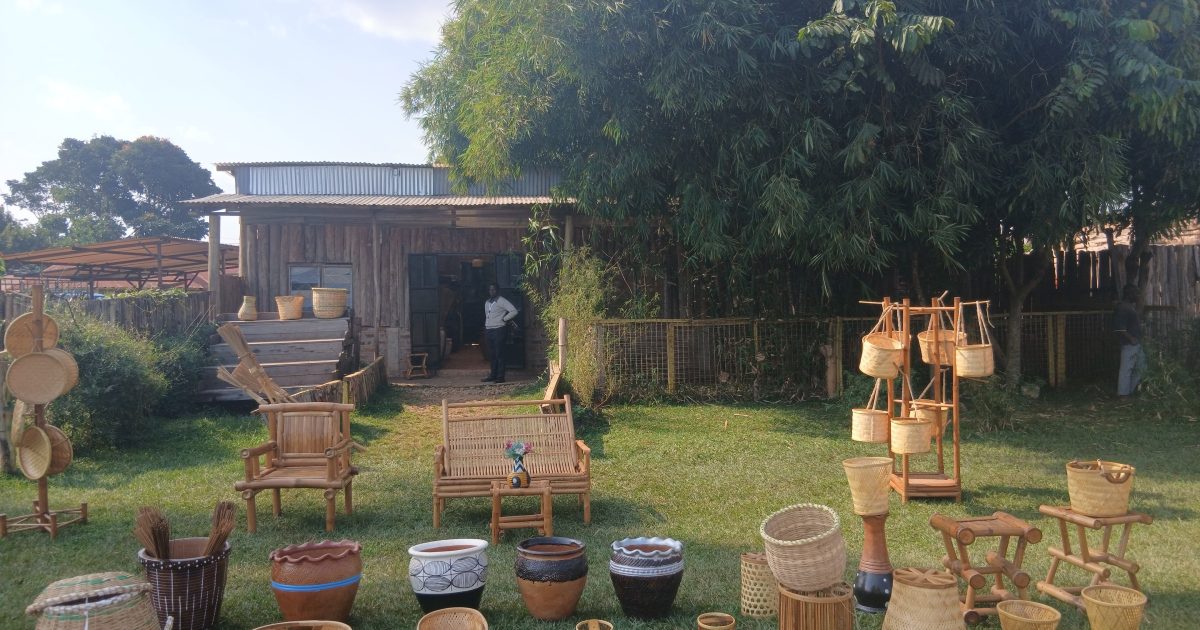
Products on display include key holders, trays, coasters, phone holders, stools, beds, coffee tables and other household items made entirely from bamboo.
Although many bamboo plantations in Vihiga are still maturing, Atlas Reforestation Foundation believes the long-term model is already proving successful by combining environmental conservation with income generation.
For the organization, bamboo represents more than a conservation initiative. It offers communities an opportunity to protect forests while earning sustainable livelihoods, ensuring that economic development and environmental protection move hand in hand.
By Convivian Khasoha