At seven months old, Edmond did not turn when his mother called him from the doorway. Yet moments later, he startled at the sharp ring of a phone.
To many, it would seem like a small, confusing detail. But to his mother, Eunice Onacha, it was the first sign that something was different. Edmond could hear, but he was not responding in the usual way. It was an early indication of autism, a condition where a child may tune out voices yet react strongly to certain sounds.
Eunice began to observe him more closely. By the time Edmond was two years old, she had sought medical help and received a diagnosis, three years earlier than most children in Vihiga County. That early intervention would later prove critical.
“Initially, Edmond was diagnosed with cerebral palsy. But after noticing some unusual changes, I took him to Vihiga Teaching and Referral Hospital, where he was later diagnosed with autism,” she explained.
At Vihiga Teaching and Referral Hospital (VTRH), there is no national screening programme for autism. Detection largely depends on observant parents like Eunice and a small number of trained health workers. The facility currently has only two therapists serving the entire county.

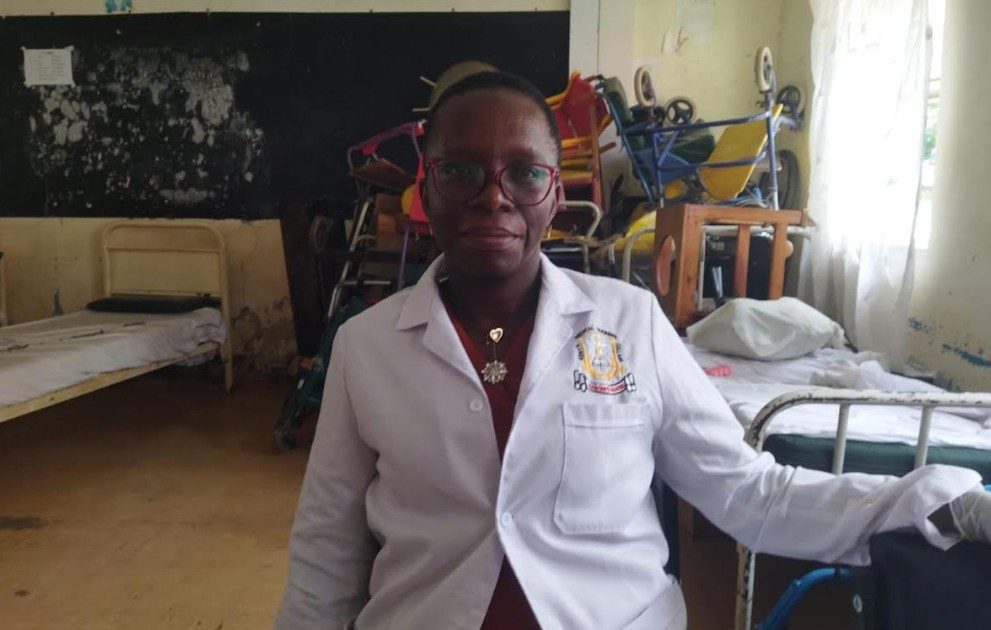
According to occupational therapist Dr Anita Atemo, Autism Spectrum Disorder is a neurological condition that affects behaviour and development. She explains that it is not a disease but a neurodivergent condition that presents differently in each individual.
“Some children require minimal support, while others need constant care. That is why it is called a spectrum,” she said.
Dr Anita notes that early signs of autism include poor eye contact, limited social interaction, lack of response when called by name, and difficulty concentrating. By the age of three, these signs often become more pronounced.
“Parents may notice delayed speech, frequent tantrums, and self-harm behaviours like biting or head-banging. These are indicators that a child may be on the autism spectrum,” she added.
For Eunice, the signs were unmistakable. “Edmond was very hyperactive. He made a lot of noise and never responded when called. I could not tell when he was hungry or full,” she recalled.
Although the exact cause of autism remains unknown, Dr Anita points to genetics as a contributing factor. Research also shows that boys are more likely to be diagnosed than girls, even though symptoms are similar across genders.
At VTRH, therapy focuses on managing visible symptoms and supporting developmental milestones. Children with delays are enrolled in physiotherapy or occupational therapy, which includes behavioural training to improve communication, social interaction, and daily functioning.
“Some children with autism have very high IQs, while others struggle significantly with learning. Many, however, excel in practical and hand skills,” Dr. Anita noted.
To support this, the hospital works with specialised teachers to guide children in self-care activities such as grooming and feeding, as well as vocational skills like tailoring and beadwork—skills that can help them become independent in adulthood.
Early diagnosis and consistent therapy can significantly improve outcomes. In Edmond’s case, progress, though gradual, has been encouraging.
“Now he can recognise me, support his neck, turn his body, and respond when called,” Eunice said with a smile.
However, consistency is key. Dr Anita warns that irregular therapy sessions can lead to setbacks, as children with autism thrive on routine and structure.
“They are very particular about their environment. Even small changes, like rearranging toys, can distress them,” she explained.
In some cases, children may exhibit self-harming behaviours when overwhelmed, including biting their lips or slapping themselves. Proper medical management, including prescribed medication, is essential to prevent further complications.
Despite the progress, accessing care remains a major challenge for many families in Vihiga County. Transport costs, therapy fees, and specialised nutrition needs place a heavy burden on caregivers.
Eunice attends therapy sessions twice a month, but not without difficulty.
“Travelling with Edmond is hard, especially as he grows older. Sometimes I have to choose between paying for transport or buying his medication,” she said.
She often compensates for missed sessions by continuing therapy exercises at home.
Dr Anita encourages parents to enrol in the Social Health Authority (SHA) scheme to ease the financial strain of treatment. Nutrition also plays a crucial role in managing autism. According to Dr Anita, certain foods, particularly those high in sugar and gluten, can worsen symptoms such as hyperactivity.
“Natural foods are highly recommended. Parents should avoid sugary and wheat-based foods and opt for healthier alternatives like arrowroots,” she advised.
For Eunice, even meeting these dietary needs is a struggle.
“I need a wheelchair to help Edmond move around and equipment like a blender and gas for preparing his meals. Everything is expensive,” she said, appealing for support from well-wishers and the government.
Beyond financial challenges, stigma remains a significant barrier. Due to limited awareness, many in the community still associate autism with curses or bad luck.
“I had to quit my job because people refused to associate with my child. They said he was cursed. It is painful because they do not understand autism,” Eunice lamented.
She now spends time educating those around her, determined to change perceptions.
Within the hospital, efforts are also being made to raise awareness. Dr. Anita says that although outreach programmes exist, they are limited by staffing constraints.
“Social media has become a helpful tool in spreading awareness, but we still need more structured community engagement,” she said.
She believes that changing how autism is perceived is critical. “These children are not ‘mentally ill’. They are different, energetic, and need understanding. If society learns about autism, they will treat them with dignity,” she emphasised.
Dr Anita also highlighted that autism is not limited to children. Many adults remain undiagnosed due to lack of awareness, often being misunderstood as having difficult personalities.
“In some communities, behaviours are dismissed as character traits until they become severe. By then, intervention becomes more complex,” she noted.
Previously, VTRH partnered with a Community-Based Rehabilitation (CBR) programme to reach patients in schools and special units. However, due to limited personnel, such outreach has since declined.
Dr Anita is now calling on the government to invest more in autism care.
“We need more therapists at the sub-county level, better equipment, and a conducive therapy environment away from noise. Reviving outreach programmes would also help us reach more families,” she urged.
For her, the work is demanding but deeply fulfilling.
“My greatest motivation is seeing a child improve when they begin to feed themselves or walk upright. Those moments give me hope and keep me going,” she said. Back at home, Eunice continues her journey with Edmond, holding onto that same hope, one small milestone at a time.
According to County Director for Disability Affairs, Ruth Oyier, Vihiga County continues to record a growing number of autism cases, with 305 identified during the latest mapping.
She noted that most children are in special needs schools due to the absence of dedicated autism institutions in the county, and many are undergoing therapy and support programmes.
Oyier highlighted challenges in care, including the need for properly fitted wheelchairs, which must be prescribed and measured by medical professionals to avoid causing harm.
She also raised concern over rising cases of abuse targeting autistic girls, which in some instances has led to pregnancies and increased care needs.
The director further pointed out the heavy financial burden on families, citing costs for medication, diapers, and constant caregiving, while caregivers receive a monthly allowance of only Sh2,000, which she termed inadequate.
Oyier called for stronger support systems and urged parents to seek assistance from disability support organisations in Mbale.
She appealed for increased collaboration among stakeholders to improve protection, care, and inclusion for children living with autism in Vihiga County.
As April’s Autism Awareness Month comes to a close, there is a renewed call for understanding, inclusion and support for children living with autism and their families.
By Florence Oteng’o and Rose Wasike