Uasin Gishu County is moving beyond simply building water infrastructure to ensure the taps keep flowing for years to come.
Through the Department of Environment, Climate Change, Natural Resources, Water, Irrigation, Sanitation and Energy the county has intensified training for the local committees that will manage and maintain community water projects long after the contractors leave.
In the last financial year alone, the county delivered 115 water projects under both Ward Development and the Financing Locally-Led Climate Action (FLLoCA) programmes.
One of the newest successes is the completed Lelkoin Water Project in Kipsomba Ward, Soy Sub-County.
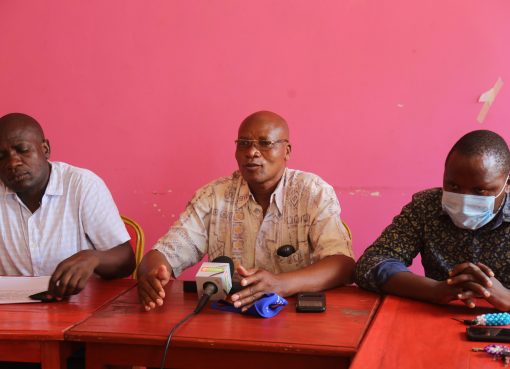
On Monday, members of its Project Management Committee and the Ward Climate Change Planning Committee sat down for hands-on training designed to turn them into effective stewards of the facility.
County engineers Francis Ndasaba, Chris Mbevi and Tabitha Kipnyango walked the committees through water quality monitoring, supply by-laws, project scope, and day-to-day operation and maintenance.
“This project is not finished when we hand over the keys,” said engineer Ndasaba.
“The real work begins now, with the community taking ownership. If the committees understand water quality, proper maintenance and the by-laws that govern the system, this water will continue to serve the people for decades,” urged Ndasaba.
The Lelkoin scheme includes the rehabilitation of a natural spring, a 50-cubic-metre sump tank, a 24-cubic-metre storage tank, a solar-powered pumping system, rising main and distribution pipelines.
It is expected to serve Cheplelaibei Primary and Secondary Schools, nearby churches and health facilities, and roughly 150 households.
“We are giving the committees the technical knowledge they need so that small problems do not become big ones,” explained engineer Kipnyango. “When communities manage their own water systems well, service delivery improves and accountability becomes the culture, not just a slogan.”
On his part, Engineer Mbevi added: “Sustainable access to clean water is not only about pipes and tanks. It is about people who know how to protect the source, operate the system correctly and keep the infrastructure working. That is the difference between a project that lasts and one that fails after a few years.”
By equipping Project Management Committees and Ward Climate Change Planning Committees with practical skills, the county aims to translate its investment in water infrastructure into lasting service.
According to the officials, this approach promotes local ownership, reduces dependence on external repairs and ensures that completed projects continue delivering reliable water to residents.
The training programme forms part of a wider county push to make every water investment sustainable, so that communities across the devolved unit can count on clean water not just today, but for generations to come.
By Maurice Aluda