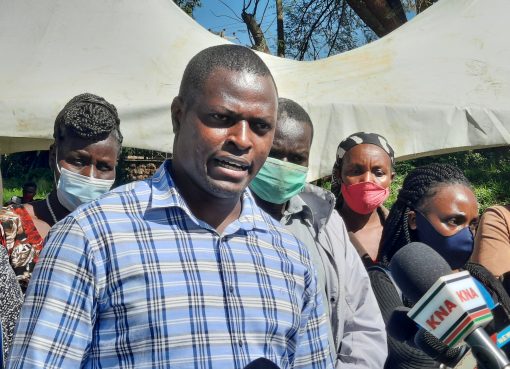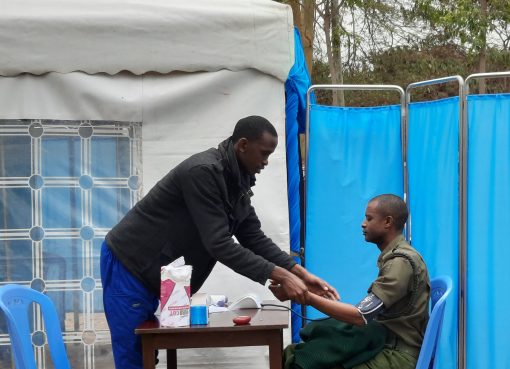
Nakuru County has rolled out the second cohort of specialized mental health training for frontline healthcare providers to help strengthen mental healthcare services across the county.
Executive Committee Member (CECM) for Health Ms. Roselyn Mungai said the training aims to equip healthcare providers with the knowledge and practical skills to identify, assess, manage, and appropriately refer patients with mental health conditions, bringing quality mental healthcare closer to communities.
According to Ms Mungai, strengthening the capacity of frontline healthcare providers was critical to improving the early identification, treatment, and referral of mental health conditions while ensuring quality mental healthcare was integrated into primary healthcare services across the county.
The County goal, the CECM said was to build a health system where every healthcare worker is confident and well-equipped to recognize, assess, manage, and appropriately refer mental health conditions.
Ms Mungai noted that strengthening the capacity of frontline healthcare providers integrates quality mental healthcare into primary healthcare services, ensuring that residents can access timely, compassionate, and people-centred care closer to their communities.
The specialized training focuses on enhancing the capacity of Clinical Officers and Nurses to identify common mental health conditions, conduct basic mental health assessments, provide appropriate interventions, and make timely referrals for patients requiring specialized care.
The initiative also seeks to equip participants with practical approaches to integrating mental healthcare into routine primary healthcare services.
The programme is being implemented through a partnership between the County Government of Nakuru, the Ministry of Health, Amref Health Africa, and the Mission for Essential Drugs and Supplies (MEDS) under the Health Systems Strengthening Programme funded by Johnson & Johnson (J&J).
The World Health Organization (WHO) estimates that one in every eight people globally lives with a mental health condition, making mental illness one of the leading causes of disability worldwide.
The organization emphasizes that integrating mental health into primary healthcare is essential to improving early diagnosis, treatment, recovery, and continuity of care while reducing stigma and widening access to services.
Amref Health Africa notes that strengthening the capacity of frontline healthcare workers is critical to addressing the growing burden of mental health conditions, particularly in low- and middle-income countries where access to specialized mental health professionals remains limited.
The organization advocates for community-based, integrated mental healthcare that enables early identification, timely intervention, and appropriate referral within primary healthcare systems.
The Health Systems Strengthening Programme, implemented by Amref Health Africa in partnership with the Mission for Essential Drugs and Supplies (MEDS) and supported by Johnson & Johnson (J&J), seeks to strengthen county health systems by building the capacity of healthcare workers, improving service delivery, and expanding access to quality healthcare through sustainable partnerships and integrated care models.
The Ministry of Health has prioritized the integration of mental health into primary healthcare through the Kenya Mental Health Action Plan 2021–2025, which seeks to strengthen community-based mental health services, improve the capacity of healthcare workers, expand access to quality mental healthcare, and reduce the treatment gap for mental health conditions across the country.
The County Government of Nakuru continues to prioritize mental health as an integral component of Universal Health Coverage (UHC) by investing in workforce capacity building, strengthening community-based mental healthcare, and partnering with development organizations to ensure residents have access to timely, quality, and people-centred mental health services.
By Caroline Nyakio