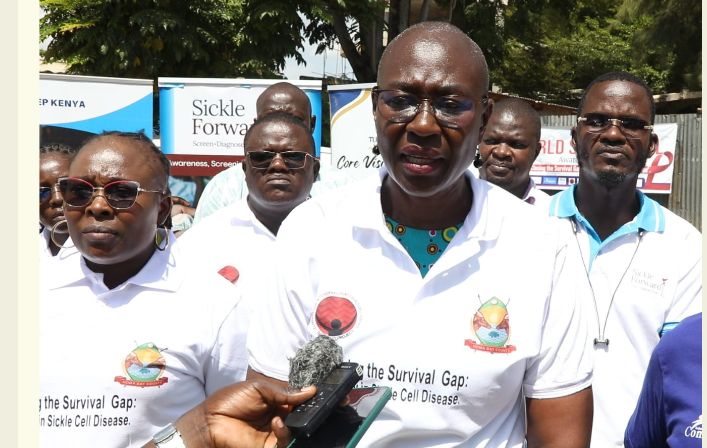
Medical experts in Homa Bay County have urged residents to embrace early diagnosis of Sickle Cell Disease (SCD), saying it is one of the most effective ways of preventing deaths associated with the condition.
Speaking during the commemoration of World Sickle Cell Day in Homa Bay on Friday, health professionals noted that many children suffering from the disease die because they are diagnosed too late, denying them access to life-saving treatment.
Dr. Meshack Liru, a pediatrician in Homa Bay County, said the prevalence of Sickle Cell Disease in the region stands at nine per cent, making it one of the most affected areas in the country.
According to Dr. Liru, the disease remains costly to manage, and delayed diagnosis continues to contribute significantly to mortality among affected children.
“About 80 percent of children with Sickle Cell Disease in this region die because they are diagnosed late. Early diagnosis and treatment can greatly improve the quality of life of patients and reduce deaths,” said Dr. Liru.
He emphasized the importance of routine newborn screening, noting that it enables medical practitioners to identify affected infants early and begin treatment before complications arise.
Homa Bay is among the 17 counties in Kenya that are highly affected by Sickle Cell Disease, a genetic blood disorder that is inherited from parents.
County Executive Committee Member for Health, Grace Osewe, said the county government has introduced several interventions aimed at reducing the burden of the disease.
Among the measures is the establishment of weekly clinics where patients receive regular medical check-ups and treatment.
“We encourage couples to undergo screening before having children. This helps determine the possibility of having a child with Sickle Cell Disease because it is a genetic condition,” Osewe said.
She added that the county government has also intensified testing of infants at maternal wards to ensure early detection and timely intervention.
“The government is conducting tests for infants at the maternal wards as part of efforts to improve early diagnosis and management of the disease,” she added.
During the event, sickle cell warriors presented a petition to the county government seeking improved access to healthcare services and medication.
The patients called for enhanced support systems, affordable treatment, and increased awareness campaigns to help reduce stigma associated with the condition.
The fight against Sickle Cell Disease in Homa Bay has also received support from humanitarian organizations. Doctors Without Borders, also known as Médecins Sans Frontières (MSF), is among the organizations supporting the management of non-communicable diseases in the region.
The organization currently supports more than 4,000 patients suffering from various chronic illnesses, including Sickle Cell Disease.
Ken Ouma, the County Non-Communicable Diseases (NCD) Chairperson, said there is a need for stronger interventions to ensure patients receive quality healthcare services.
“The county government should strengthen early diagnosis programs and improve access to essential drugs for sickle cell patients,” Ouma said.
He further appealed to the national government to ensure that sickle cell warriors benefit from healthcare services through the Social Health Authority (SHA).
“The national government should make sure that patients with Sickle Cell Disease can access treatment through the Social Health Authority without challenges,” he added.
Apart from medical care, stakeholders also highlighted the importance of addressing mental health challenges among patients and caregivers.
Tumaini Action Community-Based Organization founder David Salin said psychological support should be integrated into Sickle Cell Disease management programs.
“Patients living with Sickle Cell Disease and their caregivers need counseling services to help them cope with the emotional and psychological challenges associated with the condition,” Salin said.
He noted that mental health challenges can negatively affect both patients and caregivers, slowing progress made in managing the disease.
“Poor mental health can undermine the gains made in the fight against Sickle Cell Disease. We need to support both patients and their families psychologically,” he added.
As the world marked World Sickle Cell Day, Health care experts in Homabay County renewed their commitment to raising awareness about the disease, promoting early diagnosis and to ensure that every child born with sickle cell disease has an opportunity to live in a healthier and productive life.
By Shanel Kwamboka and Davis Langat