A section of Embu County leaders has opposed and condemned plans to establish a US-backed Ebola quarantine and treatment centre in the country.
They raised concern that the move was going to expose Kenyans to one of the world’s deadliest infectious diseases with a high case fatality rate and serious containment challenges.
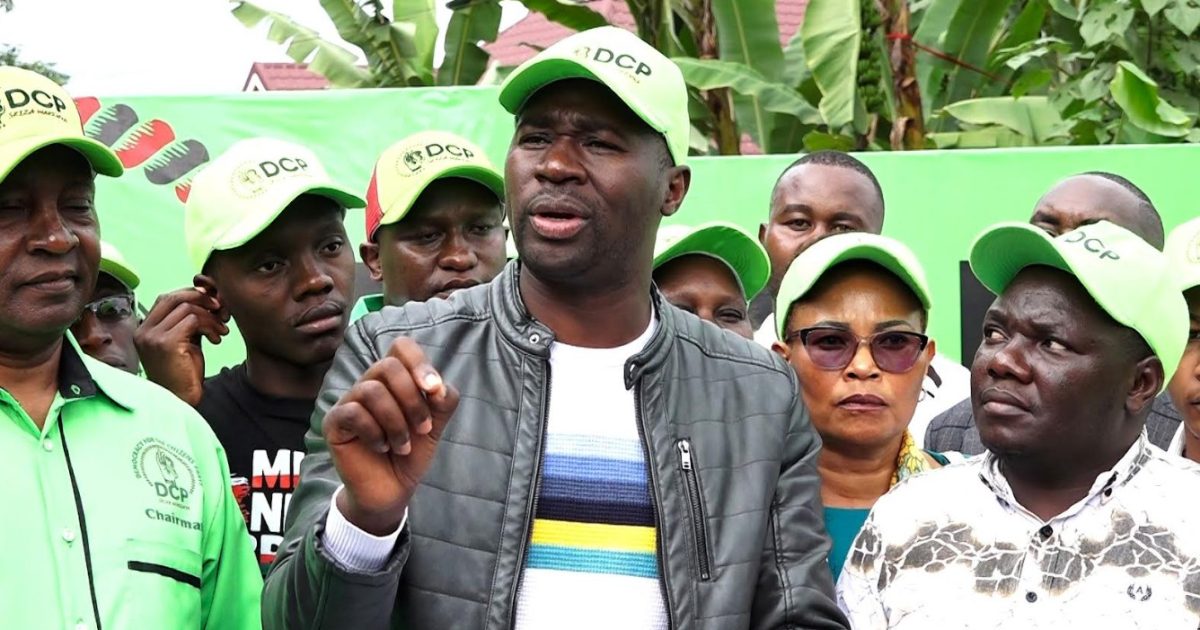
Democracy for Citizens Party (DCP) leaders, led by Manyatta MP Gitonga Mukunji, asked the President to immediately suspend the planned project implementation, saying the country lacks the capacity to handle such a plague.
Mukunji warned that plans to establish an Ebola treatment and Isolation center in Laikipia County pose the risk of cross-border transmission through the movement of goods and people.
Speaking at a press briefing, accompanied by DCP aspirants at the party offices in Embu Town on Saturday afternoon, the MP questioned why the US Government seeks to have Ebola patients quarantined in Kenya instead of handling the situation within its own borders.
He argued that with its advanced medical capability, world-class infrastructure and enormous wealth, the US Government should manage its own health emergencies instead of transferring the burden to another country.
“The United States cannot claim to be unable to accommodate its own citizens affected by Ebola while expecting Kenya to take on such a serious health risk,” he argued.
Former Runyenjes Central Ward MCA Steve Simba said Kenya’s health facilities remain poorly equipped to deal with such a highly infectious disease such as Ebola.
He said Kenya was not in a position to handle such a lethal disease, noting how it faced severe constraints during the Covid-19 pandemic.
“Most of our public hospitals continue grappling with shortages and inadequate medical supplies, personnel and emergency preparedness, making it difficult to contain an Ebola outbreak,” he stated.
Elsewhere, former Senator LennyKivuti,i who was speaking at a burial in Evurore Ward in Mbeere North Constituency, called for immediate suspension of the planned project.
He urged the government to prioritize strengthening the healthcare systems instead of entering into agreements that could expose citizens to grave health risks.
By Samuel Waititu