The Ministry of Agriculture and Livestock Development is set to unveil an ambitious roadmap that will transform the country’s livestock and meat industry into a commercially viable sector capable of generating Sh1 trillion annually.
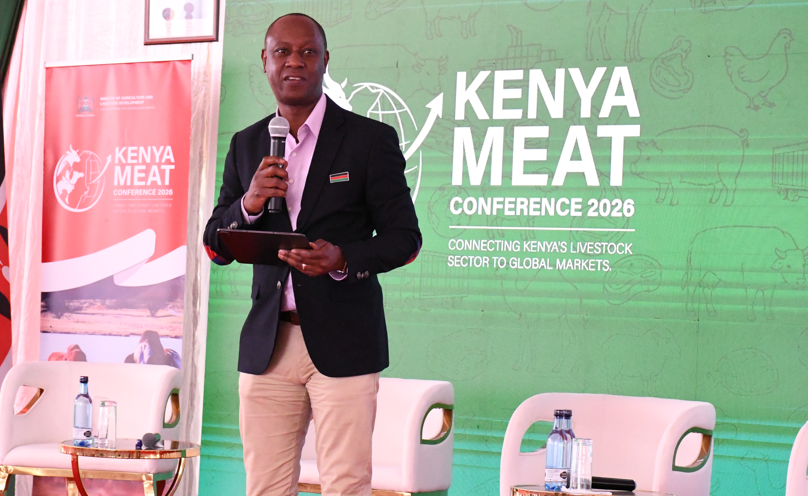
Speaking at the close of the two-day Kenya Meat Conference in Nyeri on Thursday, Principal Secretary in the State Department for Livestock Development, Jonathan Mueke said that the conference had charted a new direction for the industry.
Mueke described the conference as the first forum bringing together all players in the meat value chain to jointly develop strategies for making the sector more profitable. He noted that the predominantly subsistence industry, which currently contributes Sh. 390 billion annually to the country’s Gross Domestic Product, holds great potential of tripling these returns by the year 2029.
He however noted that it remained constrained by disjointed co-ordination between two levels of government, inadequate infrastructure, livestock diseases and limited access to the premium meat export market.
“We have come up with resolutions that are going to commercialize this sector and move it from being just a livelihood activity to be a commercially viable activity that is an engine of economic growth and that puts money in the pockets of all the actors,” said Mueke.
Among the key resolutions include fast-tracking the roll-out of the Animal Identification and Traceability System (ANITRAC) in all the 47 counties. The PS said that adopting the new system will not only open up Kenya’s livestock products to the international export markets but will also ensure that the sector complies with international sanitary and phyto-sanitary standards currently demanded by the premium meat market.
“We have agreed we must embrace traceability which is what the market says they demand if we want to sell our products globally. We tested ANITRAC in government farms and we piloted it in six counties. Now we have to roll it out at scale quickly and nationally to ensure all our animals are tagged and traceable to the farms and to the owners,” said the PS.
The government has also pledged to expand the National Mass Vaccination programme to cover 80 per cent of the livestock population up from the current 15 per cent. This, Mueke said will eliminate trade sensitive diseases particularly the Foot and Mouth disease which he said could limit access to the lucrative export market.
“Vaccination as we speak is going on in at least 13 counties simultaneously and we want to roll that out to the rest of the country at scale so that we can ensure that we are free from the trade sensitive diseases such as Foot and Mouth Disease,” he said.
As part of its efforts to improve production and in a move that is aimed at enhancing farmer advisory services, the PS said that the government will immediately revamp the delivery of extension services to embrace the use of digital technology with artificial intelligence expected to improve extension services and predict disease outbreaks
The government also committed to expanding veterinary laboratories and meat certification systems
To further improve the quality of livestock breeds, the PS said that the government will soon be rolling out a national breed improvement programme targeting the Arid and Semi-arid lands with the aim being to increase their use of Artificial insemination from the current 10 per cent to 80 per cent.
Similarly, he said that plans are underway to establish disease free-zones to protect disease free regions from blanket export bans whenever disease outbreaks occur in isolated parts of the country.
“Our breed has diminished over the years because of practices such as inbreeding. We have agreed that we are going to develop a national breed improvement program as well as support existing community breed improvement programs. We want to increase the weight of our animals and the resilience of our animals so that they can be more resistant to drought, disease and so that we can increase the quality of the meat that comes from these animals. That can only be done through consistent improvement in breeds,” said Mueke.
There are also plans to invest in dams and irrigation infrastructure to support large-scale commercial fodder production in ASALS while at the same time promoting feedlot farming.
The PS said that this will not only improve livestock nutrition and beef quality but will also increase meat production.
To realize the plan, he revealed that the Ministry intends to source resources through the National Infrastructure Fund for the construction of dams which will support large-scale, irrigation-fed production of fodder in the ASALs.
“From the panel discussions, the academic researchers have revealed that ASALs have land and good soil. We have agreed that we shall source money to harvest dam water that is enough for irrigation of large production and commercialization of fodder for our animals which we will then store and use in times of drought,” he said.
“We heard that we have many cows, but a little beef, and that will be solved by feed lotting. So, we will encourage feed lotting to ensure that we can increase our quality and quantity of animals,” he added.
Mueke said that the government will also partner with other stakeholders including County Governments to promote value addition through investment in export-grade slaughterhouses, meat processing plants, cold chain infrastructure and modern logistics systems, alongside the introduction of a national meat grading system based on quality.
He told the over 300 participants of the conference that to expand Kenya’s footprint in international meat markets, the government will reduce air freight costs and develop a distinct Kenya Meat Brand comparable to the country’s successful tea, coffee and flower brands.
The PS said that Directorate of Veterinary Services(DVS)will also begin registering and licensing all livestock and meat exporters within one month to improve regulation of the export trade and protect the country’s reputation in international markets.
“We heard that anybody can come up and go and export meat. It doesn’t happen in avocados. It doesn’t happen in flowers and in tea or coffee. Why is it happening in meats? So, the DVS within the next one month will come up with guidelines on how to register all our meat exporters to ensure that we know who they are and what they are doing, so that they don’t spoil our brand of meat out there globally,” he said.
On marketing Kenya’s meat internationally, the PS said that the government will initially focus on expanding exports to niche markets in the Middle East, beginning with the United Arab Emirates, while working with the Kenya Export Trade and Branding Agency to build a globally recognised brand for Kenyan meat products.
Mueke said technology and innovation would be central to the sector’s transformation, with artificial intelligence expected to improve the sector and attract more young people into commercial livestock farming.
According to the PS, this proposal will now be forwarded to the Cabinet for endorsement. Should the Cabinet endorse them, they will be implemented as a priority government program.
By Wangari Mwangi