The government has intensified efforts to complete the multi-billion-shilling Mwache Dam Project in Kwale County, with authorities projecting that the facility will begin impounding water by October this year to ease persistent water shortages in Mombasa and neighboring areas.
Speaking during a monthly progress monitoring visit at the project site, Principal Secretary in the State Department for Water and Sanitation, Julius Korir, said construction works had gathered momentum and were progressing according to revised timelines following the alignment of financial resources.
Korir said the contractor was operating on a 24-hour schedule to ensure the critical infrastructure project meets its targets ahead of the short rains expected later in the year.
“The construction of this critical facility is moving at an exceptional pace, with the contractor working round the clock. Our engineering teams have mapped the critical path over the next six months, putting us on course to begin impounding and storing water as early as October and November,” said Korir.
He noted that the government was finalizing a supplementary budget allocation to sustain the project’s momentum and avert potential cost escalations associated with delays.
According to the Principal Secretary, timely completion of the project remains crucial in ensuring prudent utilization of public funds and development partner support.
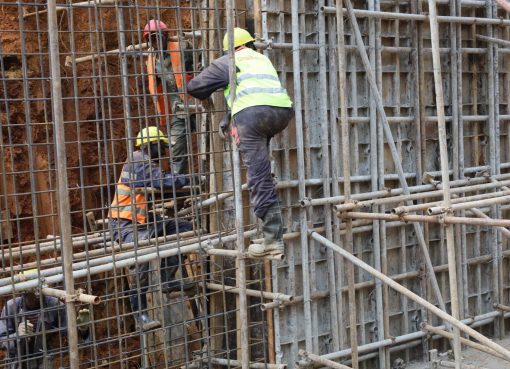
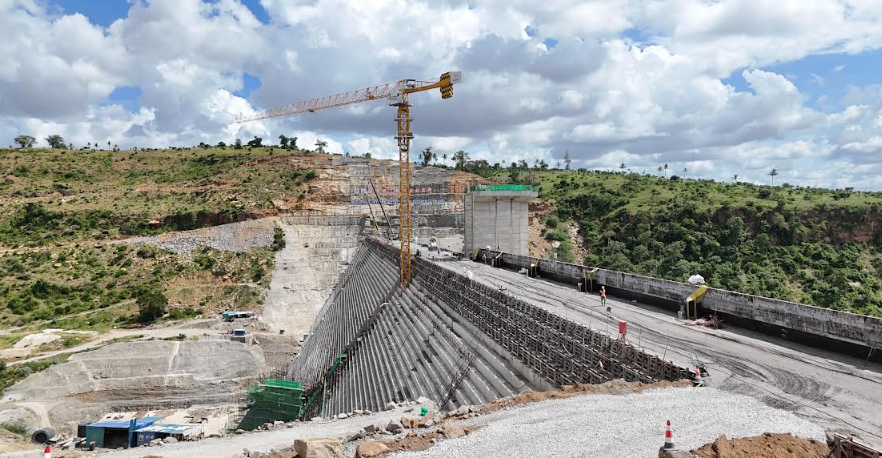
Water Secretary and Project Manager Eng. Samwel Alima said the main dam structure had reached approximately 83 per cent completion, with the embankment rising from an initial elevation of 30 metres to 87 metres above ground level.
“We are only left with about 13 metres to attain the final dam height. Once we complete the remaining works and the spillway section, we shall be ready to impound water during the upcoming short rains,” he said.
Alima explained that the Mwache Dam forms part of a broader strategy aimed at addressing chronic water shortages affecting Mombasa County by capturing and storing runoff from seasonal heavy rainfall events.
“The rainfall pattern in this region is characterised by intense rains occurring over short periods, followed by prolonged dry spells. This dam will enable us to harness and store the water, allowing for regulated supply throughout the year,” he added.
Beyond the dam structure, the Ministry is implementing a multi-phase water distribution programme to ensure the harvested water reaches consumers across the coastal region.
The second phase entails construction of a water treatment plant located approximately half a kilometre downstream from the dam site. Alima said the contract had already been signed, with the contractor expected to commence work within weeks.
Once operational, the treatment plant will process 186,000 cubic metres of water daily, equivalent to 186 million litres, before pumping it to a major storage facility at Mazeras for onward distribution.
“The water treatment component will abstract 186,000 cubic metres per day from the dam. After treatment, the water will be conveyed to Mazeras and then distributed to various parts of Mombasa County,” said Alima.
The third phase involves the development of an extensive pipeline network comprising separate lines serving the South Coast, the North Coast, and the mainland-to-island corridor.
Alima disclosed that procurement processes for the South Coast pipeline had been concluded, with contractors already mobilising to site following payment of advance funds. Preparations for the remaining two pipeline contracts are ongoing.
“We believe that within the next one and a half years, the treatment plant and distribution systems will be substantially complete, enabling residents to benefit from the additional water supply,” he stated.
The project is expected to supply approximately 166,000 cubic metres of water per day to Mombasa County, while 20,000 cubic metres daily will be allocated to communities living around the dam in Kwale County.
To support local livelihoods, the Ministry is also constructing 16 water pans to provide watering points for livestock and improve water accessibility in surrounding areas.
Deputy Project Manager and Programmes Secretary, Eng. Hosea Wendot, said significant progress had also been made in implementing social infrastructure projects intended to mitigate the impact of displacement occasioned by the dam’s construction.
He said replacement facilities, including schools, early childhood development centers, a health clinic, and a police station, were nearing completion.
“The Fulugani school is complete and awaiting handover to the administration. At Nunguni School, only minor work remains before completion. The ECDE center, clinic, and police post are also at advanced stages,” said Wendot.
He added that the project team had entered the final phase of implementation, focusing on addressing outstanding items identified through routine inspections.
“We are now dealing with what we call the snag list. We continuously monitor daily activities to ensure every pending task is completed within the stipulated time frame,” he said.
Wendot noted that the project incorporates livelihood restoration initiatives targeting more than 3,000 Project Affected Persons (PAPs), including support for small-scale farmers through agricultural training and farm inputs, as well as economic empowerment programmes such as the distribution of motorcycles to local operators.
The Ministry commended the collaboration between the National Land Commission, the World Bank, contractors, and local communities in advancing the flagship project.
Once complete, the Mwache Dam is expected to significantly enhance water security in the Coast region, support socio-economic development, and improve the quality of life for thousands of households in Mombasa and Kwale counties.
By Chari Suche