
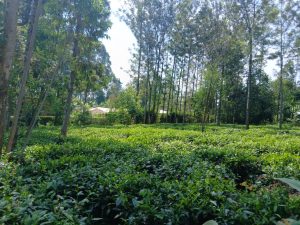
As dawn breaks over the rolling green hills of Vihiga County, hundreds of tea farmers stream into neatly manicured tea fields, baskets strapped to their backs.
Their hands move swiftly across the emerald bushes, carefully plucking the prized “two leaves and a bud,” the delicate harvest that has sustained thousands of households for decades, while helping position Kenya among the world’s leading exporters of black tea.
For many families in Vihiga, tea farming is more than an agricultural enterprise. It is a source of livelihood, a family inheritance, a symbol of resilience and a pathway to a better future.
Yet behind the lush plantations lies a story of perseverance, amid shrinking profits, rising production costs, climate change, and a growing concern that fewer young people are embracing the crop that has long sustained their communities.
For Anne Kigoda, a tea farmer from Mudete, tea farming has transformed her life. Anne ventured into tea farming in 2023 after attending a Farmers’ Field School organised by Mudete Tea Factory.
The training equipped her with practical skills in tea husbandry and inspired her to develop the tea farm she inherited from her parents.
“Tea farming has become my main source of income. It has enabled me to earn a living and support my family,” she says.
With approximately 300 tea bushes, Anne harvests an average of 70 kilogrammes of green leaf every ten days. At Sh25 per kilogramme, the earnings help meet her family’s daily needs.
She describes tea as a long-term investment that rewards patience. Although a tea bush takes nearly three years to mature, it can remain productive for decades if properly managed.
According to Anne, tea bushes that have been in production for more than 30 years often produce higher-quality leaves due to stronger branches and deeper root systems.
She explains that regular pruning every five years is essential, after which farmers wait about four months for fresh shoots that produce improved yields.
Despite its economic significance, Anne says tea farmers continue to face numerous challenges. Her biggest concern is delays in collecting green leaf from buying centres.
“Tea plucked early in the afternoon may remain in sacks until evening before factory trucks arrive. The longer it stays in the sack, the more heat it generates, causing fermentation that lowers quality. Sometimes the factory rejects it despite all the effort farmers have invested,” she explains.
Mudete Tea Factory Manager, Peter Munialo, acknowledges that delays occasionally occur, particularly during peak production seasons.
He says the factory operates 12 vehicles that collect green leaf daily from 75 registered buying centres and several satellite collection points across Vihiga and Kakamega counties.
“During peak seasons, each vehicle is forced to make several trips. Although delays occasionally occur when production is high, we always strive to ensure all farmers have their tea collected by evening,” says Munialo.

Climate change has also emerged as a major challenge. Anne notes that prolonged dry spells have significantly reduced tea production in recent years.
She further cites inadequate communication between farmers and factory management, saying many growers lack information about international tea markets and export prices, making it difficult to understand how their earnings are determined.
She is equally concerned about the ageing population of tea farmers. “Most tea farmers are elderly, while many young people are not taking over because they lack land ownership documents required for registration. They are also not receiving adequate training in tea farming from their parents,” she says.
Her advice to fellow farmers is simple. “There is no need to produce a lot of tea. What matters most is producing high-quality tea.”
Munialo agrees that quality remains the backbone of Kenya’s tea industry. He says quality assurance begins at the farm, where five tea extension officers train farmers on proper agronomic practices, including planting, pruning, fertilizer application and crop management.
Every consignment of green leaf undergoes inspection at buying centres before acceptance, followed by another quality check upon arrival at the factory.
“Quality starts on the farm. Farmers receive continuous training, and every delivery is inspected before it is purchased,” he says.
According to Mudete Tea Factory Senior Supervisor, Robert Mwale, the factory currently serves about 12,000 tea growers from Vihiga and Kakamega counties.
Its tea is exported to major international markets including China, Egypt and Britain.
China accounts for about 40 per cent of the factory’s exports, while Egypt imports approximately 25 per cent. Britain remains a key destination where Kenyan tea is blended before reaching global consumers.
Mwale observes that despite Kenya’s position among the world’s leading tea exporters, domestic consumption remains low.
“Kenya is among the world’s leading tea exporters, yet we are among the poorest consumers of our own tea,” he says.
To encourage local consumption, the factory has introduced smaller tea packages starting from 50grams to make tea more affordable to households.
Munialo says about 95 per cent of the factory’s processed tea is marketed through the Mombasa Tea Auction, while the remaining five per cent is sold locally through factory outlets and mobile distribution vans.
He adds that smart cards and electronic weighing systems have enhanced transparency by transmitting delivery records directly from buying centres to the factory’s database, ensuring farmers receive payment for the exact quantities delivered.
However, the industry continues to face mounting operational challenges.
Munialo says THE recently introduced tax levies on tea buyers have made Kenyan tea more expensive in international markets, reducing its competitiveness against tea from neighbouring Uganda, Rwanda and Tanzania.
“When Kenyan tea becomes more expensive because of taxes, buyers shift to other countries and we risk losing our markets,” he says, noting that the global tea market is already experiencing oversupply.
He adds that fluctuating exchange rates and soaring electricity costs have further increased production expenses.
The factory spends about Sh4 million monthly on electricity, while power outages force it to rely on generators that consume nearly 100 litres of diesel every hour.
He also cautions farmers against selling tea through middlemen, saying factories are required to purchase directly from registered growers to safeguard quality and traceability.
Looking ahead, Mudete Tea Factory plans to construct a hydroelectric power plant within the next one and a half years to reduce electricity costs.
The factory is also embracing automation and digital technologies to improve efficiency, reduce labour costs and enhance transparency in green leaf collection.
Munialo says the factory is working towards ensuring farmers receive their monthly payments by the fifth day of every month.
Beyond tea processing, financial institutions continue playing a vital role in supporting farmers.
Mudete Tea Factory and Tea Growers SACCO Deputy Chief Executive Officer, Elkana Liyengwa, says the SACCO serves nearly 5,000 tea farmers by providing affordable credit that enables members to purchase farm inputs, expand tea acreage and improve household incomes.
The SACCO also finances fertilizer purchases whenever factory supplies are delayed.
However, Liyengwa says loan repayment has become increasingly difficult due to fluctuating tea prices, taxation, poor road infrastructure and declining returns from tea auctions.
Poor roads, he notes, delay green leaf collection, reducing quality before it reaches the factory.
Munialo echoes the concern, saying that although tea cess is intended to support road maintenance, poor rural roads continue to hamper transportation, with factory vehicles occasionally getting stuck while collecting tea from remote buying centres.
Improving rural roads, he says, would significantly lower operational costs while safeguarding tea quality.
Liyengwa also expresses concern over the declining number of young people joining tea farming.
“The younger generation wants quick returns, yet tea requires patience and long-term investment. Unless something changes, the future of tea farming could be affected,” he warns.
To improve services, the SACCO plans to establish satellite offices and expand digital platforms while encouraging members to diversify into dairy farming, poultry keeping and other income-generating activities.
Agricultural experts believe sustained investment in farmer training and climate-smart agriculture will be critical to the future of tea production.
Agricultural extension officer, Toney Anduvate, say continuous farmer training, improved access to quality inputs, strengthened extension services and adoption of climate-smart farming practices remain essential in sustaining tea production.
They emphasize that equipping farmers with knowledge on good agricultural practices, proper pruning, fertilizer application, pest management and climate adaptation will improve both productivity and tea quality.
As global competition intensifies and climate change continues to threaten agricultural production, stakeholders agree that innovation, investment and stronger partnerships between farmers, factories, cooperatives and government will determine the future of Kenya’s tea sector.
For Anne Kigoda, however, tea remains more than just a cash crop. Every harvest tells a story of patience, determination and resilience. Every kilogramme delivered to the factory represents school fees paid, food placed on the family table and dreams kept alive.
However, although the sector faces numerous challenges, the resilience of farmers, support from cooperatives, commitment by tea factories and continued government interventions provide renewed hope that tea farming will remain the backbone of Vihiga County’s economy for generations to come.
By Anna Achieng